Japanese Prime Minister plays santoor during India visit, receives warm applause
During an official visit to India, Japan's Prime Minister attempted to play the traditional santoor instrument and impressed onlookers with her musical effort. The cultural gesture was well-received by the audience present at the event.

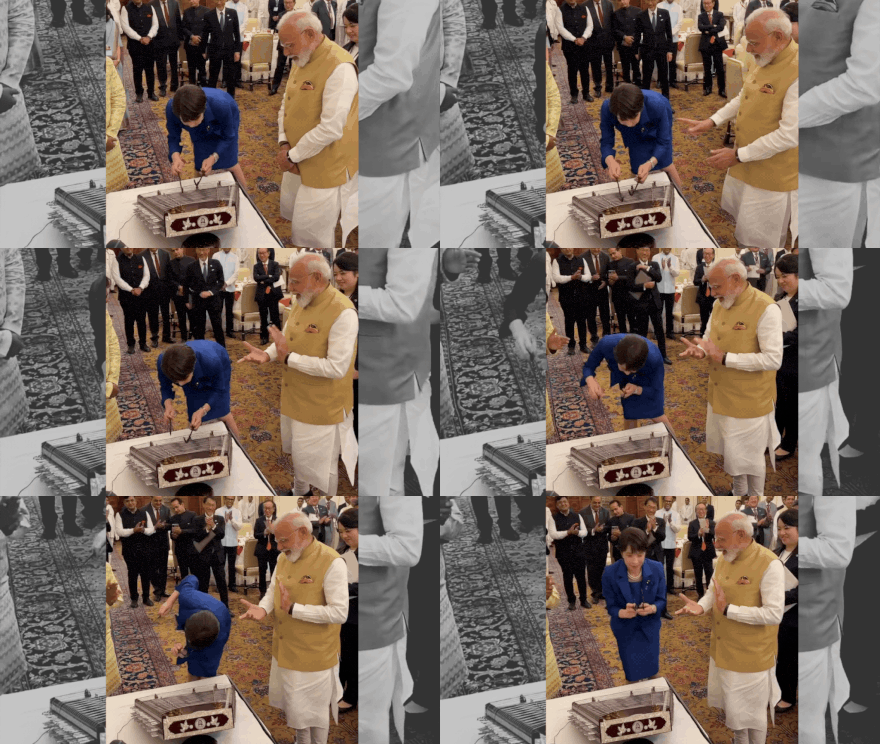
Japan's Prime Minister engaged in a cultural exchange during her official visit to India by attempting to play the santoor, a traditional stringed instrument widely used across Indian classical music. The moment drew appreciation from those present at the event, marking a memorable highlight of her diplomatic visit to the country.
The Prime Minister's willingness to participate in such a cultural activity demonstrated a spirit of goodwill and respect toward Indian traditions. Playing the santoor requires a degree of skill and familiarity with the instrument, making the gesture particularly noteworthy as it showed genuine engagement with India's musical heritage rather than a purely ceremonial participation.
The santoor is a hammered dulcimer that has been integral to Indian classical music for centuries. It is played by striking paired wooden mallets against metal strings, and mastering even basic techniques requires considerable practice. The fact that the Japanese leader attempted to play the instrument despite its complexity highlighted her appreciation for Indian culture and willingness to embrace unfamiliar customs.
The event took place during official diplomatic engagements, with the cultural performance serving as part of broader exchanges between Japan and India. Such moments are significant in international relations as they help build personal connections between leaders and demonstrate mutual respect between nations.
The audience's positive response to the Prime Minister's musical attempt underscored the warmth typically extended during high-level diplomatic visits. Cultural exchanges like these often become memorable talking points of official visits and help strengthen bilateral ties beyond formal government-to-government interactions.
The incident reflects the growing emphasis on cultural diplomacy in international relations, where leaders use participation in local traditions to connect with host nations and showcase shared human values that transcend political boundaries.