US Air Force Tests Autonomous Drones with Fighter Jets in Pacific
The US military is developing autonomous 'loyal wingmen' drones that fly alongside manned fighter jets to enhance combat capabilities. India is building its own version, the CATS Warrior, to strengthen its air force.

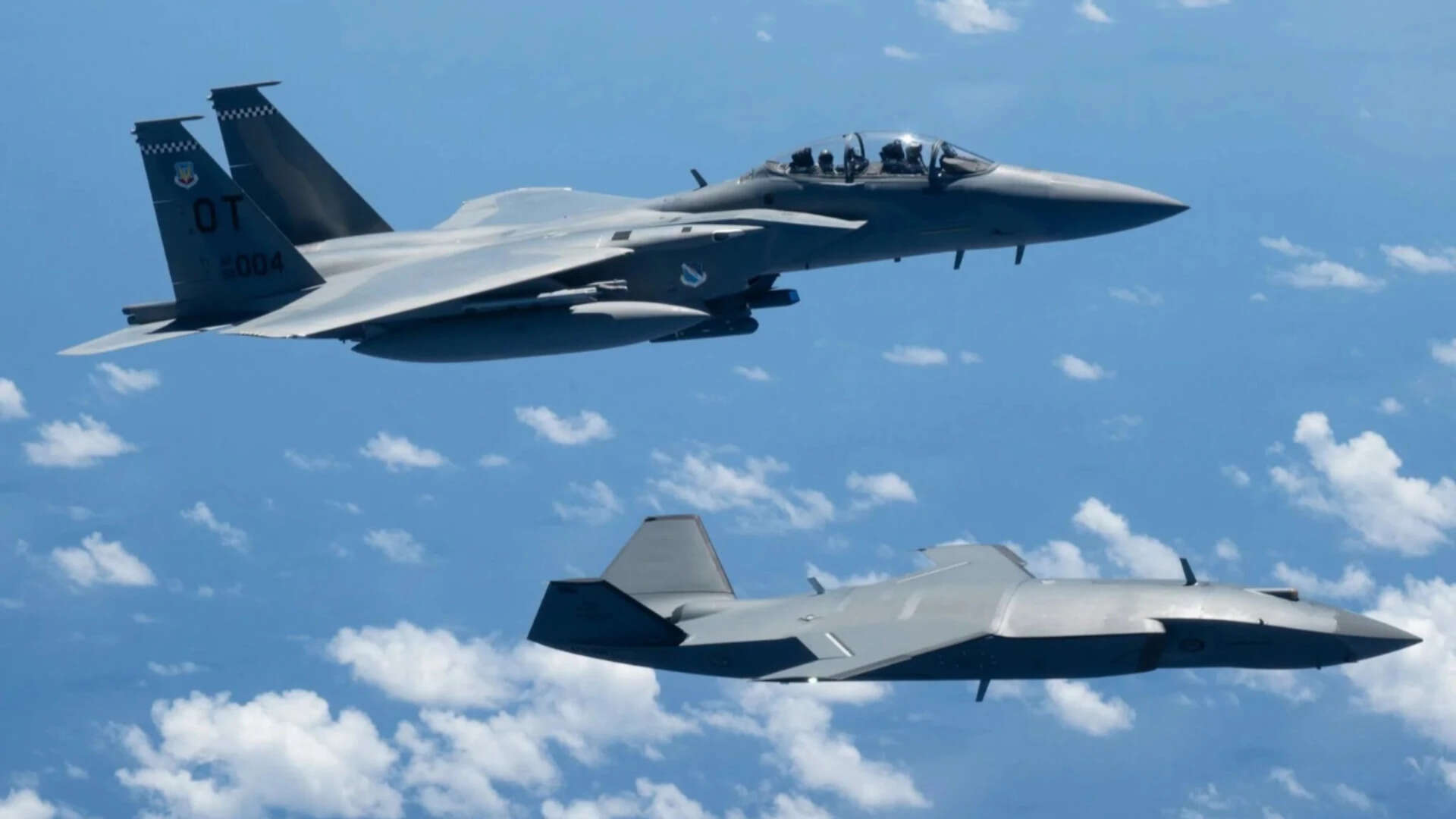
The United States Air Force is advancing its next-generation combat strategy by testing autonomous drones designed to operate alongside manned fighter aircraft in coordinated missions. These unmanned systems, known as Collaborative Combat Aircraft (CCAs) or loyal wingmen, represent a significant shift in how aerial warfare may be conducted in the future.
The experimental MQ-28 Ghost Bat drone is currently undergoing field trials over the Pacific Ocean, where it operates in tandem with manned jets like the F-15EX fighter. The Ghost Bat is programmed to execute complex combat manoeuvres while receiving guidance from the pilot of the manned aircraft, creating an integrated fighting unit that combines human decision-making with autonomous precision. This partnership between crewed and uncrewed systems allows the manned pilot to focus on strategic decisions while the drone handles specific tactical tasks in real-time combat scenarios.
The development of these loyal wingmen stems from the Pentagon's broader vision for sixth-generation fighter aircraft and future air combat. By pairing autonomous drones with traditional fighter jets, the Air Force aims to multiply the effectiveness of its pilot force, reduce pilot fatigue during extended missions, and create tactical advantages through coordinated multi-platform attacks. The Ghost Bat's autonomous capabilities allow it to respond rapidly to threats without constant communication delays from ground control stations.
India is not sitting idle in this technological race. The Indian Air Force is independently developing its own loyal wingman system called the CATS Warrior, designed specifically to augment the capabilities of India's current and future fighter fleet. The CATS Warrior programme reflects India's commitment to maintaining air superiority and modernising its defence capabilities in an increasingly competitive geopolitical environment in the Indo-Pacific region.
These autonomous combat systems have profound implications for future warfare, as they challenge traditional air superiority doctrines. The integration of loyal wingmen into operational squadrons could fundamentally alter aerial combat tactics, force structure, and procurement strategies for air forces worldwide. As both the US and India pursue these programmes, military analysts expect other nations to accelerate similar development initiatives.
The successful integration of these autonomous systems into existing fighter fleet operations remains an ongoing challenge, with questions persisting about cybersecurity, reliability, and ethical deployment. However, the progress demonstrated by the Ghost Bat over the Pacific suggests that collaborative combat aviation is transitioning from theoretical concept to practical military capability.
Source: TOI India