SIAM Withdraws Letter On E20 Fuel Contamination Concerns
SIAM raises concerns over E20 fuel contamination, later withdraws letter. Vehicle component failures linked to high chloride levels.
'%3E%3Crect%20width%3D'96'%20height%3D'96'%20fill%3D'%230B6E4F'%2F%3E%3Ccircle%20cx%3D'30'%20cy%3D'24'%20r%3D'44'%20fill%3D'%23fff'%20opacity%3D'.12'%2F%3E%3Ccircle%20cx%3D'60'%20cy%3D'74'%20r%3D'40'%20fill%3D'%23000'%20opacity%3D'.10'%2F%3E%3C%2Fg%3E%3Cg%20fill%3D'none'%20stroke%3D'%23fff'%20stroke-width%3D'3.2'%20stroke-linecap%3D'round'%20stroke-linejoin%3D'round'%3E%3Cpolyline%20points%3D'31%2C59%2041%2C49%2049%2C54%2063%2C37'%2F%3E%3Cpolyline%20points%3D'55%2C37%2063%2C37%2063%2C45'%2F%3E%3C%2Fg%3E%3C%2Fsvg%3E)
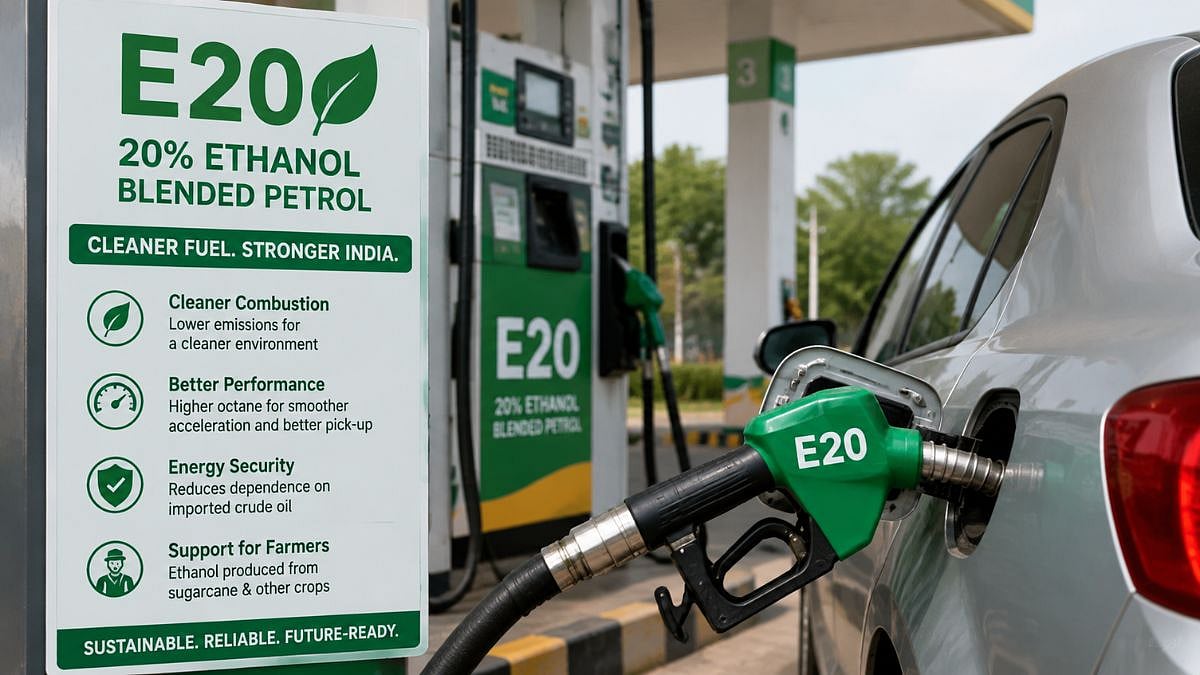
The Society of Indian Automobile Manufacturers (SIAM) has withdrawn its letter to the petroleum ministry regarding concerns over possible contamination issues in E20 fuel. The letter had highlighted the presence of high chloride content and moisture in fuel, which was linked to a significant rise in replacement and repair cases involving components such as fuel pumps, fuel injectors, and Exhaust Gas Recirculation (EGR) valves.
SIAM had urged the government to include chloride limits in E20 fuel specifications and strengthen monitoring mechanisms at oil marketing companies and retail fuel outlets. The industry body had stated that chloride accumulation in fuel systems can lead to corrosion, potentially causing permanent damage to engine components over time.
However, SIAM later clarified that the concerns raised in the letter were based on preliminary investigations and required further verification. The organisation acknowledged that the Ministry of Petroleum and Natural Gas (MoPNG) has already introduced precautionary measures, including a 3 parts per million (ppm) limit for chloride and sulphur levels in ethanol being blended into petrol supplies.
The MoPNG has taken steps to address the concerns, and oil marketing companies have implemented additional checks to monitor fuel quality. These checks include water ingress testing, which is being carried out multiple times daily across more than 87,000 fuel outlets.
SIAM's initial concerns were based on investigations into failed vehicle parts, which indicated corrosion and wear caused by high chloride levels traced to fuel quality. The industry body had recommended stricter quality control measures to prevent such failures and avoid negative consumer perception about E20 petrol.
The use of E20 fuel has been a topic of discussion in recent times, with some stakeholders raising concerns over its impact on vehicle performance and longevity. The government has been promoting the use of E20 fuel as a way to reduce the country's dependence on fossil fuels and decrease greenhouse gas emissions.
In a separate development, AAP Chief Arvind Kejriwal had led a march to PM Modi's residence against E20 fuel, highlighting the concerns of some stakeholders. However, SIAM's withdrawal of its letter suggests that the concerns over E20 fuel contamination may have been premature.
The development is significant as it highlights the importance of ensuring the quality of E20 fuel to prevent any potential damage to vehicle components. The government and oil marketing companies have taken steps to address the concerns, and it remains to be seen how the situation will unfold in the coming days.
The introduction of E20 fuel is part of the government's efforts to increase the use of ethanol in petrol, which is expected to reduce the country's dependence on fossil fuels and decrease greenhouse gas emissions. The government has set a target of achieving 20% ethanol blending in petrol by 2025.
In conclusion, SIAM's withdrawal of its letter on E20 fuel contamination concerns suggests that the concerns may have been premature. However, the development highlights the importance of ensuring the quality of E20 fuel to prevent any potential damage to vehicle components. The government and oil marketing companies have taken steps to address the concerns, and it remains to be seen how the situation will unfold in the coming days.
Frequently asked questions
What is E20 fuel and why is it being promoted?
E20 fuel is a blend of 20% ethanol and 80% petrol, which is being promoted as a way to reduce the country's dependence on fossil fuels and decrease greenhouse gas emissions.
What are the concerns over E20 fuel contamination?
The concerns over E20 fuel contamination are related to the presence of high chloride content and moisture in fuel, which can lead to corrosion and damage to vehicle components.