CEA Nageswaran Urges Return to Lower Ethanol Blend
India's Chief Economic Advisor suggests reverting to lower ethanol blend, citing concerns over older vehicles.
'%3E%3Crect%20width%3D'96'%20height%3D'96'%20fill%3D'%230B6E4F'%2F%3E%3Ccircle%20cx%3D'30'%20cy%3D'24'%20r%3D'44'%20fill%3D'%23fff'%20opacity%3D'.12'%2F%3E%3Ccircle%20cx%3D'60'%20cy%3D'74'%20r%3D'40'%20fill%3D'%23000'%20opacity%3D'.10'%2F%3E%3C%2Fg%3E%3Cg%20fill%3D'none'%20stroke%3D'%23fff'%20stroke-width%3D'3.2'%20stroke-linecap%3D'round'%20stroke-linejoin%3D'round'%3E%3Cpolyline%20points%3D'31%2C59%2041%2C49%2049%2C54%2063%2C37'%2F%3E%3Cpolyline%20points%3D'55%2C37%2063%2C37%2063%2C45'%2F%3E%3C%2Fg%3E%3C%2Fsvg%3E)
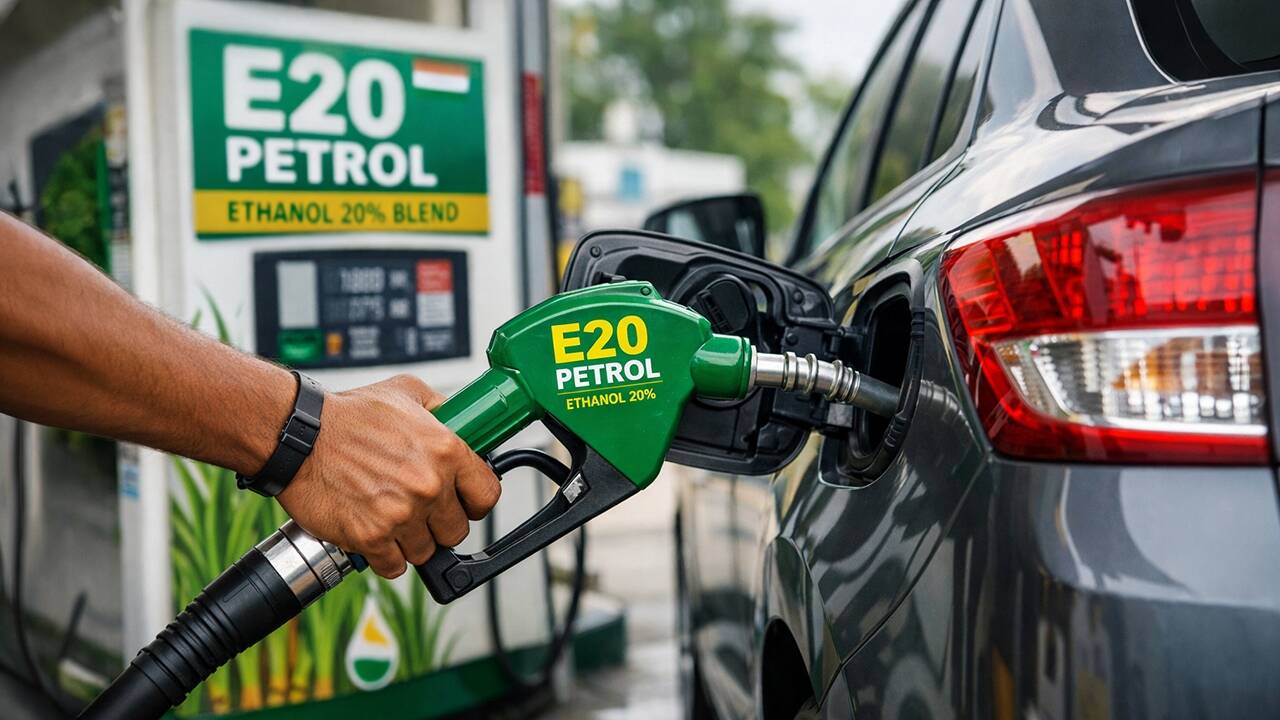
India's Chief Economic Advisor, Nageswaran, has suggested that the country should consider bringing back a lower blend of ethanol in petrol at fuel pumps. This comes amid concerns over the potential damage that E20, a 20% ethanol blend, could cause to older vehicles.
While available evidence does not suggest that E20 is damaging engines, there are potential problems involving older vehicles. India has a large number of older two-wheelers, approximately 75 to 80 million, which could be affected by the higher ethanol blend.
One of the main issues is that older rubber seals in these vehicles are not rated for ethanol and could be damaged by the higher blend. Retrofitting these seals to make them compatible with E20 would be a time-consuming process, likely taking years.
The concern over older vehicles is significant, given the large number of such vehicles on Indian roads. The government had earlier announced plans to increase the ethanol blend in petrol to 20% by 2025, as part of its efforts to reduce dependence on fossil fuels and cut greenhouse gas emissions.
However, the potential impact on older vehicles has raised concerns, and Nageswaran's suggestion to revert to a lower ethanol blend could be a way to address these concerns. The government will need to weigh the benefits of increasing the ethanol blend against the potential costs and challenges, particularly for owners of older vehicles.
The use of ethanol in petrol has been seen as a way to reduce India's dependence on fossil fuels and cut greenhouse gas emissions. However, the implementation of this policy will require careful consideration of the potential impact on different types of vehicles, as well as the availability of compatible fuel pumps and infrastructure.
In the coming years, the government will need to balance the need to reduce emissions with the need to protect the interests of vehicle owners, particularly those with older vehicles. This will require careful planning and coordination, as well as investment in infrastructure and education to support the transition to higher ethanol blends.
The suggestion by Nageswaran to bring back a lower ethanol blend is a significant development, and it will be important to see how the government responds to this suggestion. The outcome will have significant implications for vehicle owners, fuel pump operators, and the environment, and will require careful consideration of the potential impacts and benefits.
Frequently asked questions
What is the current ethanol blend in petrol in India?
The current target is to increase the ethanol blend to 20% by 2025.
Why is there a concern over older vehicles?
Older rubber seals in these vehicles are not rated for ethanol and could be damaged by the higher blend.