Supreme Court Orders RBI To Create Mule Account SOP
SC directs RBI to frame SOP, issues nationwide directions against digital arrest scams
'%3E%3Crect%20width%3D'96'%20height%3D'96'%20fill%3D'%230B6E4F'%2F%3E%3Ccircle%20cx%3D'30'%20cy%3D'24'%20r%3D'44'%20fill%3D'%23fff'%20opacity%3D'.12'%2F%3E%3Ccircle%20cx%3D'60'%20cy%3D'74'%20r%3D'40'%20fill%3D'%23000'%20opacity%3D'.10'%2F%3E%3C%2Fg%3E%3Cg%20fill%3D'none'%20stroke%3D'%23fff'%20stroke-width%3D'3.2'%20stroke-linecap%3D'round'%20stroke-linejoin%3D'round'%3E%3Cpolyline%20points%3D'31%2C59%2041%2C49%2049%2C54%2063%2C37'%2F%3E%3Cpolyline%20points%3D'55%2C37%2063%2C37%2063%2C45'%2F%3E%3C%2Fg%3E%3C%2Fsvg%3E)
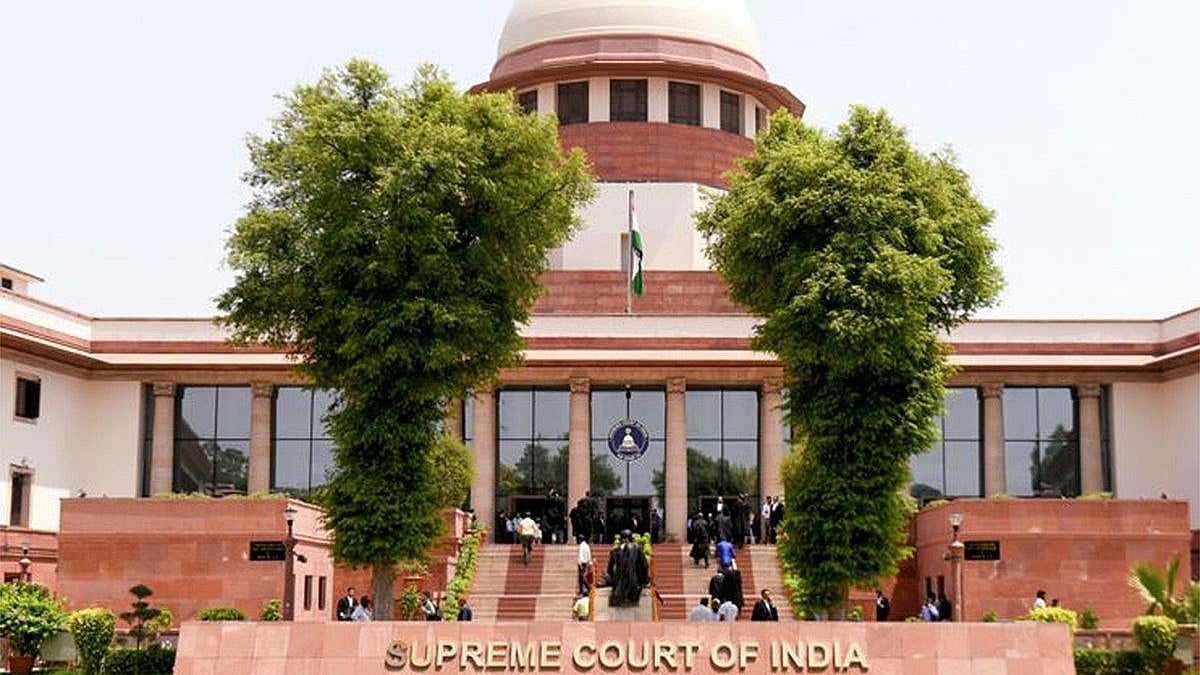
The Supreme Court on Tuesday ordered the Reserve Bank of India (RBI) to frame a Standard Operating Procedure (SOP) for dealing with mule accounts linked to money laundering and cyber-enabled fraud within four weeks.
This directive is part of a fresh set of nationwide directions issued by the court to strengthen the institutional response against digital arrest scams. The court also asked all states and Union Territories to operationalise cyber fraud grievance redressal and money restoration mechanisms.
A Bench of Chief Justice of India Surya Kant and Justices Joymalya Bagchi and V. Mohana passed the directions after taking on record the fourth status report filed by the Indian Cyber Crime Coordination Centre (I4C), Ministry of Home Affairs. The report detailed the steps taken by various ministries, regulators, investigating agencies, telecom service providers, and intermediaries pursuant to the apex court's earlier orders.
The top court directed the Centre's Inter-Departmental Committee to examine a shared liability and victim compensation framework for victims of digital arrest scams. Additionally, states were asked to notify and operationalise their State Cyber Crime Coordination Centres within four weeks and adopt the e-Zero FIR mechanism in consultation with I4C.
The RBI was ordered to prepare and circulate the SOP for dealing with mule accounts and accounts linked to money laundering activity and cyber-enabled fraud. A copy of the final SOP should also be furnished to the Registrar General of every High Court.
The apex court further directed the Registrar General of every High Court to bring the grievance redressal mechanism to the notice of courts and adjudicating authorities dealing with freezing of bank accounts in cyber fraud cases. While aggrieved persons may ordinarily be encouraged to first avail the mechanism, it would not bar constitutional or statutory remedies.
The court recommended that State Legal Services Authorities immediately undertake public awareness initiatives on digital arrest scams, cybercrime prevention, and mechanisms available for recovery of defrauded amounts. Authorities were also directed to ensure expeditious disposal of matters relating to freezing of bank accounts arising out of cyber-enabled financial frauds.
According to the court, complaints relating to digital arrest scams received on the National Cyber Crime Reporting Portal had declined from 1,23,672 in 2024 to 58,249 in 2025, and further to 16,377 till June 30, 2026. The corresponding reported defrauded amounts have also substantially reduced.
The Supreme Court's directives aim to strengthen the institutional response against digital arrest scams and provide relief to victims of cyber-enabled financial frauds. The court's orders are expected to have a significant impact on the prevention and prosecution of cybercrimes in India.
The decline in complaints and defrauded amounts is a positive trend, but continued monitoring remains indispensable. The court's emphasis on public awareness initiatives and expeditious disposal of matters related to cyber-enabled financial frauds is crucial in preventing and combating digital arrest scams.
In conclusion, the Supreme Court's orders are a significant step towards addressing the growing menace of digital arrest scams in India. The directives issued by the court are expected to provide relief to victims of cyber-enabled financial frauds and strengthen the institutional response against such scams.
The court's decision to direct the RBI to frame an SOP for dealing with mule accounts and the Centre's Inter-Departmental Committee to examine a shared liability and victim compensation framework are important measures in preventing and combating digital arrest scams. The orders issued by the court are a testament to its commitment to protecting the rights of citizens and preventing cybercrimes in India.
Overall, the Supreme Court's directives are a positive development in the fight against digital arrest scams and cyber-enabled financial frauds. The court's emphasis on public awareness, expeditious disposal of matters, and relief to victims is expected to have a significant impact on the prevention and prosecution of cybercrimes in India.
The Supreme Court's orders will have far-reaching implications for the prevention and prosecution of cybercrimes in India. The directives issued by the court are expected to provide a framework for dealing with digital arrest scams and cyber-enabled financial frauds, and will help to strengthen the institutional response against such scams.
In the coming weeks and months, it will be important to monitor the implementation of the court's directives and assess their impact on the prevention and prosecution of cybercrimes in India. The Supreme Court's orders are a significant step towards addressing the growing menace of digital arrest scams, and it is hoped that they will have a positive impact on the prevention and prosecution of cybercrimes in India.
Frequently asked questions
What is a mule account?
A mule account is a bank account used for money laundering or cyber-enabled fraud.
What are the Supreme Court's directives against digital arrest scams?
The Supreme Court has directed the RBI to frame an SOP on mule accounts, and states to operationalise cyber fraud grievance redressal mechanisms, among other directives.