NFR Upgrades Safety with Advanced Signalling and Telecommunication
Northeast Frontier Railway modernises network, enhances safety and efficiency.
'%3E%3Crect%20width%3D'96'%20height%3D'96'%20fill%3D'%23B3261E'%2F%3E%3Ccircle%20cx%3D'30'%20cy%3D'24'%20r%3D'44'%20fill%3D'%23fff'%20opacity%3D'.12'%2F%3E%3Ccircle%20cx%3D'60'%20cy%3D'74'%20r%3D'40'%20fill%3D'%23000'%20opacity%3D'.10'%2F%3E%3C%2Fg%3E%3Cg%20fill%3D'%23fff'%3E%3Crect%20x%3D'29'%20y%3D'49'%20width%3D'8'%20height%3D'19'%20rx%3D'1'%2F%3E%3Crect%20x%3D'39'%20y%3D'40'%20width%3D'9'%20height%3D'28'%20rx%3D'1'%2F%3E%3Crect%20x%3D'50'%20y%3D'45'%20width%3D'8'%20height%3D'23'%20rx%3D'1'%2F%3E%3Crect%20x%3D'60'%20y%3D'53'%20width%3D'7'%20height%3D'15'%20rx%3D'1'%2F%3E%3Crect%20x%3D'41'%20y%3D'34'%20width%3D'5'%20height%3D'6'%2F%3E%3C%2Fg%3E%3C%2Fsvg%3E)
The Northeast Frontier Railway (NFR) has undertaken significant initiatives to modernise its railway network through advanced signalling and telecommunication technologies.
Between January 1 and July 31, 2026, NFR has commissioned several key projects to strengthen safety, operational resilience, and passenger-centric services.
A major focus has been on enhancing the safety architecture and signalling ecosystem. Electronic Interlocking has been commissioned at 9 stations, while 40 Level Crossing Gates have been interlocked and 39 Sliding Booms installed, improving protection at critical interfaces and supporting smoother train operations.
Additionally, 29.73 Route Kilometres of Automatic Block Signalling has been commissioned in the Aluabari Road–Gaisal–Panjipara section, augmenting signalling capabilities and operational efficiency.
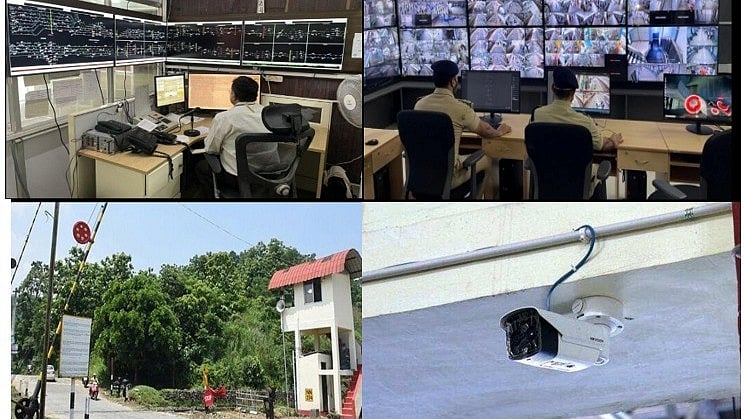
NFR has also expanded its technology-enabled surveillance framework, with CCTV systems installed at 74 stations and 24 Level Crossing Gates. This enhances real-time monitoring capabilities and contributes to a more robust safety and security environment.
In a significant step towards operational digitalisation, the VoIP-based Train Control Communication System (TCCS) has been installed and commissioned in the Lumding and Tinsukia divisions. This facilitates reliable communication and supports efficient train control operations.
Furthermore, RCIL Passenger Reservation System circuits at 10 Tier-I locations have been upgraded from 2 Mbps to 10 Mbps, substantially enhancing network capacity and reliability. Integrated Passenger Information Systems have also been provided at 8 stations, strengthening the availability of timely passenger information.
Through these technology-led interventions, NFR is transitioning towards a more resilient, intelligent, and efficient railway ecosystem. Advanced signalling, digital communication, surveillance, and passenger information systems are converging to strengthen safety and elevate the overall quality of railway operations and passenger services.
The modernisation of the railway network is expected to have a positive impact on the overall safety and efficiency of train operations. With the implementation of these advanced technologies, NFR is taking a significant step towards creating a more robust and reliable railway system.
The upgrades are part of NFR's efforts to provide better services to its passengers and improve the overall railway experience. By leveraging advanced signalling and telecommunication technologies, NFR is poised to become a more efficient and passenger-friendly railway network.
In the long run, these initiatives are expected to contribute to the growth and development of the region, by providing a safe, efficient, and reliable railway system. This, in turn, will have a positive impact on the local economy and the overall quality of life for the people in the region.
The modernisation of the railway network is a significant step towards creating a more sustainable and efficient transportation system. By adopting advanced technologies, NFR is reducing its environmental footprint and improving the overall safety and efficiency of its operations.
Overall, the initiatives undertaken by NFR are expected to have a positive impact on the railway network and its passengers. By providing a safe, efficient, and reliable railway system, NFR is contributing to the growth and development of the region.
Frequently asked questions
What is the purpose of NFR's modernisation initiatives?
The purpose of NFR's modernisation initiatives is to enhance safety, operational resilience, and passenger-centric services.
What technologies has NFR implemented to improve safety and efficiency?
NFR has implemented Electronic Interlocking, Automatic Block Signalling, CCTV systems, and VoIP-based Train Control Communication System.