Canada's Kelp Forests Survive Best in Cooler Waters
Kelp forests thrive in cooler waters. Vancouver Island study reveals survival rates.
'%3E%3Crect%20width%3D'96'%20height%3D'96'%20fill%3D'%231B5E20'%2F%3E%3Ccircle%20cx%3D'30'%20cy%3D'24'%20r%3D'44'%20fill%3D'%23fff'%20opacity%3D'.12'%2F%3E%3Ccircle%20cx%3D'60'%20cy%3D'74'%20r%3D'40'%20fill%3D'%23000'%20opacity%3D'.10'%2F%3E%3C%2Fg%3E%3Cg%3E%3Ccircle%20cx%3D'48'%20cy%3D'48'%20r%3D'15'%20fill%3D'%23fff'%2F%3E%3Cpath%20d%3D'M43%2034%20Q50%2048%2043%2062'%20fill%3D'none'%20stroke%3D'%238a94a6'%20stroke-width%3D'2.4'%2F%3E%3Cpath%20d%3D'M47%2033%20Q54%2048%2047%2063'%20fill%3D'none'%20stroke%3D'%238a94a6'%20stroke-width%3D'1.8'%20stroke-dasharray%3D'1.5%203'%2F%3E%3C%2Fg%3E%3C%2Fsvg%3E)
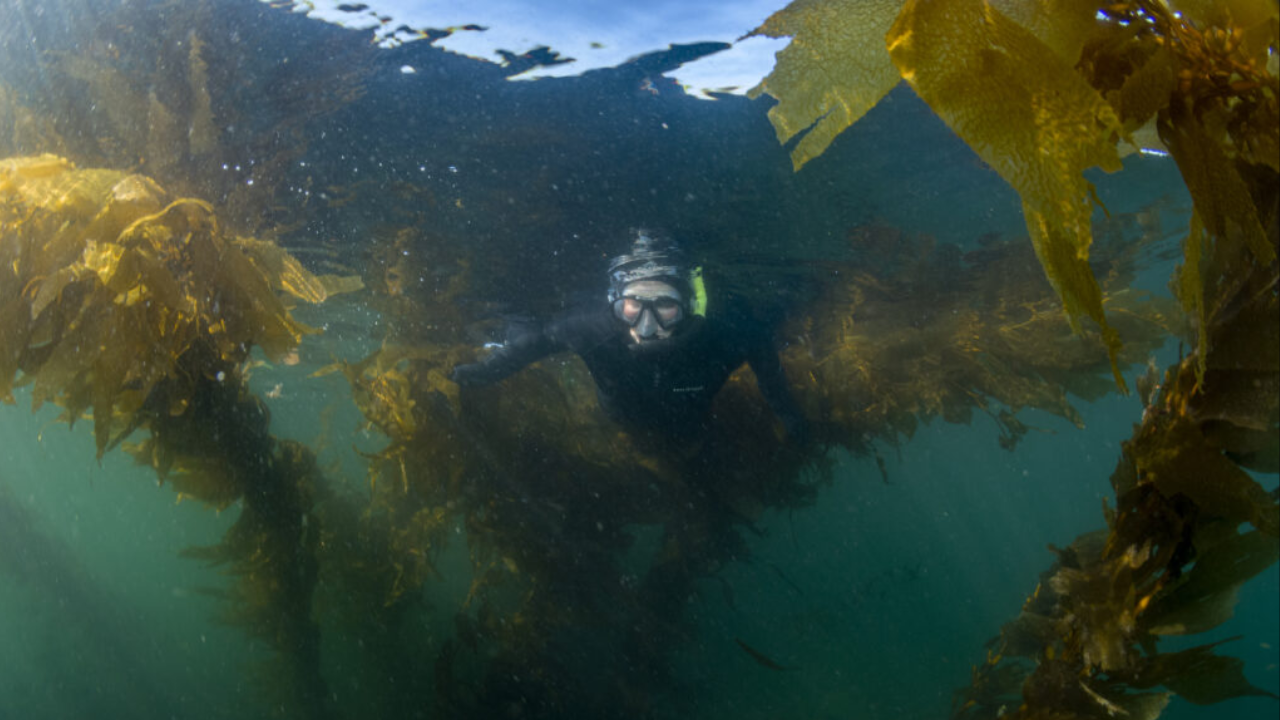
A recent study of Vancouver Island's kelp forests has shed light on the impressive durability of these marine ecosystems. By analyzing 170 years of records, including historic charts and satellite data, researchers found that kelp forests in cooler, wave-exposed zones have a significantly higher survival rate than those in warmer, sheltered waters.
The study revealed that an astonishing 88% of kelp forests in these cooler zones have survived for over a century. In contrast, kelp forests in warmer, sheltered waters have faced a concerning decline, with only 52% surviving over the same period. This significant difference in survival rates highlights the crucial regional variations in kelp forest resilience.
Kelp forests are essential marine ecosystems that provide habitat for a diverse range of species and help to mitigate the effects of climate change. However, they are facing numerous threats, including rising temperatures, ocean acidification, and coastal development. The insights gained from this study will serve as pivotal guidance for future conservation initiatives aimed at protecting these vital ecosystems.
The study's findings have important implications for conservation efforts in Canada and beyond. By identifying the areas where kelp forests are most resilient, conservationists can focus their efforts on protecting these critical ecosystems. Additionally, the study highlights the need for regional conservation strategies that take into account the unique conditions and challenges faced by kelp forests in different areas.
Vancouver Island's kelp forests are a prime example of the importance of preserving these ecosystems. The island's coastal waters are home to a diverse range of marine life, and the kelp forests play a critical role in maintaining the health and biodiversity of these ecosystems.
As the world grapples with the challenges of climate change, the conservation of kelp forests is more important than ever. By protecting these essential ecosystems, we can help to mitigate the effects of rising temperatures and preserve the rich biodiversity of our oceans.
In conclusion, the study of Vancouver Island's kelp forests has provided valuable insights into the resilience of these ecosystems and the importance of conservation efforts. As we move forward, it is essential that we prioritize the protection of these vital ecosystems and work to preserve the health and biodiversity of our oceans.
The findings of this study will be crucial in informing future conservation initiatives and ensuring the long-term survival of kelp forests in Canada and beyond. By working together to protect these essential ecosystems, we can help to preserve the rich biodiversity of our oceans and mitigate the effects of climate change.
The study's results also underscore the importance of continued research and monitoring of kelp forests. By tracking changes in these ecosystems over time, scientists can gain a better understanding of the factors that influence their resilience and develop effective strategies for conservation.
Overall, the study of Vancouver Island's kelp forests has highlighted the importance of preserving these essential ecosystems and the need for continued research and conservation efforts. By working together to protect these vital ecosystems, we can help to ensure the long-term health and biodiversity of our oceans.
The conservation of kelp forests is a complex issue that requires a multifaceted approach. It will require the collaboration of governments, conservation organizations, and local communities to develop and implement effective conservation strategies. However, the rewards will be well worth the effort, as the preservation of these ecosystems will have a positive impact on the health and biodiversity of our oceans.
In the end, the study of Vancouver Island's kelp forests serves as a reminder of the importance of preserving our planet's precious marine ecosystems. By working together to protect these vital ecosystems, we can help to ensure a healthy and sustainable future for our oceans and the many species that depend on them.
The significance of this study extends beyond the borders of Canada, as kelp forests are found in oceans around the world. The insights gained from this research will be valuable in informing conservation efforts globally and highlighting the importance of preserving these essential ecosystems.
In conclusion, the study of Vancouver Island's kelp forests has provided a valuable contribution to our understanding of these essential ecosystems and the importance of conservation efforts. The findings of this study will be crucial in informing future conservation initiatives and ensuring the long-term survival of kelp forests in Canada and beyond.
Frequently asked questions
What percentage of kelp forests survive in cooler waters?
88% of kelp forests survive in cooler waters.
Why are kelp forests important?
Kelp forests are essential marine ecosystems that provide habitat for a diverse range of species and help to mitigate the effects of climate change.