MP Police Orders Immediate Action on Bonded Labour Complaints
New SOP issued to eradicate bonded labour, immediate FIRs and rescue within 24 hours. Police to ensure victim safety and gather strong evidence.
'%3E%3Crect%20width%3D'96'%20height%3D'96'%20fill%3D'%23B3261E'%2F%3E%3Ccircle%20cx%3D'30'%20cy%3D'24'%20r%3D'44'%20fill%3D'%23fff'%20opacity%3D'.12'%2F%3E%3Ccircle%20cx%3D'60'%20cy%3D'74'%20r%3D'40'%20fill%3D'%23000'%20opacity%3D'.10'%2F%3E%3C%2Fg%3E%3Cg%20fill%3D'%23fff'%3E%3Crect%20x%3D'29'%20y%3D'49'%20width%3D'8'%20height%3D'19'%20rx%3D'1'%2F%3E%3Crect%20x%3D'39'%20y%3D'40'%20width%3D'9'%20height%3D'28'%20rx%3D'1'%2F%3E%3Crect%20x%3D'50'%20y%3D'45'%20width%3D'8'%20height%3D'23'%20rx%3D'1'%2F%3E%3Crect%20x%3D'60'%20y%3D'53'%20width%3D'7'%20height%3D'15'%20rx%3D'1'%2F%3E%3Crect%20x%3D'41'%20y%3D'34'%20width%3D'5'%20height%3D'6'%2F%3E%3C%2Fg%3E%3C%2Fsvg%3E)
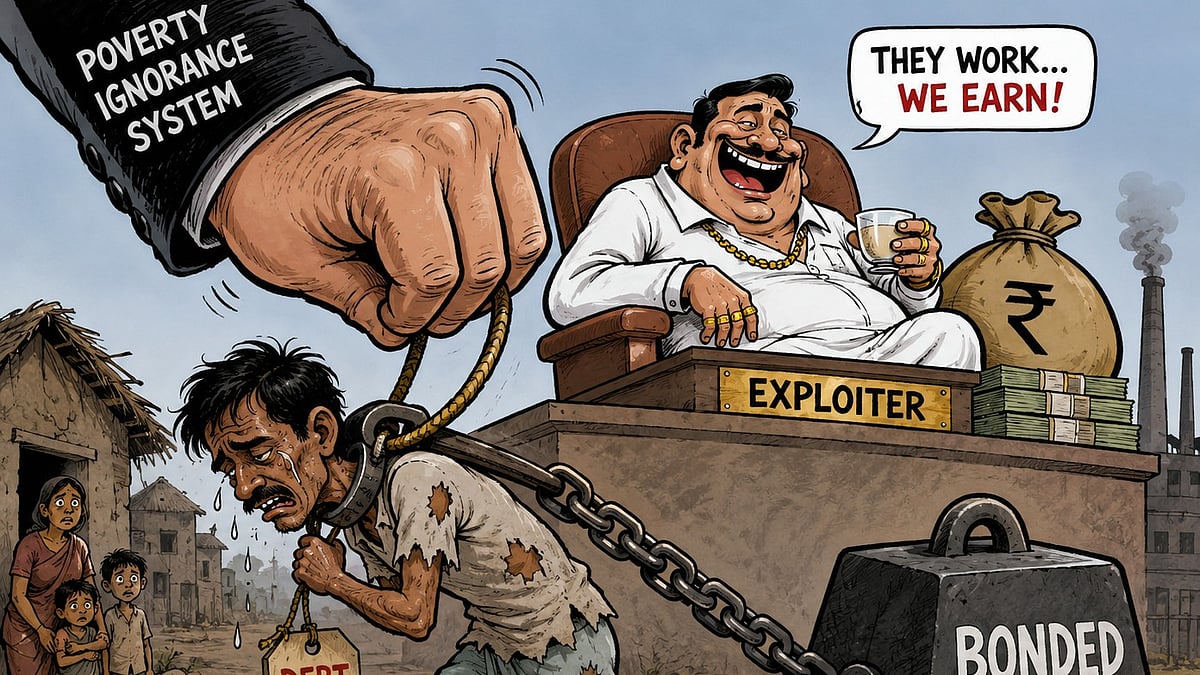
The Police Headquarters (PHQ) in Bhopal, Madhya Pradesh, has issued a new Standard Operating Procedure (SOP) to tackle the issue of bonded labour. The SOP directs police to take immediate action on receiving complaints, including registering a First Information Report (FIR) and ensuring the rescue of victims within 24 hours.
The new guidelines have been issued to the Police Commissioners of Bhopal and Indore, as well as all district and zonal railway Superintendents of Police (SPs). The SOP emphasizes the need to maintain the confidentiality of the complainant's identity and the details of the action taken to prevent any threat to the lives or safety of the victims.
Policemen are required to complete the preliminary investigation into complaints within 24 hours and submit a report to senior officials. The SOP also allows for the arrest of accused persons without a warrant, wherever applicable under the law.
A special team, comprising government officials, women officials, a photographer, witnesses, and NGO representatives, will accompany police during raids. This team will be responsible for ensuring the safe release of bonded labourers and gathering evidence, including photographs and seized items.
The district collector will be kept informed about such operations, and it will be the responsibility of the district SP to ensure that the team reaches the spot and secures the release of bonded labourers within 24 hours of receiving a complaint.
The new SOP is a significant step towards eradicating the practice of bonded labour in Madhya Pradesh. Bonded labour is a form of exploitation where workers are forced to work against their will, often in conditions of slavery.
The issue of bonded labour is a serious concern in India, with many workers being trapped in debt bondage and forced to work in various industries, including agriculture, construction, and manufacturing. The new SOP is expected to help in identifying and rescuing such workers and bringing the perpetrators to justice.
The Madhya Pradesh government has been taking steps to address the issue of bonded labour, including conducting raids and rescuing workers. The new SOP is a part of these efforts and is expected to strengthen the state's response to the issue.
In terms of significance, the new SOP is an important development in the fight against bonded labour in Madhya Pradesh. It demonstrates the state government's commitment to addressing the issue and ensuring the safety and well-being of workers.
Overall, the new SOP is a positive step towards eradicating bonded labour in Madhya Pradesh and ensuring that workers are protected from exploitation. It is expected to have a significant impact on the lives of workers in the state and to contribute to the broader efforts to address the issue of bonded labour in India.
The implementation of the new SOP will be closely monitored, and its effectiveness will be reviewed regularly. The state government is expected to take further steps to address the issue of bonded labour, including increasing awareness and providing support to rescued workers.
In conclusion, the new SOP issued by the PHQ in Bhopal is an important development in the fight against bonded labour in Madhya Pradesh. It demonstrates the state government's commitment to addressing the issue and ensuring the safety and well-being of workers. The SOP is expected to have a significant impact on the lives of workers in the state and to contribute to the broader efforts to address the issue of bonded labour in India.
Frequently asked questions
What is the new SOP issued by MP Police on bonded labour?
The new SOP directs police to take immediate action on receiving complaints, including registering a FIR and ensuring the rescue of victims within 24 hours.
What is the composition of the special team that will accompany police during raids?
The special team will comprise government officials, women officials, a photographer, witnesses, and NGO representatives.