Indian Retail Traders Lose ₹91,685 Crore In F&O Trading
Retail investors suffer huge losses, SEBI curbs have limited impact, regulators seek balance
'%3E%3Crect%20width%3D'96'%20height%3D'96'%20fill%3D'%230B6E4F'%2F%3E%3Ccircle%20cx%3D'30'%20cy%3D'24'%20r%3D'44'%20fill%3D'%23fff'%20opacity%3D'.12'%2F%3E%3Ccircle%20cx%3D'60'%20cy%3D'74'%20r%3D'40'%20fill%3D'%23000'%20opacity%3D'.10'%2F%3E%3C%2Fg%3E%3Cg%20fill%3D'none'%20stroke%3D'%23fff'%20stroke-width%3D'3.2'%20stroke-linecap%3D'round'%20stroke-linejoin%3D'round'%3E%3Cpolyline%20points%3D'31%2C59%2041%2C49%2049%2C54%2063%2C37'%2F%3E%3Cpolyline%20points%3D'55%2C37%2063%2C37%2063%2C45'%2F%3E%3C%2Fg%3E%3C%2Fsvg%3E)
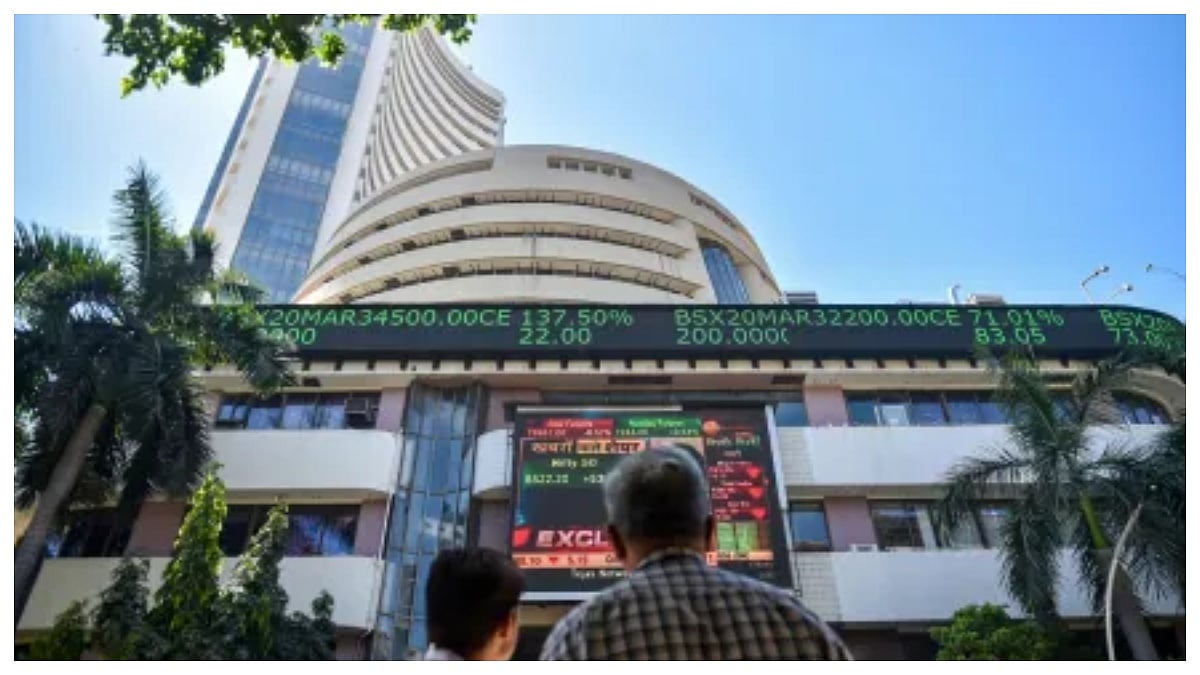
Indian retail traders have incurred significant losses of ₹91,685 crore in equity futures and options (F&O) trading in the financial year ended March. This amount is lower than the previous year's ₹1.1 trillion, but still highlights the challenges faced by regulators in curbing risky derivative trading among individuals.
The number of active traders has also declined to less than 8 million from 9.8 million, according to data shared by Minister of State for Finance Pankaj Chaudhary. The decline in participation follows a series of measures introduced by the Securities and Exchange Board of India (SEBI) to reduce excessive participation in options trading.
SEBI has raised contract sizes, tightened position limits, and introduced additional safeguards to reduce excessive participation in options trading. The Reserve Bank of India has also brought in stricter funding norms for proprietary traders and brokers. However, the continued losses among retail participants indicate that regulatory measures have had limited impact.
Market experts have called for further steps to prevent individual investors from taking excessive risks in derivatives. The regulatory changes have also affected stock exchanges, which benefited significantly from the surge in retail trading activity. Average daily notional turnover in futures and options listed on the National Stock Exchange declined 23% to ₹214 trillion in July from June, marking a 17-month low.
Despite restrictions, retail traders continue to hold a significant share of the derivatives market. Individuals accounted for nearly 31% of equity derivatives trading, compared with 26% a year earlier, according to NSE data. The measures have also influenced institutional participants, with proprietary traders seeing their share of derivatives turnover fall to 58.1% in June from more than 60% last year.
The broader impact of restrictions needs to be assessed, and regulators need to strike a balance between limiting speculative activity and ensuring that market liquidity and institutional participation are not adversely affected. SEBI's objective of protecting retail investors is justified, but the measures should not harm the overall market.
The decline in retail trading activity has significant implications for the Indian stock market. The market has seen a surge in retail participation in recent years, driven by the ease of trading and the promise of high returns. However, the risks associated with derivatives trading are high, and regulators need to ensure that investors are aware of these risks and take steps to mitigate them.
In conclusion, the losses incurred by Indian retail traders in F&O trading highlight the need for regulators to strike a balance between protecting investors and ensuring market liquidity. While the measures introduced by SEBI have had some impact, they have not fully addressed the issue, and further steps are needed to prevent individual investors from taking excessive risks in derivatives.
The Indian stock market is a critical component of the country's economy, and regulators need to ensure that it operates in a fair and transparent manner. The measures introduced by SEBI are a step in the right direction, but more needs to be done to protect retail investors and promote market stability.
The impact of the regulatory measures on the derivatives market will be closely watched in the coming months. The market is expected to continue to evolve, and regulators will need to adapt to these changes to ensure that the market remains stable and secure. The balance between protecting investors and promoting market liquidity is a delicate one, and regulators will need to tread carefully to achieve this balance.
Overall, the losses incurred by Indian retail traders in F&O trading are a reminder of the risks associated with derivatives trading. Regulators need to take steps to protect investors and promote market stability, while also ensuring that the market remains liquid and accessible to all participants.
In the context of the Indian economy, the stock market plays a critical role in facilitating investment and promoting economic growth. The regulatory measures introduced by SEBI are aimed at promoting stability and transparency in the market, and these measures are expected to have a positive impact on the economy in the long run.
However, the short-term impact of the measures may be negative, as they may reduce trading activity and liquidity in the market. The market may take some time to adjust to the new regulations, and traders may need to adapt to the changed circumstances.
In conclusion, the losses incurred by Indian retail traders in F&O trading are a significant issue that needs to be addressed by regulators. The measures introduced by SEBI are a step in the right direction, but more needs to be done to protect investors and promote market stability. The balance between protecting investors and promoting market liquidity is a delicate one, and regulators will need to tread carefully to achieve this balance.
The significance of this issue for Mumbai and India cannot be overstated. The stock market is a critical component of the country's economy, and any instability in the market can have far-reaching consequences. The regulatory measures introduced by SEBI are aimed at promoting stability and transparency in the market, and these measures are expected to have a positive impact on the economy in the long run.
In the end, the key to promoting stability and transparency in the market is to strike a balance between protecting investors and promoting market liquidity. Regulators need to take steps to protect investors and promote market stability, while also ensuring that the market remains liquid and accessible to all participants. This balance is critical to the long-term health and stability of the market, and regulators will need to tread carefully to achieve this balance.
The impact of the regulatory measures on the derivatives market will be closely watched in the coming months. The market is expected to continue to evolve, and regulators will need to adapt to these changes to ensure that the market remains stable and secure. The balance between protecting investors and promoting market liquidity is a delicate one, and regulators will need to tread carefully to achieve this balance.
Overall, the losses incurred by Indian retail traders in F&O trading are a reminder of the risks associated with derivatives trading. Regulators need to take steps to protect investors and promote market stability, while also ensuring that the market remains liquid and accessible to all participants. The significance of this issue for Mumbai and India cannot be overstated, and regulators will need to tread carefully to achieve the right balance between protecting investors and promoting market liquidity.
Frequently asked questions
What were the losses incurred by Indian retail traders in F&O trading in FY26?
The losses incurred by Indian retail traders in F&O trading in FY26 were ₹91,685 crore.
What measures has SEBI introduced to curb risky derivative trading among individuals?
SEBI has raised contract sizes, tightened position limits, and introduced additional safeguards to reduce excessive participation in options trading.