Parliamentary Panel Flags Removal Clause Issue
A parliamentary panel raises concerns over a clause, stakeholders find it problematic.
'%3E%3Crect%20width%3D'96'%20height%3D'96'%20fill%3D'%231A5276'%2F%3E%3Ccircle%20cx%3D'30'%20cy%3D'24'%20r%3D'44'%20fill%3D'%23fff'%20opacity%3D'.12'%2F%3E%3Ccircle%20cx%3D'60'%20cy%3D'74'%20r%3D'40'%20fill%3D'%23000'%20opacity%3D'.10'%2F%3E%3C%2Fg%3E%3Cg%20fill%3D'%23fff'%3E%3Cpath%20d%3D'M31%2041%20L48%2031%20L65%2041%20Z'%2F%3E%3Crect%20x%3D'33'%20y%3D'43'%20width%3D'4'%20height%3D'17'%2F%3E%3Crect%20x%3D'41'%20y%3D'43'%20width%3D'4'%20height%3D'17'%2F%3E%3Crect%20x%3D'51'%20y%3D'43'%20width%3D'4'%20height%3D'17'%2F%3E%3Crect%20x%3D'59'%20y%3D'43'%20width%3D'4'%20height%3D'17'%2F%3E%3Crect%20x%3D'30'%20y%3D'62'%20width%3D'36'%20height%3D'4'%20rx%3D'1'%2F%3E%3C%2Fg%3E%3C%2Fsvg%3E)
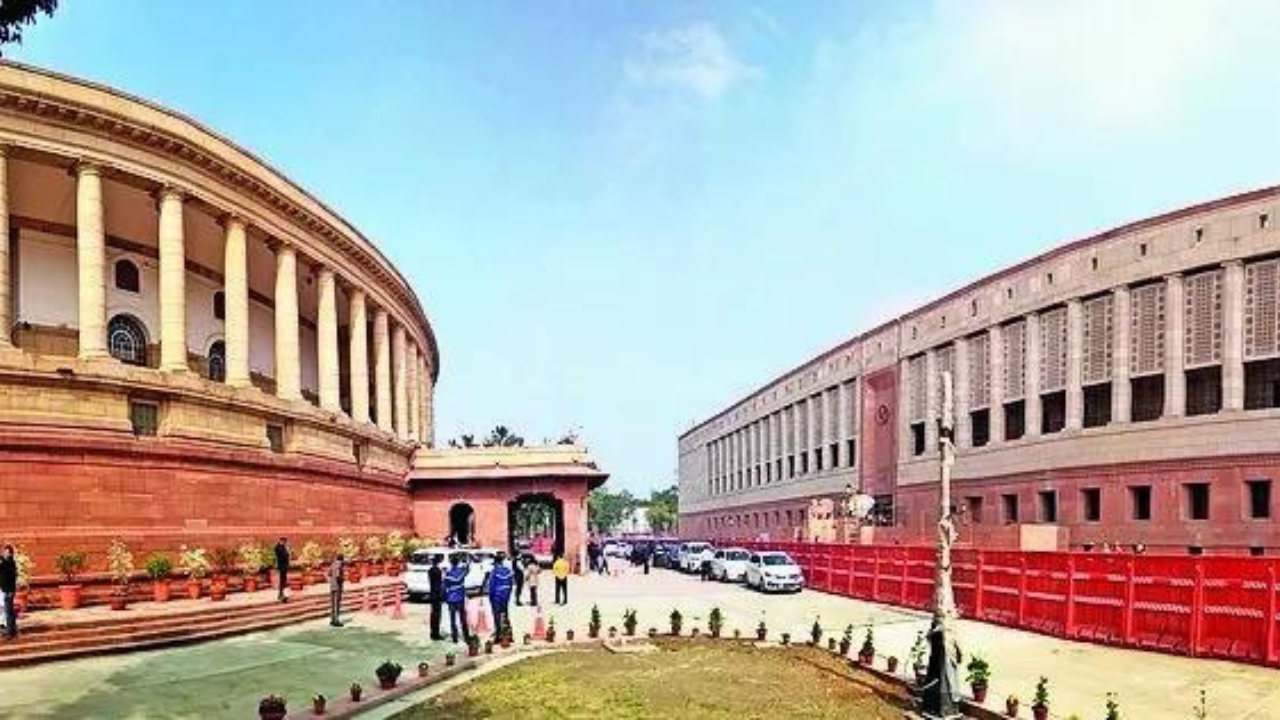
A parliamentary panel has noted concerns regarding a specific clause in the anti-corruption bill that allows for the removal of high-ranking officials, including the Prime Minister and Chief Ministers, after a period of thirty days. This clause has been deemed 'constitutionally problematic' by stakeholders.
The concerns were raised in a draft report that suggests implementing a sunset clause, which would automatically reverse the barring of officials after a certain period. Additionally, the report proposes replacing the term 'removal' with 'suspension' to avoid the stigma associated with removal.
The parliamentary panel's recommendations are expected to be tabled in the Lok Sabha soon, where they will be discussed and debated by lawmakers. The anti-corruption bill has been a topic of discussion for some time now, with various stakeholders weighing in on its provisions.
The bill aims to tackle corruption at the highest levels of government, but the removal clause has raised eyebrows among some stakeholders. They argue that such a clause could be misused and may not be in line with the principles of the Constitution.
The parliamentary panel's report is a significant development in the discussion around the anti-corruption bill. The panel's recommendations will likely be closely examined by lawmakers and other stakeholders as the bill moves forward.
The use of a sunset clause and the replacement of 'removal' with 'suspension' are seen as potential solutions to the concerns raised by stakeholders. These proposals aim to balance the need to tackle corruption with the need to protect the rights of officials.
The anti-corruption bill is part of a broader effort to tackle corruption in India. The bill's provisions have been widely debated, and the parliamentary panel's report is a significant contribution to this discussion.
In the coming days, the Lok Sabha will discuss the parliamentary panel's recommendations, and it is likely that the bill will undergo further changes before it is passed. The outcome of these discussions will be closely watched by stakeholders and the general public.
The significance of this development lies in its potential impact on the country's efforts to tackle corruption. The anti-corruption bill is seen as a key piece of legislation in this effort, and the parliamentary panel's recommendations will play a crucial role in shaping the final version of the bill.
In conclusion, the parliamentary panel's report has highlighted the need for careful consideration of the anti-corruption bill's provisions. The recommendations made by the panel will likely have a significant impact on the final version of the bill, and it is essential that lawmakers carefully weigh the pros and cons of each proposal.