Jalgaon May Become IT Hub
Jalgaon has potential to become North Maharashtra's IT hub, says Dr Deepak Shikarpur. Right policies and infrastructure can attract investments.
'%3E%3Crect%20width%3D'96'%20height%3D'96'%20fill%3D'%23B3261E'%2F%3E%3Ccircle%20cx%3D'30'%20cy%3D'24'%20r%3D'44'%20fill%3D'%23fff'%20opacity%3D'.12'%2F%3E%3Ccircle%20cx%3D'60'%20cy%3D'74'%20r%3D'40'%20fill%3D'%23000'%20opacity%3D'.10'%2F%3E%3C%2Fg%3E%3Cg%20fill%3D'%23fff'%3E%3Crect%20x%3D'29'%20y%3D'49'%20width%3D'8'%20height%3D'19'%20rx%3D'1'%2F%3E%3Crect%20x%3D'39'%20y%3D'40'%20width%3D'9'%20height%3D'28'%20rx%3D'1'%2F%3E%3Crect%20x%3D'50'%20y%3D'45'%20width%3D'8'%20height%3D'23'%20rx%3D'1'%2F%3E%3Crect%20x%3D'60'%20y%3D'53'%20width%3D'7'%20height%3D'15'%20rx%3D'1'%2F%3E%3Crect%20x%3D'41'%20y%3D'34'%20width%3D'5'%20height%3D'6'%2F%3E%3C%2Fg%3E%3C%2Fsvg%3E)
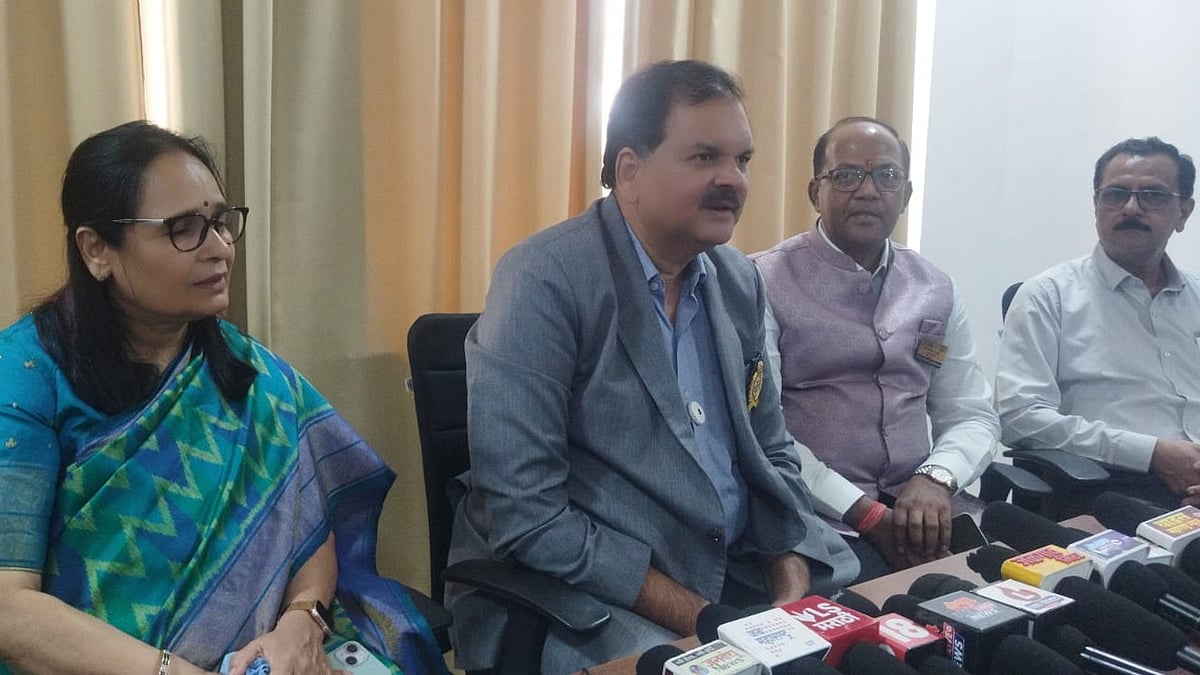
Jalgaon, a city in North Maharashtra, has the potential to emerge as a leading Information Technology (IT) hub in the next decade. According to Dr Deepak Shikarpur, an IT expert, the city can achieve this goal if the right policies, infrastructure, and industry support are put in place.
Dr Shikarpur made this statement during a press conference, where he was joined by Dr Preeti Agrawal, Director of Raisoni Engineering College. He noted that while Maharashtra's IT sector has traditionally been concentrated in Mumbai and Pune, the rapid growth of Artificial Intelligence (AI), cloud computing, and Global Capability Centres (GCCs) has created new opportunities for Tier-II cities like Jalgaon.
Jalgaon has several strengths that make it an attractive destination for IT investments. The city has a large pool of talented students, well-established engineering colleges, affordable land, lower operating costs, and a business-friendly environment. Many multinational companies are now expanding beyond major metropolitan cities, allowing Jalgaon to attract technology and service-based investments.
Dr Shikarpur suggested that the city focus on attracting Global Capability Centres and AI data centres, which could generate thousands of employment opportunities for local youth. He also emphasized the importance of strengthening power supply, water management, solar energy facilities, and high-speed internet connectivity to attract investments in this sector.
To prepare the local workforce for global opportunities, Dr Shikarpur recommended that educational institutions in Jalgaon introduce Japanese and Korean language training, along with courses on the industrial culture and business practices of these countries. This would improve the employability of local students in international companies, particularly since several companies from Japan and South Korea are planning fresh investments in India.
Dr Shikarpur also stressed the importance of building Jalgaon's own identity instead of following the development model of other cities. He called for stronger collaboration between industries, educational institutions, government agencies, and the local community to establish innovation hubs, research laboratories, and advanced skill development centres.
Furthermore, Dr Shikarpur suggested that Jalgaon explore sister-city partnerships with Tsukuba in Japan and Gumi in South Korea. These collaborations could encourage student and entrepreneur exchange programmes, technology partnerships, and joint initiatives in AI, electronics, and language training.
Overall, Dr Shikarpur's vision for Jalgaon's future is ambitious and exciting. With the right support and infrastructure, the city can become a thriving IT hub and provide opportunities for local youth to work with global companies.
The development of Jalgaon as an IT hub would have significant implications for the city and the region. It would create new job opportunities, attract investments, and contribute to the growth of the local economy. Additionally, it would help to establish Jalgaon as a major player in the IT sector, both in Maharashtra and in India as a whole.