Assam Tackles Human-Elephant Conflict
Assam launches consultation to curb human-elephant conflict and monkey menace.
'%3E%3Crect%20width%3D'96'%20height%3D'96'%20fill%3D'%231B5E20'%2F%3E%3Ccircle%20cx%3D'30'%20cy%3D'24'%20r%3D'44'%20fill%3D'%23fff'%20opacity%3D'.12'%2F%3E%3Ccircle%20cx%3D'60'%20cy%3D'74'%20r%3D'40'%20fill%3D'%23000'%20opacity%3D'.10'%2F%3E%3C%2Fg%3E%3Cg%3E%3Ccircle%20cx%3D'48'%20cy%3D'48'%20r%3D'15'%20fill%3D'%23fff'%2F%3E%3Cpath%20d%3D'M43%2034%20Q50%2048%2043%2062'%20fill%3D'none'%20stroke%3D'%238a94a6'%20stroke-width%3D'2.4'%2F%3E%3Cpath%20d%3D'M47%2033%20Q54%2048%2047%2063'%20fill%3D'none'%20stroke%3D'%238a94a6'%20stroke-width%3D'1.8'%20stroke-dasharray%3D'1.5%203'%2F%3E%3C%2Fg%3E%3C%2Fsvg%3E)
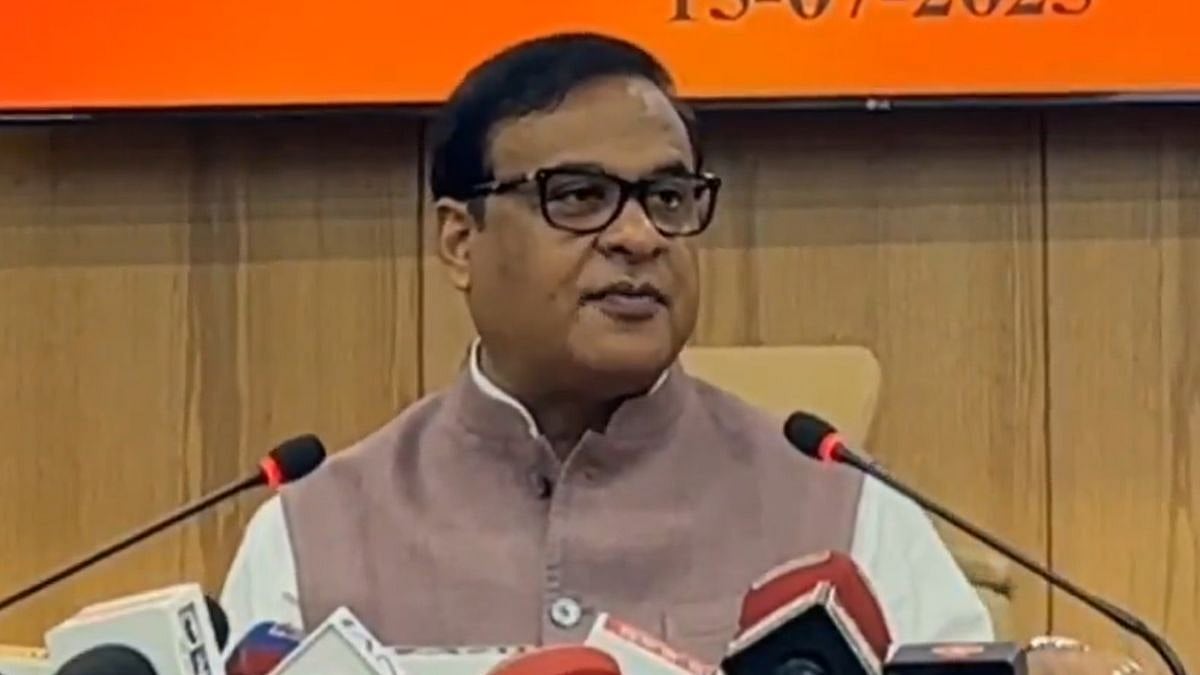
The Assam government has initiated a statewide consultative exercise to develop a scientific strategy for addressing human-wildlife conflict, with a focus on human-elephant conflict and the growing monkey menace.
The consultation process began with a meeting between Environment, Forest and Climate Change Minister Jayanta Mallabaruah, MLAs, senior Forest Department officials, and other stakeholders at the Assam Legislative Assembly campus in Dispur. The discussions centered on region-specific measures, improved coordination among stakeholders, and the preparation of a comprehensive Standard Operating Procedure (SOP) for human-wildlife conflict management.
According to Minister Mallabaruah, nearly 150 people die every year in Assam due to encounters with elephants, resulting in significant crop losses and damage to livelihoods. To address this issue, the government is exploring immediate interventions, such as afforestation on a large scale, and long-term habitat management. The minister emphasized the need for area-specific planning based on scientific evidence.
As part of the new approach, Assam has been divided into elephant management zones based on elephant populations and movement patterns. Separate consultations will be held in each zone with local MLAs, experts, and Forest Department officials to determine the most suitable interventions, including solar fencing, bio-fencing, and habitat improvement measures.
The government is also examining the possibility of aerial seeding in difficult terrain where conventional plantation is not feasible. Large-scale afforestation will be carried out with support from Forest Battalions, the Armed Forces, and other organizations. Stakeholders have been asked to submit written suggestions by July 20 or 21, and the Forest Department aims to prepare the SOP by July 22.
The issue of monkey menace, which has affected agriculture and horticulture in several districts, was also discussed. The minister stated that the government is examining multiple options, including increased plantation of fruit-bearing trees and the feasibility of scientifically conducted sterilization.
The human-elephant conflict is a significant concern in Assam, with elephants often venturing into agricultural fields and human settlements in search of food. The government's efforts to address this issue through afforestation and habitat management are crucial to reducing the conflict and protecting both human and elephant lives.
The consultation process is a positive step towards developing a comprehensive strategy for human-wildlife conflict management in Assam. By engaging with local stakeholders and experts, the government can ensure that the solutions developed are effective and sustainable.
The Assam government's initiative to tackle human-elephant conflict and monkey menace is a significant development in the state's conservation efforts. The success of this initiative will depend on the effective implementation of the SOP and the cooperation of local communities.
In conclusion, the Assam government's consultative exercise is a crucial step towards addressing the human-wildlife conflict in the state. The development of a comprehensive SOP and the implementation of area-specific measures will help reduce the conflict and protect both human and animal lives.
The initiative is also significant for the country as a whole, as it highlights the need for sustainable conservation efforts and the importance of engaging with local communities in addressing human-wildlife conflict. The success of this initiative can serve as a model for other states to follow, and it is a positive step towards protecting India's rich biodiversity.