India Lifts Export Restrictions On Wheat Products
Export curbs on wheat flour, maida, and semolina removed. Restrictions were imposed in 2022.
'%3E%3Crect%20width%3D'96'%20height%3D'96'%20fill%3D'%230B6E4F'%2F%3E%3Ccircle%20cx%3D'30'%20cy%3D'24'%20r%3D'44'%20fill%3D'%23fff'%20opacity%3D'.12'%2F%3E%3Ccircle%20cx%3D'60'%20cy%3D'74'%20r%3D'40'%20fill%3D'%23000'%20opacity%3D'.10'%2F%3E%3C%2Fg%3E%3Cg%20fill%3D'none'%20stroke%3D'%23fff'%20stroke-width%3D'3.2'%20stroke-linecap%3D'round'%20stroke-linejoin%3D'round'%3E%3Cpolyline%20points%3D'31%2C59%2041%2C49%2049%2C54%2063%2C37'%2F%3E%3Cpolyline%20points%3D'55%2C37%2063%2C37%2063%2C45'%2F%3E%3C%2Fg%3E%3C%2Fsvg%3E)
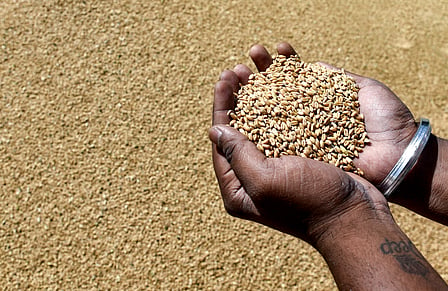
The Indian government has lifted export restrictions on wheat flour, maida, and semolina, according to a notification issued by the Directorate General of Foreign Trade (DGFT) on Monday. The export policy for these wheat products has been shifted from the prohibited to the free category, allowing for unrestricted exports.
The decision to impose curbs on wheat and wheat product exports was made in 2022 to ensure domestic food security and contain rising prices. The restrictions were put in place amid disruptions in global wheat supplies following the Russia-Ukraine conflict, which led to increased overseas demand for Indian wheat and higher domestic prices.
Despite the ban, certain exceptions were permitted for specific wheat products. In February this year, the government allowed the export of 25 lakh metric tonnes (LMT) of wheat and an additional 5 LMT of wheat products, citing improved stock availability.
India's total foodgrain production has increased by 5.3 per cent to an all-time high of 376.563 million tonnes in 2025-26, compared to the previous year. Wheat production was estimated at 120.657 million tonnes, which is 2.712 million tonnes higher than last year's production.
The government's decision to lift export restrictions on wheat products is expected to boost exports and increase revenue for farmers and exporters. The move is also likely to have a positive impact on the domestic market, as it will allow for the export of surplus wheat products and help to stabilize prices.
The lifting of export restrictions on wheat products is a significant development for India's agricultural sector, which is a major contributor to the country's economy. The decision is expected to have far-reaching implications for farmers, exporters, and consumers, and will likely be closely watched by stakeholders in the industry.
In recent years, India has emerged as a major player in the global wheat market, with the country's wheat exports increasing significantly. The lifting of export restrictions on wheat products is expected to further boost India's exports and increase its share in the global market.
The government's decision to lift export restrictions on wheat products is also expected to have a positive impact on the country's economy, as it will allow for the export of surplus wheat products and help to earn foreign exchange. The move is likely to be welcomed by farmers, exporters, and other stakeholders in the industry, who have been advocating for the lifting of export restrictions on wheat products.
In conclusion, the lifting of export restrictions on wheat products is a significant development for India's agricultural sector and is expected to have far-reaching implications for farmers, exporters, and consumers. The decision is likely to boost exports, increase revenue, and have a positive impact on the domestic market, and will likely be closely watched by stakeholders in the industry.
The Indian government's decision to lift export restrictions on wheat products is a major step forward for the country's agricultural sector, and is expected to have a significant impact on the industry in the coming months and years. As the country continues to emerge as a major player in the global wheat market, the lifting of export restrictions on wheat products is likely to be seen as a major success for the government's efforts to boost exports and increase revenue for farmers and exporters.
The lifting of export restrictions on wheat products is also expected to have a positive impact on the country's food security, as it will allow for the export of surplus wheat products and help to stabilize prices. The decision is likely to be welcomed by consumers, who have been affected by rising prices in recent years.
Overall, the lifting of export restrictions on wheat products is a significant development for India's agricultural sector, and is expected to have far-reaching implications for farmers, exporters, and consumers. The decision is likely to boost exports, increase revenue, and have a positive impact on the domestic market, and will likely be closely watched by stakeholders in the industry.
Frequently asked questions
Why were export restrictions imposed on wheat products in 2022?
Export restrictions were imposed in 2022 to ensure domestic food security and contain rising prices amid disruptions in global wheat supplies.
What is the current production of wheat in India?
Wheat production was estimated at 120.657 million tonnes in 2025-26, which is 2.712 million tonnes higher than last year's production.