India, Chile Target 2026 CEPA Completion
India and Chile aim to conclude CEPA talks by 2026, focusing on critical minerals and market access.
'%3E%3Crect%20width%3D'96'%20height%3D'96'%20fill%3D'%234A235A'%2F%3E%3Ccircle%20cx%3D'30'%20cy%3D'24'%20r%3D'44'%20fill%3D'%23fff'%20opacity%3D'.12'%2F%3E%3Ccircle%20cx%3D'60'%20cy%3D'74'%20r%3D'40'%20fill%3D'%23000'%20opacity%3D'.10'%2F%3E%3C%2Fg%3E%3Cg%20fill%3D'none'%20stroke%3D'%23fff'%20stroke-width%3D'3'%3E%3Ccircle%20cx%3D'48'%20cy%3D'48'%20r%3D'16'%2F%3E%3Cellipse%20cx%3D'48'%20cy%3D'48'%20rx%3D'6.5'%20ry%3D'16'%2F%3E%3Cline%20x1%3D'32'%20y1%3D'42'%20x2%3D'64'%20y2%3D'42'%2F%3E%3Cline%20x1%3D'32'%20y1%3D'54'%20x2%3D'64'%20y2%3D'54'%2F%3E%3C%2Fg%3E%3C%2Fsvg%3E)
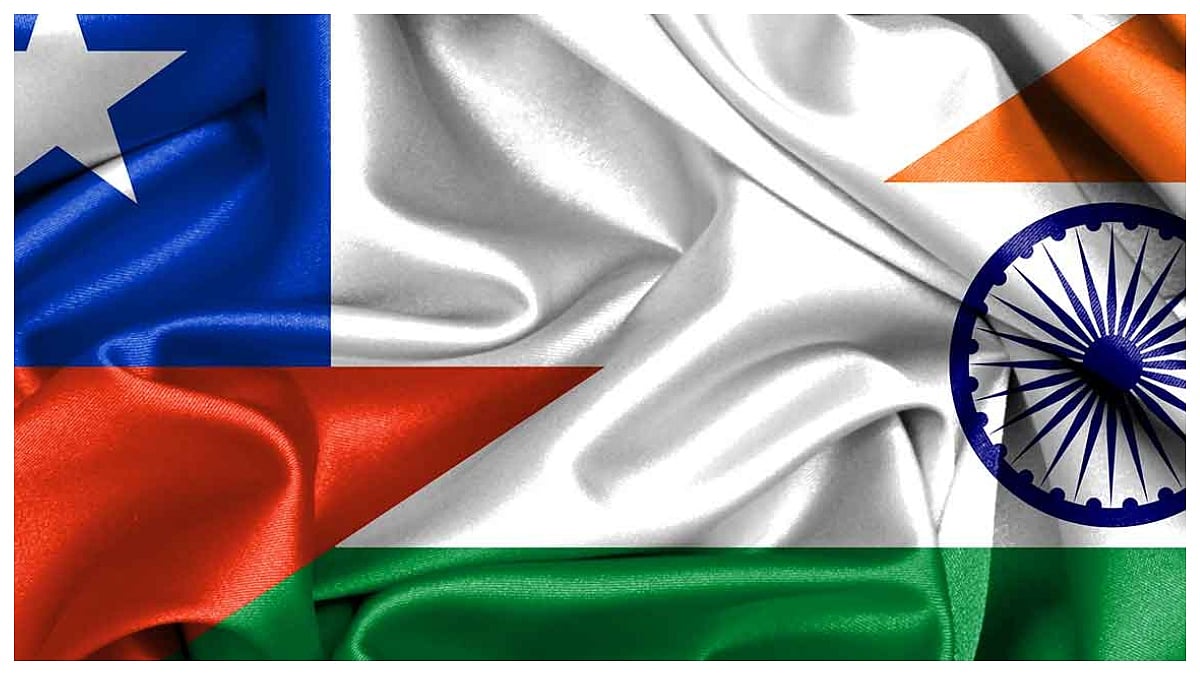
India and Chile have renewed their efforts to conclude negotiations for a Comprehensive Economic Partnership Agreement (CEPA) by the end of 2026. The commitment was made during a meeting in Santiago between Commerce Secretary Rajesh Agrawal and Chile’s Vice-Minister of International Economic Relations, Pauls Estevaz Weinstein.
The two sides reviewed the progress of negotiations and discussed the remaining issues that need to be resolved. A major focus of the talks is establishing reliable supply chains for critical minerals, particularly lithium and copper. Chile is a major global copper producer and forms part of South America’s Lithium Triangle, making it an important potential supplier for India’s electric-vehicle battery and clean-energy industries.
The proposed CEPA includes a dedicated chapter on critical and strategic minerals. India wants safeguards against unexpected supply disruptions and export restrictions, while Chile is seeking to encourage greater domestic processing of its mineral resources. The two nations have conducted four formal rounds of negotiations so far.
Talks were temporarily paused after Chile’s elections, but the new government has completed a review and indicated its willingness to restart discussions. India and Chile currently trade under a Preferential Trade Agreement (PTA), originally signed in 2006. The pact was expanded in 2016, increasing the number of tariff lines covered from 474 to 2,829.
In April 2025, both countries finalised the terms for upgrading the arrangement into a CEPA. Chile has emerged as India’s fifth-largest trading partner in the Latin America and Caribbean region. Bilateral trade increased from $3.84 billion in 2024 to $5.38 billion in 2025.
Agrawal’s Latin America visit also includes Argentina and Brazil, where discussions are expected to cover broader trade cooperation and expansion of the India-Mercosur PTA. The pact, operational since 2009, currently covers only 450 tariff lines.
The completion of the CEPA talks is significant for India as it seeks to diversify its trade relationships and secure access to critical minerals. The agreement is expected to boost bilateral trade and investment between India and Chile, and provide a framework for cooperation in areas such as clean energy and electric vehicles.
The success of the CEPA talks will depend on the ability of both sides to address the remaining issues and reach a mutually beneficial agreement. If successful, the CEPA will be an important step forward in India’s efforts to strengthen its trade relationships with Latin American countries and secure its position as a major player in the global economy.
In conclusion, the India-Chile CEPA talks are a significant development in the trade relationship between the two countries. The focus on critical minerals and market access reflects the growing importance of these issues in the global economy. The successful completion of the talks will have important implications for India’s trade and investment relationships with Latin American countries, and will help to secure its position as a major player in the global economy.
Frequently asked questions
What is the current status of India-Chile trade relations?
India and Chile currently trade under a Preferential Trade Agreement (PTA), which was expanded in 2016 to cover 2,829 tariff lines.
What are the key areas of discussion in the India-Chile CEPA talks?
The key areas of discussion are critical minerals, particularly lithium and copper, and market access.