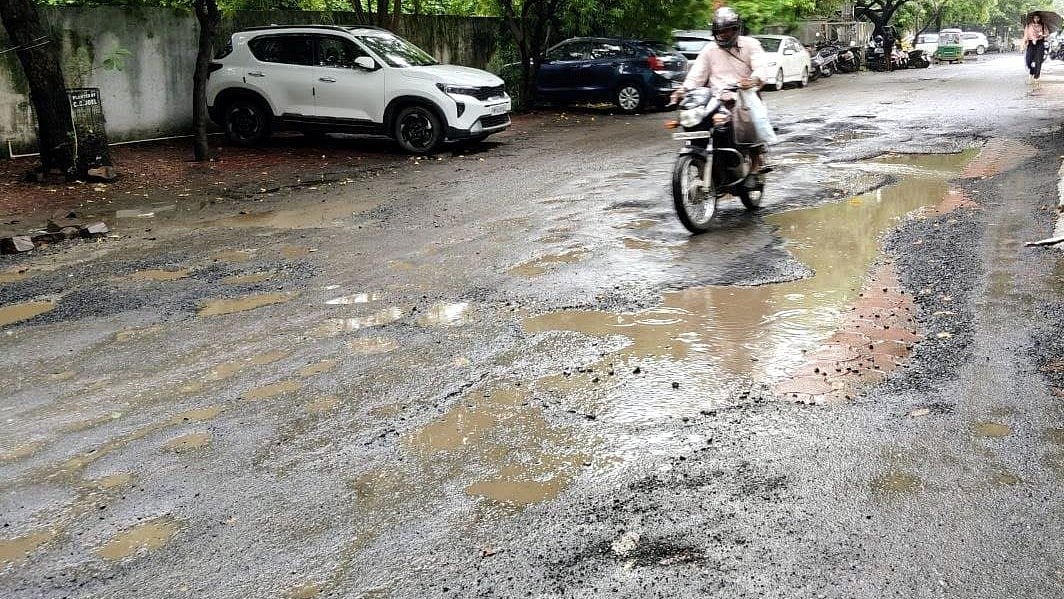
India Faces Climate Risk, 13% Rainfall Deficit
El Niño takes toll, monsoon rains below normal, Kharif crop harvest at risk
'%3E%3Crect%20width%3D'96'%20height%3D'96'%20fill%3D'%23B3261E'%2F%3E%3Ccircle%20cx%3D'30'%20cy%3D'24'%20r%3D'44'%20fill%3D'%23fff'%20opacity%3D'.12'%2F%3E%3Ccircle%20cx%3D'60'%20cy%3D'74'%20r%3D'40'%20fill%3D'%23000'%20opacity%3D'.10'%2F%3E%3C%2Fg%3E%3Cg%20fill%3D'%23fff'%3E%3Crect%20x%3D'29'%20y%3D'49'%20width%3D'8'%20height%3D'19'%20rx%3D'1'%2F%3E%3Crect%20x%3D'39'%20y%3D'40'%20width%3D'9'%20height%3D'28'%20rx%3D'1'%2F%3E%3Crect%20x%3D'50'%20y%3D'45'%20width%3D'8'%20height%3D'23'%20rx%3D'1'%2F%3E%3Crect%20x%3D'60'%20y%3D'53'%20width%3D'7'%20height%3D'15'%20rx%3D'1'%2F%3E%3Crect%20x%3D'41'%20y%3D'34'%20width%3D'5'%20height%3D'6'%2F%3E%3C%2Fg%3E%3C%2Fsvg%3E)
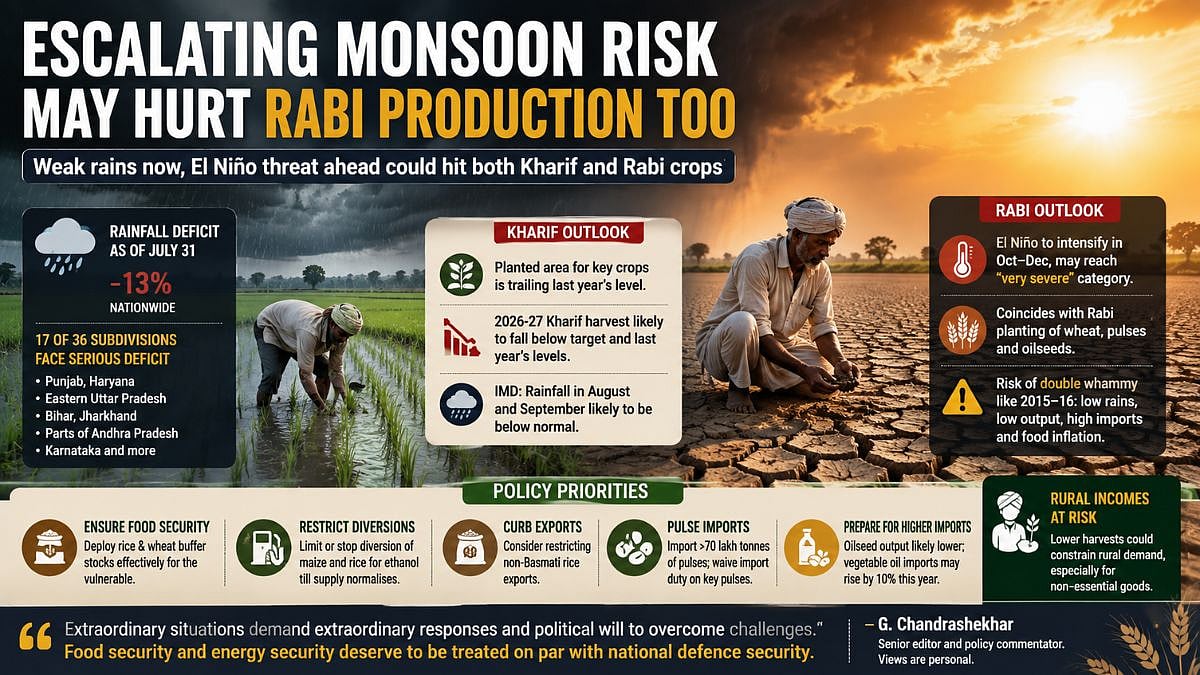
India's agricultural sector is facing a significant climate risk in 2026-27 due to the ongoing El Niño phenomenon. As of July 31, the country is experiencing a 13% rainfall deficiency, with 17 out of 36 meteorological subdivisions facing a serious deficit in precipitation.
The affected regions include Punjab, Haryana, eastern Uttar Pradesh, Bihar, Jharkhand, and parts of Andhra Pradesh and Karnataka. Despite copious rains in July, the spatial distribution of rainfall has been less than satisfactory.
The India Meteorological Department (IMD) has predicted that rainfall in August and September will be below normal, which is likely to hurt Kharif crop conditions and harvest prospects. As of July 24, the planted area for key crops such as paddy, pulses, coarse cereals, oilseeds, and cotton is trailing last year's level.
The Kharif crop harvest size is likely to fall below the season's target and last year's levels. Furthermore, the IMD's latest prediction suggests that El Niño conditions are likely to intensify during the October-December quarter, which coincides with Rabi crop planting.
Major Rabi crops include wheat, pulses, and oilseeds, which require soil moisture and winter rains for healthy growth. The situation may worsen if the Persian Gulf crisis continues to disrupt energy supply chains and crude oil prices remain high.
Fertiliser shortages and elevated prices may further skew farm conditions. The government's primary priorities should be food security and inflation control. To address this, sugar exports have been suspended till September, and stock limits have been imposed.
It is essential to ensure that buffer stocks of rice and wheat are deployed to ensure adequate availability of fine cereals. The government needs to take proactive measures to mitigate the impact of the climate risk on the agricultural sector and ensure food security for the country.
The potential consequences of a poor harvest, including food inflation and higher imports, are a concern. The situation is reminiscent of the 2015-16 season, when the country faced two successive seasons of less-than-normal rainfall, leading to a sharp decline in crop production and food inflation.
The government must take a proactive approach to address the climate risk and ensure that the agricultural sector is equipped to handle the challenges ahead. This includes implementing policies to support farmers, managing water resources effectively, and ensuring that the country has adequate buffer stocks of essential crops.
In conclusion, the climate risk facing India's agricultural sector is a significant concern, and the government must take immediate action to address it. The potential consequences of inaction could be severe, and it is essential to prioritize food security and inflation control to ensure the well-being of the country's population.
Frequently asked questions
What is the current rainfall deficiency in India?
The current rainfall deficiency in India is 13% as of July 31.
How will El Niño affect Rabi crops?
El Niño conditions are likely to intensify during the October-December quarter, which coincides with Rabi crop planting, and may hurt crop growth.