India's Automakers Miss ELV Scrappage Targets
India's automakers failed to meet ELV scrappage targets. What's next?
'%3E%3Crect%20width%3D'96'%20height%3D'96'%20fill%3D'%23B3261E'%2F%3E%3Ccircle%20cx%3D'30'%20cy%3D'24'%20r%3D'44'%20fill%3D'%23fff'%20opacity%3D'.12'%2F%3E%3Ccircle%20cx%3D'60'%20cy%3D'74'%20r%3D'40'%20fill%3D'%23000'%20opacity%3D'.10'%2F%3E%3C%2Fg%3E%3Cg%20fill%3D'%23fff'%3E%3Crect%20x%3D'29'%20y%3D'49'%20width%3D'8'%20height%3D'19'%20rx%3D'1'%2F%3E%3Crect%20x%3D'39'%20y%3D'40'%20width%3D'9'%20height%3D'28'%20rx%3D'1'%2F%3E%3Crect%20x%3D'50'%20y%3D'45'%20width%3D'8'%20height%3D'23'%20rx%3D'1'%2F%3E%3Crect%20x%3D'60'%20y%3D'53'%20width%3D'7'%20height%3D'15'%20rx%3D'1'%2F%3E%3Crect%20x%3D'41'%20y%3D'34'%20width%3D'5'%20height%3D'6'%2F%3E%3C%2Fg%3E%3C%2Fsvg%3E)
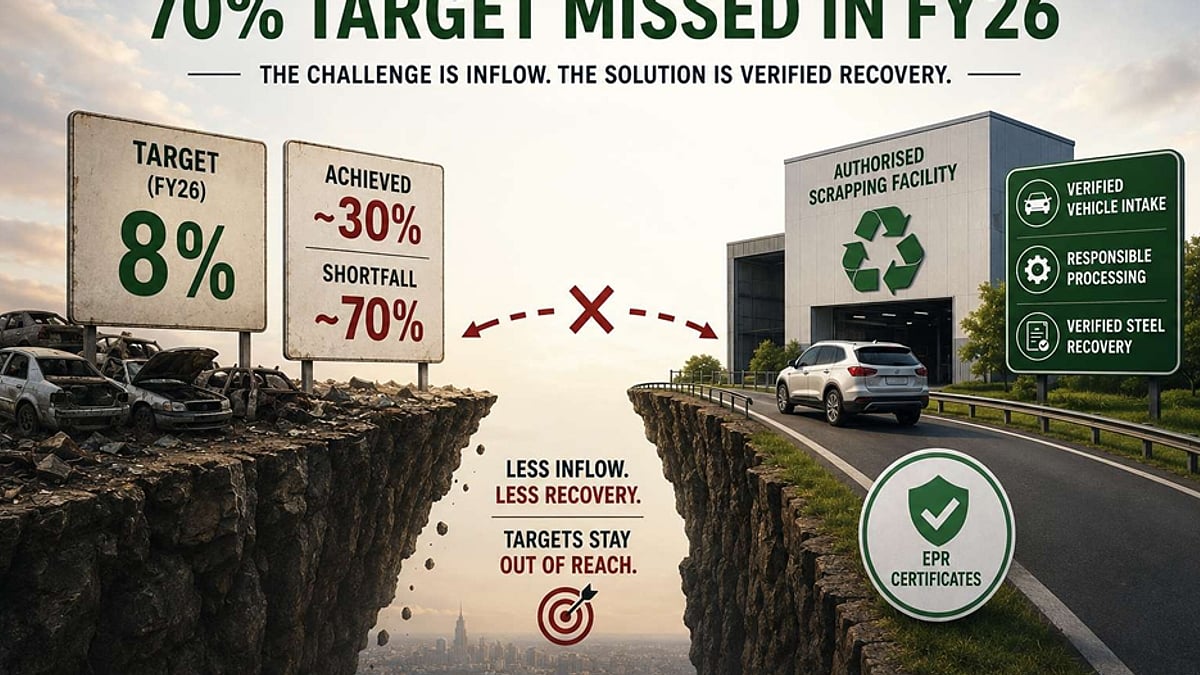
India's automakers have missed their targets for scrapping end-of-life vehicles (ELV), sparking concerns about the country's ability to manage its growing fleet of old and polluting vehicles. The ELV scrappage policy was introduced to encourage the responsible disposal of old vehicles and promote the adoption of newer, more environmentally friendly models.
The policy set ambitious targets for the scrappage of old vehicles, but it appears that these targets have not been met. The exact figures are not available, but industry insiders suggest that the shortfall is significant. This has raised questions about the effectiveness of the policy and the ability of the government and industry to work together to address the issue.
The ELV scrappage policy is part of a broader effort to reduce pollution and improve air quality in India's cities. The country's vehicle fleet is growing rapidly, and older vehicles are a major contributor to pollution. By encouraging the scrappage of old vehicles, the government hopes to reduce emissions and improve public health.
The policy has been supported by the automotive industry, which sees it as an opportunity to promote the sale of new vehicles. However, the industry has also faced challenges in implementing the policy, including a lack of infrastructure and a shortage of facilities for scrapping old vehicles.
The failure to meet the ELV scrappage targets is a setback for the government and the industry. It highlights the need for a more effective approach to managing the country's vehicle fleet and reducing pollution. The government and industry will need to work together to address the challenges and find new ways to promote the scrappage of old vehicles.
In the context of India's growing vehicle fleet and increasing pollution, the ELV scrappage policy is an important initiative. The country's cities are struggling to manage the impact of pollution, and the government is under pressure to find solutions. The ELV scrappage policy is one part of a broader effort to address the issue, and its success is critical to improving air quality and public health.
The next steps for the government and industry will be crucial in determining the success of the ELV scrappage policy. They will need to work together to identify the challenges and find solutions. This may involve investing in new infrastructure, providing incentives for vehicle owners to scrap their old vehicles, and promoting the adoption of newer, more environmentally friendly models.
In conclusion, the failure of India's automakers to meet their ELV scrappage targets is a concern. It highlights the need for a more effective approach to managing the country's vehicle fleet and reducing pollution. The government and industry will need to work together to address the challenges and find new ways to promote the scrappage of old vehicles. The success of the ELV scrappage policy is critical to improving air quality and public health in India's cities.
The ELV scrappage crisis has significant implications for Mumbai, where air pollution is a major concern. The city's vehicle fleet is growing rapidly, and older vehicles are a major contributor to pollution. The success of the ELV scrappage policy will be critical to improving air quality and public health in Mumbai.
Overall, the ELV scrappage crisis is a complex issue that requires a coordinated response from the government and industry. It is a critical issue for India's cities, including Mumbai, and its success will have significant implications for public health and the environment.