Mumbai's Juhu Beach Overwhelmed By Plastic Waste And Sewage
High tide brings massive amounts of trash to Juhu Beach, raising concerns about marine pollution and waste management.
'%3E%3Crect%20width%3D'96'%20height%3D'96'%20fill%3D'%23B3261E'%2F%3E%3Ccircle%20cx%3D'30'%20cy%3D'24'%20r%3D'44'%20fill%3D'%23fff'%20opacity%3D'.12'%2F%3E%3Ccircle%20cx%3D'60'%20cy%3D'74'%20r%3D'40'%20fill%3D'%23000'%20opacity%3D'.10'%2F%3E%3C%2Fg%3E%3Cg%20fill%3D'%23fff'%3E%3Crect%20x%3D'29'%20y%3D'49'%20width%3D'8'%20height%3D'19'%20rx%3D'1'%2F%3E%3Crect%20x%3D'39'%20y%3D'40'%20width%3D'9'%20height%3D'28'%20rx%3D'1'%2F%3E%3Crect%20x%3D'50'%20y%3D'45'%20width%3D'8'%20height%3D'23'%20rx%3D'1'%2F%3E%3Crect%20x%3D'60'%20y%3D'53'%20width%3D'7'%20height%3D'15'%20rx%3D'1'%2F%3E%3Crect%20x%3D'41'%20y%3D'34'%20width%3D'5'%20height%3D'6'%2F%3E%3C%2Fg%3E%3C%2Fsvg%3E)
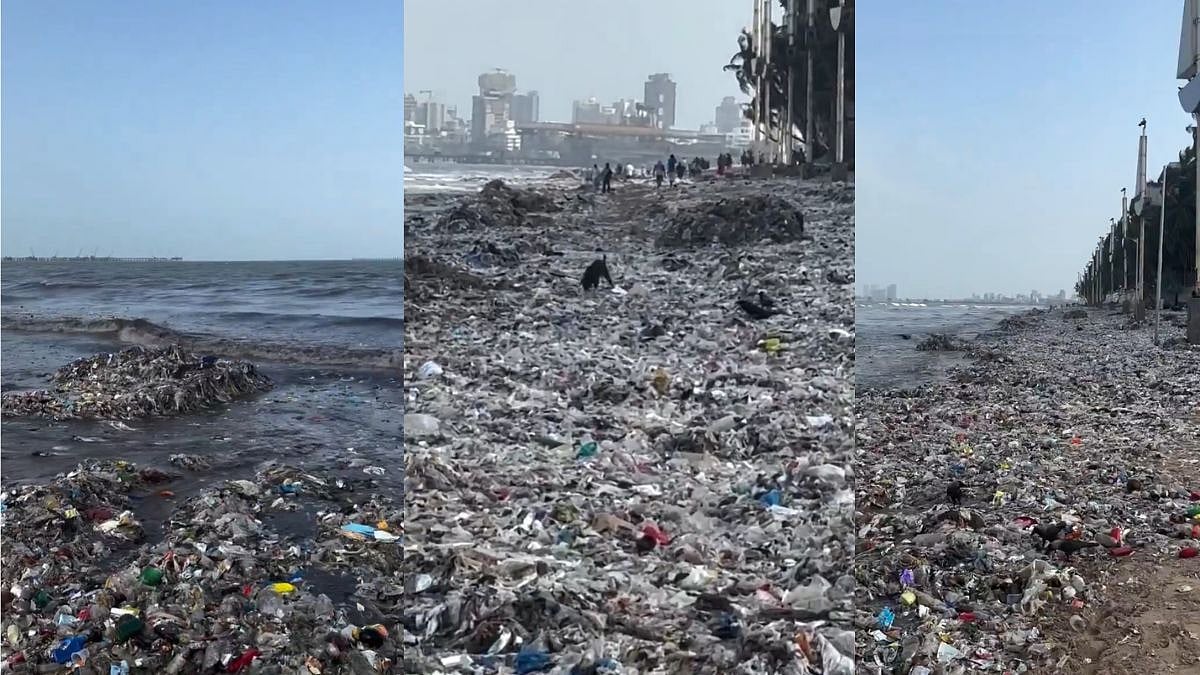
Mumbai's iconic Juhu Beach was left buried under a massive blanket of plastic waste and sewage after a recent high tide. The beach, one of the city's most popular tourist destinations, was filled with large quantities of plastic bottles, food wrappers, thermocol, and other household waste.
The sight of garbage strewn across the shoreline has raised concerns among environmentalists and residents, who say the recurring issue reflects the urgent need for better waste management and coastal conservation. The beach was closed by the police, and lifeguards patrolled the area to prevent visitors from entering.
According to experts, much of the waste originates from drains, rivers, and nullahs that carry garbage into the sea, especially during the monsoon. Strong waves and tidal movements then push the accumulated debris back onto the coastline, effectively returning the city's own waste to its beaches.
The repeated accumulation of plastic and sewage not only affects the aesthetic appeal of the beach but also poses a serious threat to the city's coastal ecosystem. Juhu Beach plays an important role in the city's ecosystem, and the pollution has significant implications for the environment and public health.
The Maharashtra government has been urged to take necessary steps to address the issue, including imposing a blanket ban on plastic use in the vicinity of Juhu Beach. Residents and environmentalists have also called for better waste management and coastal conservation efforts to prevent the recurrence of such incidents.
The problem of marine pollution is not unique to Juhu Beach, but it is a stark reminder of the city's growing waste management crisis. Mumbai, being one of the most populated cities in the world, generates a massive amount of waste, and the lack of effective waste management systems has led to the pollution of its beaches and waterways.
The city's coastline and beaches are not only important tourist destinations but also play a crucial role in the city's ecosystem. The pollution of these areas has significant implications for the environment, public health, and the city's economy.
In recent years, there have been efforts to clean up Mumbai's beaches and improve waste management, but more needs to be done to address the root cause of the problem. The city needs a comprehensive waste management plan that includes measures to reduce plastic use, improve waste collection and disposal, and prevent pollution of its waterways.
The incident at Juhu Beach is a wake-up call for the city's authorities to take immediate action to address the issue of marine pollution and waste management. It is essential to protect the city's coastline and beaches, not only for the sake of the environment but also for the city's reputation and economy.
In conclusion, the pollution of Juhu Beach is a serious issue that requires immediate attention from the city's authorities. It is essential to take a comprehensive approach to address the problem, including improving waste management, reducing plastic use, and preventing pollution of the city's waterways. Only then can we hope to restore the beauty and charm of Mumbai's iconic beaches and protect the city's coastal ecosystem.