US Govt Tightens Visa Rules
US visa and green card rules change, public assistance a factor.
'%3E%3Crect%20width%3D'96'%20height%3D'96'%20fill%3D'%234A235A'%2F%3E%3Ccircle%20cx%3D'30'%20cy%3D'24'%20r%3D'44'%20fill%3D'%23fff'%20opacity%3D'.12'%2F%3E%3Ccircle%20cx%3D'60'%20cy%3D'74'%20r%3D'40'%20fill%3D'%23000'%20opacity%3D'.10'%2F%3E%3C%2Fg%3E%3Cg%20fill%3D'none'%20stroke%3D'%23fff'%20stroke-width%3D'3'%3E%3Ccircle%20cx%3D'48'%20cy%3D'48'%20r%3D'16'%2F%3E%3Cellipse%20cx%3D'48'%20cy%3D'48'%20rx%3D'6.5'%20ry%3D'16'%2F%3E%3Cline%20x1%3D'32'%20y1%3D'42'%20x2%3D'64'%20y2%3D'42'%2F%3E%3Cline%20x1%3D'32'%20y1%3D'54'%20x2%3D'64'%20y2%3D'54'%2F%3E%3C%2Fg%3E%3C%2Fsvg%3E)
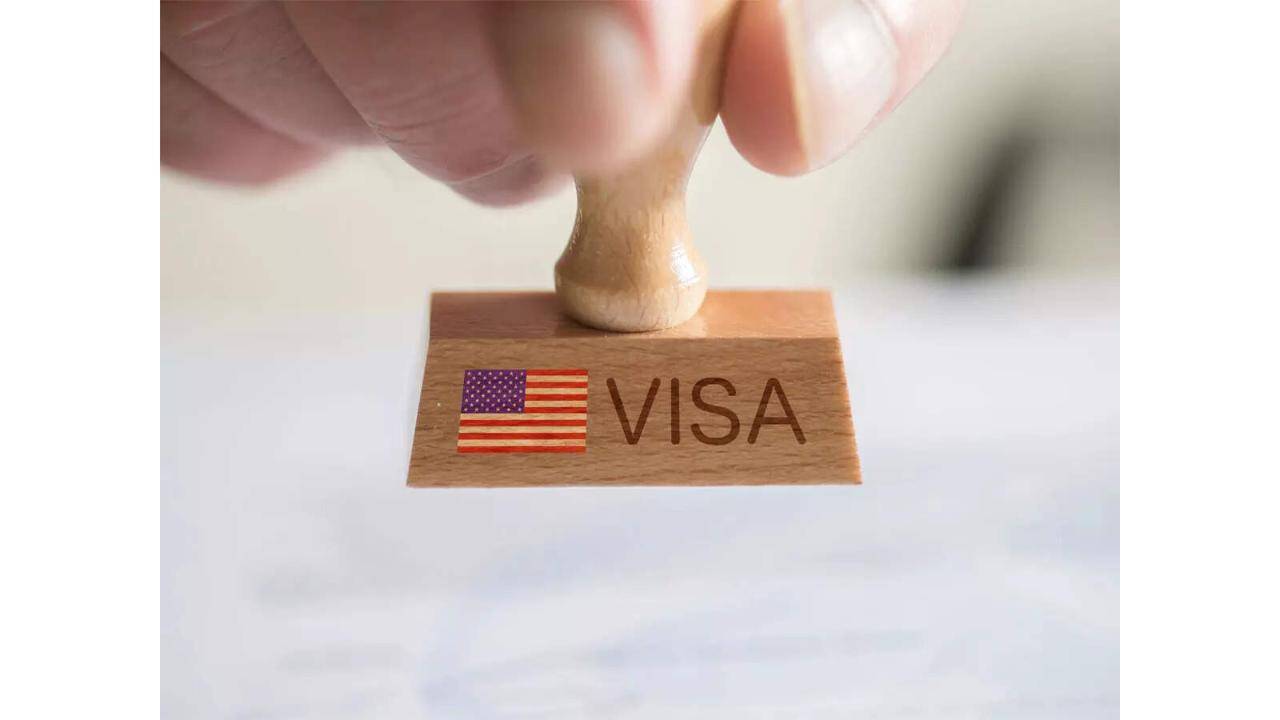
The United States government has introduced a revised public charge immigration rule, which may deny entry to immigrants who are likely to depend on public assistance. This new regulation gives immigration officers broader discretion to assess whether an individual is likely to require public support.
The policy change is set to officially take effect on September 18, 2026. As part of this update, the US Citizenship and Immigration Services (USCIS) has also revised rules regarding signatures on immigration benefit requests.
Under the new rule, immigration officers will have more flexibility to determine whether an applicant is likely to become a public charge. This means that individuals who are deemed likely to rely on government assistance, such as food stamps or Medicaid, may be denied a visa or green card.
The US government has stated that the revised rule is intended to ensure that immigrants are self-sufficient and do not become a burden on the public purse. However, immigrant advocacy groups have expressed concerns that the new rule may unfairly target low-income immigrants and limit their access to essential public services.
The revised public charge rule is part of a broader effort by the US government to reform its immigration system. The rule has been the subject of controversy and debate, with some arguing that it is necessary to protect public resources and others claiming that it is overly restrictive and unfair to immigrants.
The US Citizenship and Immigration Services (USCIS) has stated that the revised rule will be applied in a fair and consistent manner, and that applicants will be assessed on a case-by-case basis. However, the impact of the new rule on immigrant communities and the US economy as a whole remains to be seen.
The revised public charge rule is a significant development in US immigration policy, and its effects will be closely watched in the coming months. As the rule takes effect, it is likely to have far-reaching consequences for immigrants, immigration officers, and the US government as a whole.
In the context of US immigration policy, the revised public charge rule is part of a larger effort to balance the need to protect public resources with the need to provide a fair and welcoming environment for immigrants. The rule reflects a shift towards a more restrictive immigration policy, and its impact will be felt by immigrant communities across the United States.
For individuals and families considering immigrating to the US, the revised public charge rule may pose significant challenges. It is essential for applicants to understand the new rule and its implications, and to seek guidance from qualified immigration professionals to ensure that their applications are processed smoothly and efficiently.
In conclusion, the revised public charge immigration rule marks a significant change in US immigration policy, and its effects will be closely watched in the coming months. As the rule takes effect, it is likely to have far-reaching consequences for immigrants, immigration officers, and the US government as a whole.
The significance of this new rule for India and other countries cannot be overstated. With many Indians seeking to immigrate to the US for work, study, or family reasons, the revised public charge rule may have a major impact on their plans and prospects. As the US government continues to evolve its immigration policies, it is essential for individuals and families to stay informed and adapt to the changing landscape.
What this means for Mumbai and India is that individuals seeking to immigrate to the US will need to carefully consider their financial situation and potential reliance on public assistance before applying for a visa or green card. The revised public charge rule may also lead to increased scrutiny of immigration applications, which could result in longer processing times and higher rejection rates.
Overall, the revised public charge immigration rule is a complex and multifaceted development that will have significant implications for US immigration policy and practice. As the rule takes effect, it is essential for individuals, families, and communities to stay informed and adapt to the changing landscape.