Climate Change May Have Caused 1200 BCE Civilisation Collapse
Drought and climate stress may have led to collapse. Eastern Mediterranean societies affected.
'%3E%3Crect%20width%3D'96'%20height%3D'96'%20fill%3D'%23B3261E'%2F%3E%3Ccircle%20cx%3D'30'%20cy%3D'24'%20r%3D'44'%20fill%3D'%23fff'%20opacity%3D'.12'%2F%3E%3Ccircle%20cx%3D'60'%20cy%3D'74'%20r%3D'40'%20fill%3D'%23000'%20opacity%3D'.10'%2F%3E%3C%2Fg%3E%3Cg%20fill%3D'%23fff'%3E%3Crect%20x%3D'29'%20y%3D'49'%20width%3D'8'%20height%3D'19'%20rx%3D'1'%2F%3E%3Crect%20x%3D'39'%20y%3D'40'%20width%3D'9'%20height%3D'28'%20rx%3D'1'%2F%3E%3Crect%20x%3D'50'%20y%3D'45'%20width%3D'8'%20height%3D'23'%20rx%3D'1'%2F%3E%3Crect%20x%3D'60'%20y%3D'53'%20width%3D'7'%20height%3D'15'%20rx%3D'1'%2F%3E%3Crect%20x%3D'41'%20y%3D'34'%20width%3D'5'%20height%3D'6'%2F%3E%3C%2Fg%3E%3C%2Fsvg%3E)
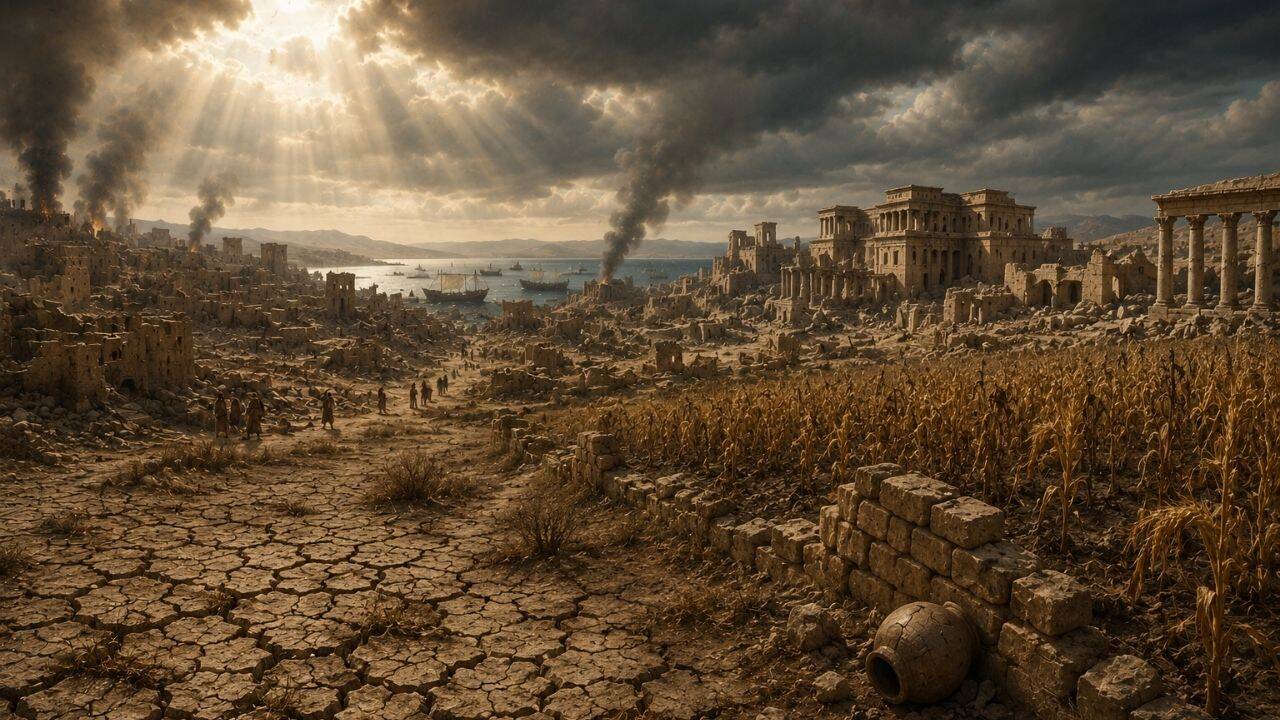
A significant study has shed light on the potential reasons behind the collapse of civilisations around 1200 BCE. The research suggests that prolonged drought in the eastern Mediterranean region may have played a crucial role in the downfall of these societies. This period of drying had a profound impact on agriculture and food security, exacerbating existing societal challenges.
The study reveals that drought acted as a threat multiplier, worsening the effects of warfare and invasions that occurred during this time. The interaction between environmental stress and societal pressures ultimately led to the collapse of these civilisations. Understanding the climate pressures of the past can inform our view of societal vulnerability and the potential consequences of environmental stress.
The eastern Mediterranean region was home to several complex societies around 1200 BCE, including the Mycenaeans and the Hittites. These societies were heavily reliant on agriculture, which made them vulnerable to changes in climate. The prolonged drought would have had a devastating impact on crop yields, leading to food shortages and societal instability.
The collapse of these civilisations has been the subject of much debate among historians and archaeologists. While warfare and invasions have been cited as potential causes, the role of climate change has often been overlooked. This new study highlights the importance of considering environmental factors when examining the rise and fall of societies.
The findings of this study have significant implications for our understanding of societal vulnerability to climate change. By examining the past, we can gain valuable insights into the potential consequences of environmental stress and take steps to mitigate its effects. This is particularly relevant in today's world, where climate change is having a profound impact on societies around the globe.
In conclusion, the collapse of civilisations around 1200 BCE may have been caused by a combination of factors, including prolonged drought and climate stress. This study highlights the importance of considering environmental factors when examining the rise and fall of societies and provides valuable insights into the potential consequences of climate change.
The study's findings also underscore the need for societies to be resilient in the face of environmental stress. By understanding the past and the potential consequences of climate change, we can take steps to mitigate its effects and build more sustainable societies.
Overall, the research provides a fascinating glimpse into the potential causes of the collapse of civilisations around 1200 BCE and highlights the importance of considering environmental factors when examining the rise and fall of societies.
Frequently asked questions
What may have caused the collapse of civilisations around 1200 BCE?
Prolonged drought and climate stress may have played a crucial role in the collapse of these societies.
How did drought affect the eastern Mediterranean societies?
Drought had a devastating impact on agriculture, leading to food shortages and societal instability.