Mumbai's Flooding Woes Continue
Mumbai's flooding issues persist, Bombay High Court blames citizens, but experts say it's more complex. City's drainage system outdated, needs upgrade.

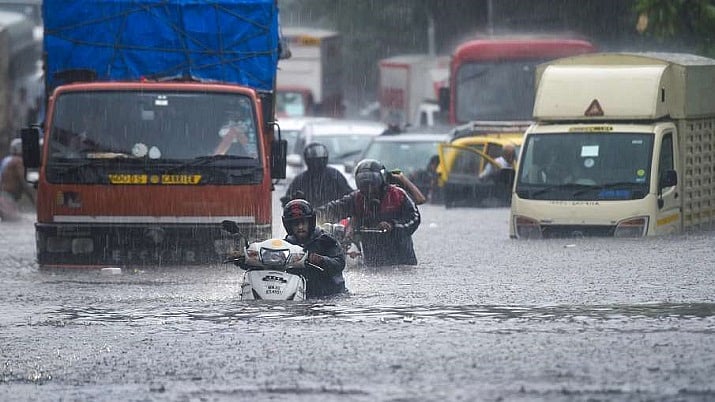
Mumbai's recurring waterlogging problem has been a major concern for its citizens, and the Bombay High Court's recent observation that it is 'our own creation' has sparked a debate. The court blamed citizens for encroaching on public land, blocking gutters, and converting footpaths into shops and parking. However, experts say that the issue is more complex and deeply rooted in the city's history and infrastructure.
The city's stormwater drainage system was designed by British engineers in the late 19th and early 20th centuries, and it has not been upgraded to cater to the needs of the modern city. The system was designed for rainfall intensities around 25 mm per hour, but the city now experiences extreme downpours that exceed this capacity. The drainage system's core still serves Mumbai today, but it is inadequate for the density and impervious surfaces of the 21st century.
Post-independence, the city grew rapidly, but the drains were not upgraded to keep pace with the growth. Studies after the 1974 and 1985 floods flagged siltation, encroachments, and maintenance failures as major issues. The 1993 BRIMSTOWAD report recommended lifting the capacity to 50 mm per hour, but the implementation was piecemeal. The July 26, 2005 deluge, which saw 944 mm of rainfall in a day, exposed the system's limits.
The high court's indictment of civic habits is only half the story. Encroachments and indiscriminate dumping into drains are real issues, but responsibility does not belong to any one section of society. Businesses, residents, motorists, hawkers, and institutions have all contributed to the problem at various points. Public infrastructure rarely distinguishes between individual violations, and a blocked drain does not ask who blocked it.
However, there are encouraging signs that the city is finally attempting to address the problem at a larger scale. The state government has submitted a Rs 13,000-crore integrated flood mitigation proposal to the Centre, targeting nearly 370 flood-prone locations. The proposal aims to clear floodwater within 30 minutes, even during high tide, and commits to completing the remaining BRIMSTOWAD works within two years.
The proposal is a step in the right direction, but it will require sustained efforts and cooperation from all stakeholders to implement. The city's flooding woes are a complex issue that requires a multifaceted approach. It is not just a matter of blaming citizens or upgrading the drainage system; it requires a fundamental shift in how we approach urban planning and infrastructure development.
The city's history and geography have played a significant role in shaping its drainage system. Mumbai began as seven islands joined by reclamation, which left large parts of the city below high-tide levels. The drainage system was designed to cater to the needs of a smaller city, but it has not been upgraded to keep pace with the growth.
In conclusion, Mumbai's flooding woes are a complex issue that requires a comprehensive approach. The city's drainage system needs to be upgraded, and citizens need to be aware of their responsibilities in maintaining public infrastructure. The state government's proposal is a step in the right direction, but it will require sustained efforts and cooperation from all stakeholders to implement.
The issue of flooding in Mumbai is not just a local problem; it has implications for the entire city and its inhabitants. It is a reminder that urban planning and infrastructure development require a long-term vision and a commitment to sustainability. As the city continues to grow and develop, it is essential that we prioritize the upgrade of our drainage system and take a proactive approach to mitigating the risks of flooding.
The Rs 13,000-crore proposal is a significant investment in the city's infrastructure, and it has the potential to make a significant impact on the lives of Mumbaikars. However, it is crucial that the implementation is done in a transparent and accountable manner, with regular monitoring and evaluation to ensure that the goals are met.
In the end, the solution to Mumbai's flooding woes will require a collective effort from all stakeholders, including citizens, businesses, and the government. It is a complex issue that requires a multifaceted approach, but with sustained efforts and cooperation, it is possible to create a more sustainable and resilient city.