Nashik Kharif Sowing Reaches 71.66% After Good Rains
Nashik Kharif sowing surges, farmers fear dry spell. Sowing reaches 71.66% after rains.
'%3E%3Crect%20width%3D'96'%20height%3D'96'%20fill%3D'%23B3261E'%2F%3E%3Ccircle%20cx%3D'30'%20cy%3D'24'%20r%3D'44'%20fill%3D'%23fff'%20opacity%3D'.12'%2F%3E%3Ccircle%20cx%3D'60'%20cy%3D'74'%20r%3D'40'%20fill%3D'%23000'%20opacity%3D'.10'%2F%3E%3C%2Fg%3E%3Cg%20fill%3D'%23fff'%3E%3Crect%20x%3D'29'%20y%3D'49'%20width%3D'8'%20height%3D'19'%20rx%3D'1'%2F%3E%3Crect%20x%3D'39'%20y%3D'40'%20width%3D'9'%20height%3D'28'%20rx%3D'1'%2F%3E%3Crect%20x%3D'50'%20y%3D'45'%20width%3D'8'%20height%3D'23'%20rx%3D'1'%2F%3E%3Crect%20x%3D'60'%20y%3D'53'%20width%3D'7'%20height%3D'15'%20rx%3D'1'%2F%3E%3Crect%20x%3D'41'%20y%3D'34'%20width%3D'5'%20height%3D'6'%2F%3E%3C%2Fg%3E%3C%2Fsvg%3E)
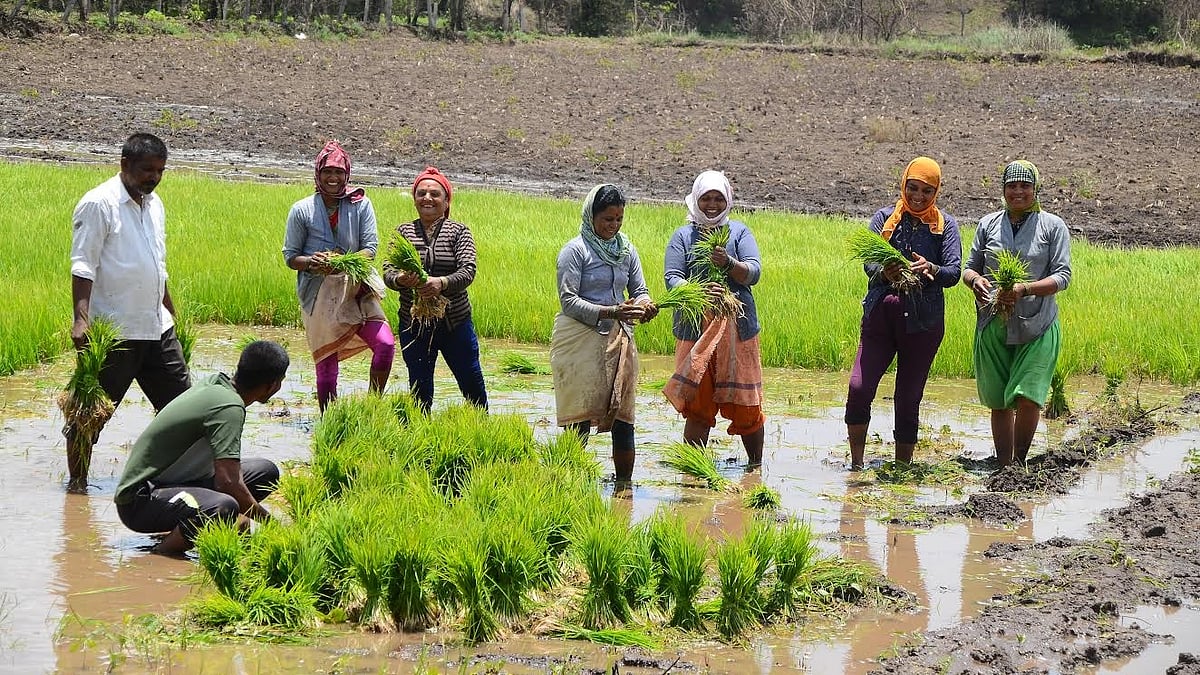
Nashik district has seen a significant increase in Kharif sowing, with 71.66% of the targeted area now sown. This surge in sowing is attributed to the suitable rainfall in the region over the past few days. The district had initially experienced a delay in sowing due to inactive monsoon conditions at the start of the season. However, with the intensification of rainfall in early July, the pace of Kharif sowing picked up.
By July 11, only 32.47% of the targeted area had been sown, but satisfactory rainfall over the next nine days pushed the figure to 71.66%. The district has set a target to sow Kharif crops across an area of 6,40,550 hectares this year. The increased rainfall has led to a rise in the sowing of crops such as soybean, maize, pearl millet, tur, moong, and urad.
Chandwad taluka has recorded the highest sowing at 99.79%, followed by Kalwan taluka at 91.62%. Other talukas, such as Sinnar and Yeola, have also seen significant progress in sowing, with completion rates of 95.77% and 90.76%, respectively.
The taluka-wise progress of sowing is as follows: Baglan at 81.07%, Deola at 80.33%, Nandgaon at 89.54%, and Niphad at 82.07%. Although the sowing has been satisfactory, farmers are concerned about the possibility of having to re-sow if the rainfall is not maintained. A break in rainfall could reduce soil moisture and increase the risk of diseases affecting tender crops.
In Igatpuri and Trimbakeshwar talukas, paddy is the primary crop, and sowing operations for other Kharif crops have also gained momentum. Preliminary data indicates that paddy sowing has been completed across approximately 6,500 hectares in Igatpuri taluka, representing 25% to 27% of the total cultivable area.
However, areas such as Yeola, Nandgaon, and Niphad have not yet received adequate rainfall due to uneven distribution. Continuous rain over the coming days would accelerate the remaining sowing activities. Farmers are hopeful for favorable rainfall distribution, but they are also concerned that a dry spell could jeopardize the entire season and lead to reduced yields.
According to preliminary data from the Agriculture Department, Kharif sowing has got off to a good start. The department is monitoring the situation closely, and farmers are keeping their fingers crossed for a favorable monsoon season. The next few days will be crucial in determining the outcome of the Kharif season in Nashik district.
The significance of this development lies in the fact that a good monsoon season can have a positive impact on the agricultural sector, which is a crucial part of the Indian economy. A successful Kharif season can lead to increased crop yields, improved farmer incomes, and a boost to the local economy. Therefore, the progress of Kharif sowing in Nashik district is being closely watched by farmers, policymakers, and stakeholders in the agricultural sector.
In conclusion, the Kharif sowing in Nashik district has reached 71.66% after good rains, and farmers are hopeful for a favorable monsoon season. However, they are also concerned about the possibility of a dry spell, which could jeopardize the entire season. The next few days will be crucial in determining the outcome of the Kharif season in Nashik district.
Frequently asked questions
What is the current status of Kharif sowing in Nashik district?
Kharif sowing has reached 71.66% in Nashik district.
What is the target area for Kharif crops in Nashik district?
The target area for Kharif crops in Nashik district is 6,40,550 hectares.