Court Rejects Bail For Santosh Deshmukh Murder Accused
Accused Jairam Chate's bail plea rejected, court cites criminal antecedents and gravity of offence.
'%3E%3Crect%20width%3D'96'%20height%3D'96'%20fill%3D'%231A5276'%2F%3E%3Ccircle%20cx%3D'30'%20cy%3D'24'%20r%3D'44'%20fill%3D'%23fff'%20opacity%3D'.12'%2F%3E%3Ccircle%20cx%3D'60'%20cy%3D'74'%20r%3D'40'%20fill%3D'%23000'%20opacity%3D'.10'%2F%3E%3C%2Fg%3E%3Cg%20fill%3D'%23fff'%3E%3Cpath%20d%3D'M31%2041%20L48%2031%20L65%2041%20Z'%2F%3E%3Crect%20x%3D'33'%20y%3D'43'%20width%3D'4'%20height%3D'17'%2F%3E%3Crect%20x%3D'41'%20y%3D'43'%20width%3D'4'%20height%3D'17'%2F%3E%3Crect%20x%3D'51'%20y%3D'43'%20width%3D'4'%20height%3D'17'%2F%3E%3Crect%20x%3D'59'%20y%3D'43'%20width%3D'4'%20height%3D'17'%2F%3E%3Crect%20x%3D'30'%20y%3D'62'%20width%3D'36'%20height%3D'4'%20rx%3D'1'%2F%3E%3C%2Fg%3E%3C%2Fsvg%3E)

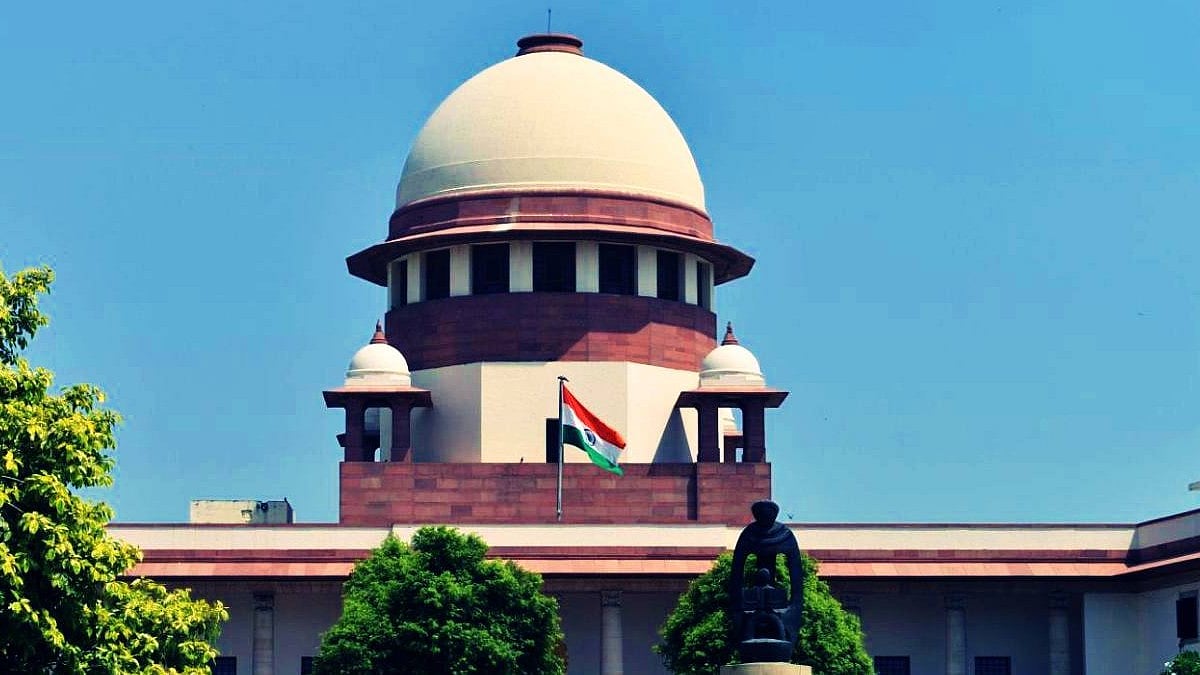
A special court in Beed has rejected the bail plea of Jairam Chate, an accused in the murder of former Massajog sarpanch Santosh Deshmukh. The court ruled that educational qualifications and good academic scores cannot be grounds for bail in a serious criminal case.
Chate had approached the court seeking bail, highlighting his academic record, which included a BSc degree in Computer Science and high scores in his Class 10 and 12 board examinations. However, Special Judge Jayshri Pulate dismissed the argument, stating that educational qualification and scoring good marks cannot be held as a ground to enlarge the applicant on bail.
Santosh Deshmukh was abducted and brutally murdered on December 9, 2024. Investigators said Deshmukh was targeted because he tried to stop a gang from extorting money from an energy company operating in the area. The brutal killing triggered widespread public outrage and protests across Maharashtra.
Chate is one of seven people arrested in connection with the case. The accused have been booked under the Maharashtra Control of Organised Crime Act (MCOCA), the Scheduled Castes and Scheduled Tribes (Prevention of Atrocities) Act, and relevant sections of the Bharatiya Nyaya Sanhita (BNS).
While Chate's counsel argued that he had been falsely implicated, had no links with any gang, and did not derive any financial benefit from the crime, the prosecution presented a different picture. According to the police, the attackers filmed the entire assault on their mobile phones with the intention of circulating the videos on social media to instil fear among the public.
The prosecution alleged that Chate was actively involved from the beginning. The court noted that in one of the videos, Chate is allegedly seen holding the victim's shirt, stripping him, laughing loudly, and participating in the fatal assault. Eyewitness statements also prima facie established Chate's active role in the organised crime syndicate allegedly led by co-accused Walmik Karad.
The court rejected the bail plea, citing Chate's criminal antecedents and the gravity of the offence. The court observed that the attack was intended to terrorise society and that the applicant was not entitled to bail.
The rejection of Chate's bail plea is a significant development in the case, which has sparked widespread outrage and concern about the safety and security of citizens in Maharashtra. The case highlights the need for effective law enforcement and justice to prevent such heinous crimes.
The court's decision is also a reminder that educational qualifications and good academic scores are not a guarantee of good character or a basis for leniency in serious criminal cases. The focus should be on ensuring that justice is served and that those responsible for such crimes are held accountable.
In the context of Maharashtra's efforts to combat organised crime, the court's decision is a step in the right direction. The state government has been taking measures to strengthen law enforcement and improve the justice system, and the court's decision reflects the commitment to ensuring that those who engage in such crimes are brought to justice.
The case will continue to be closely watched, and the outcome will have significant implications for the state's efforts to combat organised crime and ensure public safety. For now, the rejection of Chate's bail plea is a positive development, and it is hoped that justice will be served in the case.
The incident has also raised concerns about the safety and security of citizens in rural areas, where such crimes often go unreported. The state government needs to take measures to improve law enforcement and provide better protection to citizens in these areas.
In conclusion, the court's decision to reject Chate's bail plea is a significant development in the case, and it reflects the commitment to ensuring that justice is served. The case highlights the need for effective law enforcement and justice to prevent such heinous crimes, and it is hoped that the outcome will have a positive impact on the state's efforts to combat organised crime and ensure public safety.