Centre Rejects Separate E10 Petrol Sales, Stands by E20 Rollout
Centre defends E20 ethanol blend, cites logistical challenges and investments.

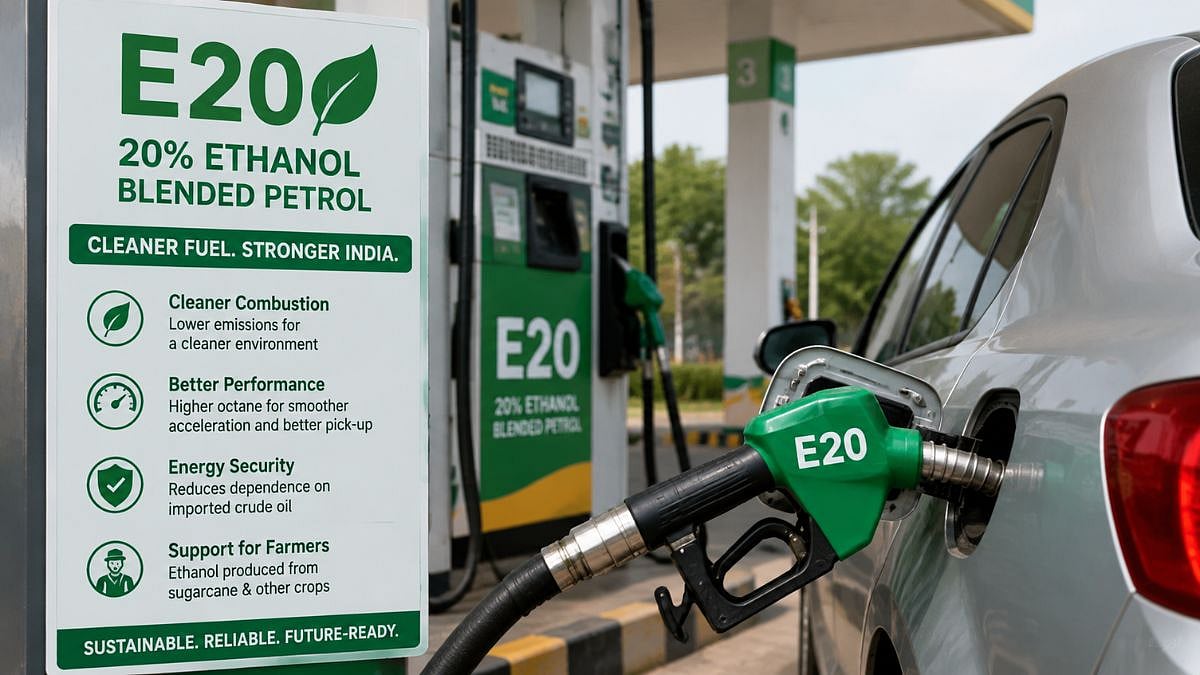
The Centre has rejected calls for selling lower ethanol blends such as E10 petrol alongside E20, citing major logistical challenges and the impact on investments made in ethanol production infrastructure.
On Friday, the Ministry of Petroleum and Natural Gas stated that India's extensive fuel distribution network would face significant operational difficulties if different petrol blends were maintained simultaneously. The ministry highlighted that managing separate inventories would increase costs, complicate supply chains, and reduce efficiency.
The government has made nearly ₹1 lakh crore of annual investments in ethanol production and related infrastructure over recent years. Dedicated ethanol plants, distilleries, storage facilities, and transportation networks have been developed to achieve India's blending targets. The ministry questioned the feasibility of reversing the policy after such large-scale investments involving farmers, cooperatives, entrepreneurs, financial institutions, and public sector companies.
The ministry acknowledged concerns around fuel efficiency, admitting that E20 petrol can lead to a 3-5% reduction in mileage compared with conventional petrol. However, it said the blend offers advantages such as higher octane levels, improved anti-knock properties, faster combustion, smoother acceleration, and cleaner engine performance.
The introduction of E20 was based on scientific studies, extensive testing, and consultations involving institutions such as NITI Aayog and the automobile industry. Experts argued that despite some mileage impact, ethanol blending supports India's energy security by reducing dependence on imported crude oil. Prashant Vashisht, VP and Co-Head of Corporate Ratings at ICRA, said ethanol blending was a step towards greater self-reliance as India imports a large share of its crude oil requirements.
Automobile industry executives said vehicles underwent testing and certification before the introduction of E20. Toyota Kirloskar Motor's Vikram Gulati said older vehicles were also tested before the fuel transition, while E85 stations are intended only for flex-fuel vehicles. The government clarified that E20 petrol is not cheaper despite ethanol being domestically produced because producers are paid remunerative prices.
According to the ministry, ethanol blending has helped India save over ₹1.97 lakh crore in foreign exchange, replace nearly 316 lakh metric tonnes of crude oil, reduce carbon emissions, and transfer more than ₹1.66 lakh crore to farmers. The government's decision to stand by the E20 rollout is significant, given the investments made and the potential benefits of reduced dependence on imported crude oil.
In conclusion, the Centre's decision to reject separate E10 petrol sales and stand by the E20 rollout has significant implications for India's energy security and the environment. While there may be some concerns around fuel efficiency, the benefits of ethanol blending, including reduced dependence on imported crude oil and lower carbon emissions, outweigh the drawbacks. As India continues to navigate its energy landscape, the government's commitment to ethanol blending is likely to have a lasting impact on the country's energy security and environmental sustainability.