India's July Monsoon Rainfall Exceeds Expectations
July monsoon rainfall beats forecasts, eases shortfall fears. Climate change alters patterns.
'%3E%3Crect%20width%3D'96'%20height%3D'96'%20fill%3D'%23B3261E'%2F%3E%3Ccircle%20cx%3D'30'%20cy%3D'24'%20r%3D'44'%20fill%3D'%23fff'%20opacity%3D'.12'%2F%3E%3Ccircle%20cx%3D'60'%20cy%3D'74'%20r%3D'40'%20fill%3D'%23000'%20opacity%3D'.10'%2F%3E%3C%2Fg%3E%3Cg%20fill%3D'%23fff'%3E%3Crect%20x%3D'29'%20y%3D'49'%20width%3D'8'%20height%3D'19'%20rx%3D'1'%2F%3E%3Crect%20x%3D'39'%20y%3D'40'%20width%3D'9'%20height%3D'28'%20rx%3D'1'%2F%3E%3Crect%20x%3D'50'%20y%3D'45'%20width%3D'8'%20height%3D'23'%20rx%3D'1'%2F%3E%3Crect%20x%3D'60'%20y%3D'53'%20width%3D'7'%20height%3D'15'%20rx%3D'1'%2F%3E%3Crect%20x%3D'41'%20y%3D'34'%20width%3D'5'%20height%3D'6'%2F%3E%3C%2Fg%3E%3C%2Fsvg%3E)
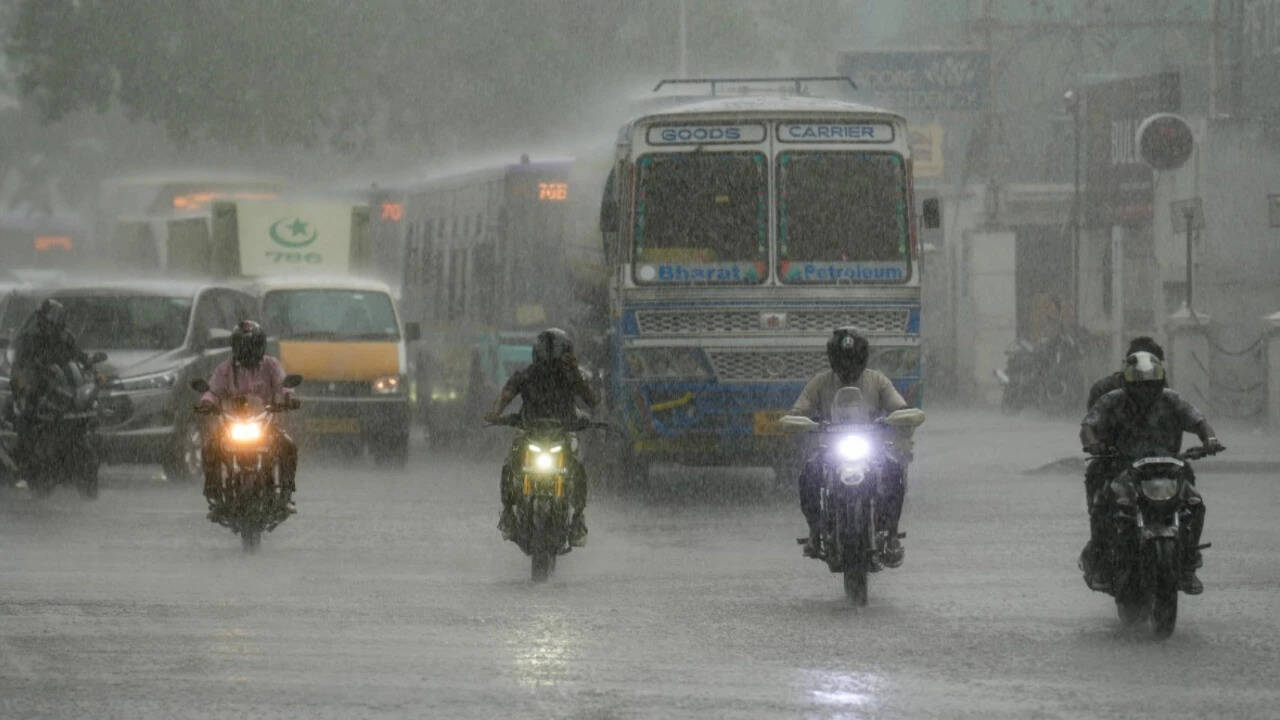
India's monsoon rainfall in July was higher than expected, contrary to earlier forecasts that predicted below-normal precipitation due to the impact of El Nino. This unexpected increase in rainfall has eased concerns about a significant monsoon shortfall for the country.
The earlier forecasts had suggested that El Nino would negatively impact the monsoon season, leading to reduced rainfall. However, the actual rainfall in July defied these predictions, bringing relief to many parts of the country.
Despite the overall increase in rainfall, the distribution of rainfall remained uneven across different regions of India. Some areas received heavy rainfall, while others continued to experience dry conditions.
Experts are now highlighting that El Nino alone cannot explain the changing rainfall patterns in India. They emphasize that climate change is playing a significant role in altering monsoon patterns, making it more challenging to predict rainfall accurately.
The Indian monsoon season is a complex phenomenon, influenced by various factors, including global climate patterns, temperature, and atmospheric conditions. The impact of climate change on monsoon patterns is becoming increasingly evident, with more frequent extreme weather events and changing rainfall distribution.
The monsoon season is crucial for India's agriculture, economy, and water resources. A good monsoon season can lead to a bumper crop, while a poor season can result in drought and water scarcity. Therefore, accurate predictions of monsoon rainfall are essential for planning and decision-making.
The recent rainfall data suggests that climate change is altering the traditional patterns of the Indian monsoon. This shift in patterns is making it more difficult for forecasters to predict rainfall accurately, highlighting the need for more advanced climate modeling and forecasting techniques.
In conclusion, the unexpected increase in July monsoon rainfall has brought relief to India, but the uneven distribution of rainfall and the impact of climate change on monsoon patterns remain a concern. As the monsoon season continues, it is essential to monitor the rainfall closely and develop more accurate forecasting models to better understand and predict the complex Indian monsoon.
The significance of this development lies in its implications for India's agriculture, economy, and water resources. The changing monsoon patterns due to climate change can have far-reaching consequences, and it is crucial to develop strategies to mitigate these impacts and ensure sustainable development.
Frequently asked questions
What was the expected impact of El Nino on India's monsoon rainfall?
El Nino was expected to lead to below-normal precipitation, but the actual rainfall in July defied these predictions.
Why are monsoon rainfall predictions becoming more complex?
Climate change is increasingly altering monsoon patterns, making it more challenging to predict rainfall accurately.