Monsoon Session Ends Abruptly
Parliament's monsoon session ends without customary thanks, 12 bills passed
'%3E%3Crect%20width%3D'96'%20height%3D'96'%20fill%3D'%231A5276'%2F%3E%3Ccircle%20cx%3D'30'%20cy%3D'24'%20r%3D'44'%20fill%3D'%23fff'%20opacity%3D'.12'%2F%3E%3Ccircle%20cx%3D'60'%20cy%3D'74'%20r%3D'40'%20fill%3D'%23000'%20opacity%3D'.10'%2F%3E%3C%2Fg%3E%3Cg%20fill%3D'%23fff'%3E%3Cpath%20d%3D'M31%2041%20L48%2031%20L65%2041%20Z'%2F%3E%3Crect%20x%3D'33'%20y%3D'43'%20width%3D'4'%20height%3D'17'%2F%3E%3Crect%20x%3D'41'%20y%3D'43'%20width%3D'4'%20height%3D'17'%2F%3E%3Crect%20x%3D'51'%20y%3D'43'%20width%3D'4'%20height%3D'17'%2F%3E%3Crect%20x%3D'59'%20y%3D'43'%20width%3D'4'%20height%3D'17'%2F%3E%3Crect%20x%3D'30'%20y%3D'62'%20width%3D'36'%20height%3D'4'%20rx%3D'1'%2F%3E%3C%2Fg%3E%3C%2Fsvg%3E)
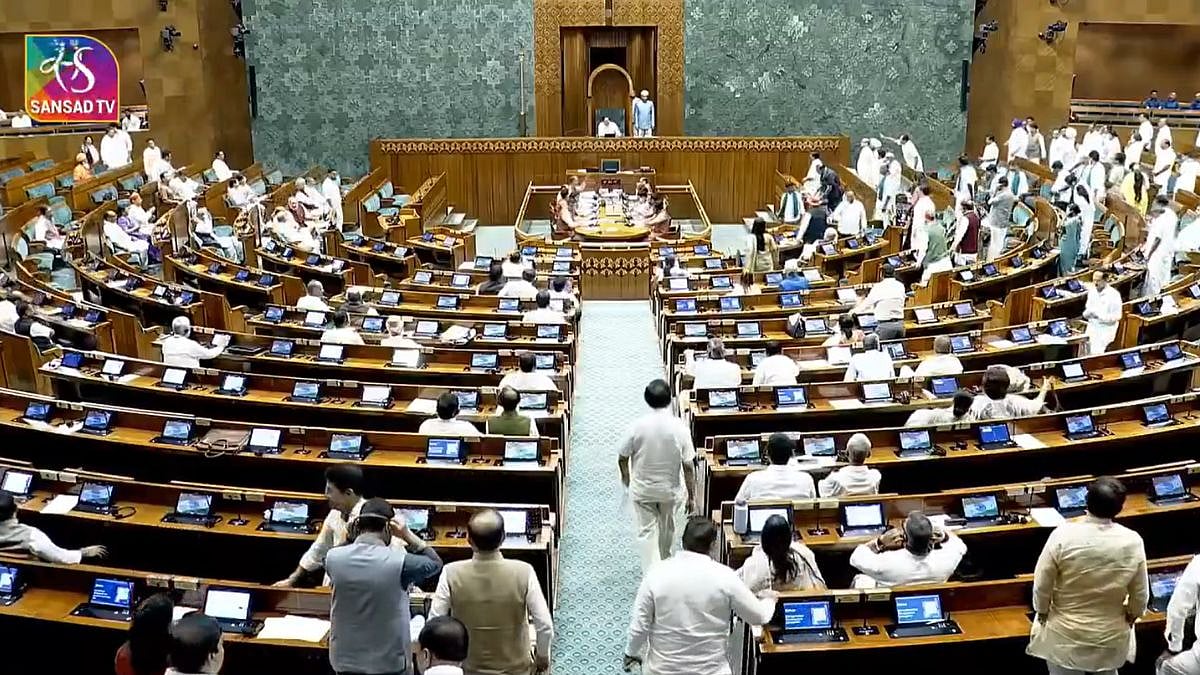
The monsoon session of Parliament, which began on July 20, ended abruptly without the customary word of thanks from the Speaker. This session was marked by controversy from the start, with students marching to Parliament House to protest against the handling of competitive examinations. The police response to the protest was widely criticized, with allegations of brutality and the use of unidentified personnel wearing masks.
The session saw the passage of 12 bills, but this achievement is marred by the fact that most of these bills were passed without debate or discussion. The government may claim satisfaction with the number of bills passed, but the lack of scrutiny and debate raises concerns about the quality of legislation.
The Opposition also came under criticism for disrupting the proceedings, rather than engaging in constructive scrutiny of the bills. Disruption cannot become a substitute for scrutiny, and it is the duty of the Opposition to examine the bills, expose any dangerous clauses, and propose improvements.
The absence of key government ministers, including Home Minister Amit Shah and Prime Minister Narendra Modi, was also notable. Their absence created the impression that they were unwilling to face an angry Opposition, and they have only themselves to blame for this perception.
The monsoon session of Parliament is a clear example of how a parliamentary session should not be conducted. The country deserves better from those entrusted with democratic governance. The session's failure to serve the people is a reminder that Parliament is the country's highest law-making body, and the quality of legislation depends on the quality of scrutiny it receives.
In the end, the monsoon session failed to meet the expectations of the people, and it is up to the government and the Opposition to ensure that future sessions are conducted in a more constructive and democratic manner. The country needs a functioning Parliament, where laws are properly drafted, debated, and amended, and where the interests of the people are represented.
The failure of the monsoon session to serve the people is a serious concern, and it highlights the need for greater accountability and transparency in the legislative process. The government and the Opposition must work together to ensure that Parliament functions effectively, and that the laws passed are in the best interests of the country.
The monsoon session may be over, but its impact will be felt for a long time. It is up to the government and the Opposition to learn from the mistakes of the past and work towards creating a more functional and democratic Parliament.
In conclusion, the monsoon session of Parliament was a disappointment, and it failed to serve the people. The country deserves better, and it is up to the government and the Opposition to ensure that future sessions are conducted in a more constructive and democratic manner.
Frequently asked questions
What happened during the monsoon session of Parliament?
The monsoon session of Parliament ended abruptly without the customary word of thanks from the Speaker, and 12 bills were passed without debate or discussion.
Why was the police response to the student protest criticized?
The police response was criticized for being brutal and for using unidentified personnel wearing masks.