Maryland Creates 70 Acres of Wetland from Dredged Sand
Maryland restores eroding marsh, benefits wildlife and shipping. $13.5M project complete.
'%3E%3Crect%20width%3D'96'%20height%3D'96'%20fill%3D'%23B3261E'%2F%3E%3Ccircle%20cx%3D'30'%20cy%3D'24'%20r%3D'44'%20fill%3D'%23fff'%20opacity%3D'.12'%2F%3E%3Ccircle%20cx%3D'60'%20cy%3D'74'%20r%3D'40'%20fill%3D'%23000'%20opacity%3D'.10'%2F%3E%3C%2Fg%3E%3Cg%20fill%3D'%23fff'%3E%3Crect%20x%3D'29'%20y%3D'49'%20width%3D'8'%20height%3D'19'%20rx%3D'1'%2F%3E%3Crect%20x%3D'39'%20y%3D'40'%20width%3D'9'%20height%3D'28'%20rx%3D'1'%2F%3E%3Crect%20x%3D'50'%20y%3D'45'%20width%3D'8'%20height%3D'23'%20rx%3D'1'%2F%3E%3Crect%20x%3D'60'%20y%3D'53'%20width%3D'7'%20height%3D'15'%20rx%3D'1'%2F%3E%3Crect%20x%3D'41'%20y%3D'34'%20width%3D'5'%20height%3D'6'%2F%3E%3C%2Fg%3E%3C%2Fsvg%3E)
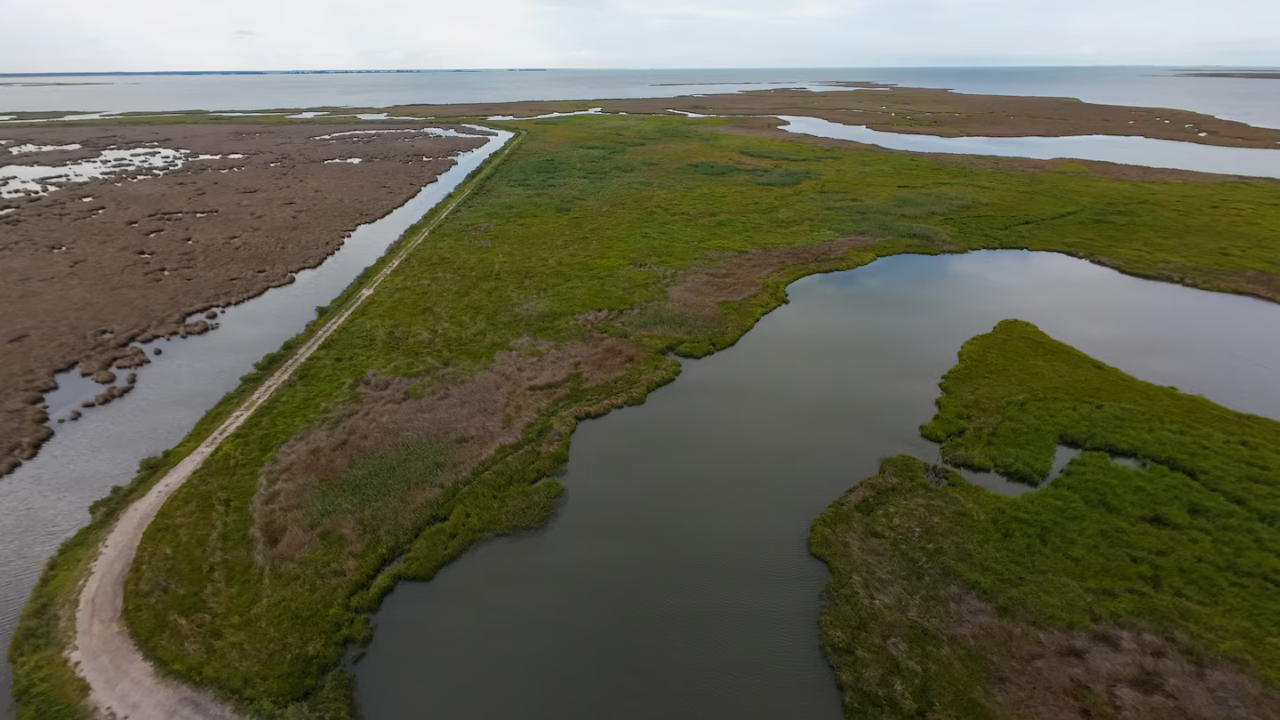
A significant environmental project in Maryland has resulted in the creation of 70 acres of tidal wetland habitat. The $13.5 million initiative involved the reuse of dredged river sediment to restore a previously eroding marsh area.
This restoration project has not only benefited local wildlife but also enhanced commercial shipping activities in the region. The introduction of native salt marsh grasses has played a crucial role in fortifying the new terrain, thereby increasing its stability.
The project's focus on reusing dredged sediment has been instrumental in achieving its goals. By doing so, the initiative has helped to protect Maryland's shoreline and restore habitats for diverse wildlife. The creation of this new wetland habitat is expected to have a positive impact on the local ecosystem.
Maryland's shoreline has long been vulnerable to erosion, which has threatened the habitats of various species of marsh birds and other wildlife. The restoration of the marsh area is a significant step towards mitigating this issue. The project's success can be attributed to the collaborative efforts of various stakeholders, including environmental organizations and government agencies.
The use of dredged sediment in the project has also helped to reduce the need for traditional fill materials, which can be costly and harmful to the environment. This approach has not only been cost-effective but also environmentally friendly.
The restoration of the marsh area is expected to have long-term benefits for the local ecosystem. The creation of the new wetland habitat will provide a safe haven for marsh birds and other wildlife, while also helping to protect the shoreline from erosion.
The project's success is a testament to the importance of conservation efforts and the need to protect our natural habitats. It also highlights the potential for innovative approaches to environmental restoration, such as the reuse of dredged sediment.
In conclusion, the $13.5 million project in Maryland has achieved its goal of creating 70 acres of tidal wetland habitat, benefiting both local wildlife and commercial shipping activities. The project's success is a significant step towards protecting Maryland's shoreline and restoring habitats for diverse wildlife.
The creation of this new wetland habitat is a positive development for the environment and a testament to the power of collaborative conservation efforts. As the world continues to grapple with the challenges of environmental degradation, projects like this serve as a reminder of the importance of protecting our natural habitats and the potential for innovative approaches to restoration.
The project's impact will be closely monitored in the coming years to ensure that it continues to meet its goals and provide benefits to the local ecosystem. With its focus on sustainability and environmental protection, the project is an important step towards a more environmentally conscious future.
The success of this project can also serve as a model for other environmental restoration initiatives, demonstrating the potential for collaborative efforts and innovative approaches to achieve significant positive impacts on the environment.
Frequently asked questions
What was the cost of the Maryland wetland restoration project?
The project cost $13.5 million.
How many acres of wetland were created in the project?
The project resulted in the creation of 70 acres of tidal wetland habitat.