PM Modi Addresses BRICS Summit in New Delhi
PM Modi hosts BRICS Summit, Xi, Putin attend. Discussions on global growth, climate, and trade.
'%3E%3Crect%20width%3D'96'%20height%3D'96'%20fill%3D'%234A235A'%2F%3E%3Ccircle%20cx%3D'30'%20cy%3D'24'%20r%3D'44'%20fill%3D'%23fff'%20opacity%3D'.12'%2F%3E%3Ccircle%20cx%3D'60'%20cy%3D'74'%20r%3D'40'%20fill%3D'%23000'%20opacity%3D'.10'%2F%3E%3C%2Fg%3E%3Cg%20fill%3D'none'%20stroke%3D'%23fff'%20stroke-width%3D'3'%3E%3Ccircle%20cx%3D'48'%20cy%3D'48'%20r%3D'16'%2F%3E%3Cellipse%20cx%3D'48'%20cy%3D'48'%20rx%3D'6.5'%20ry%3D'16'%2F%3E%3Cline%20x1%3D'32'%20y1%3D'42'%20x2%3D'64'%20y2%3D'42'%2F%3E%3Cline%20x1%3D'32'%20y1%3D'54'%20x2%3D'64'%20y2%3D'54'%2F%3E%3C%2Fg%3E%3C%2Fsvg%3E)
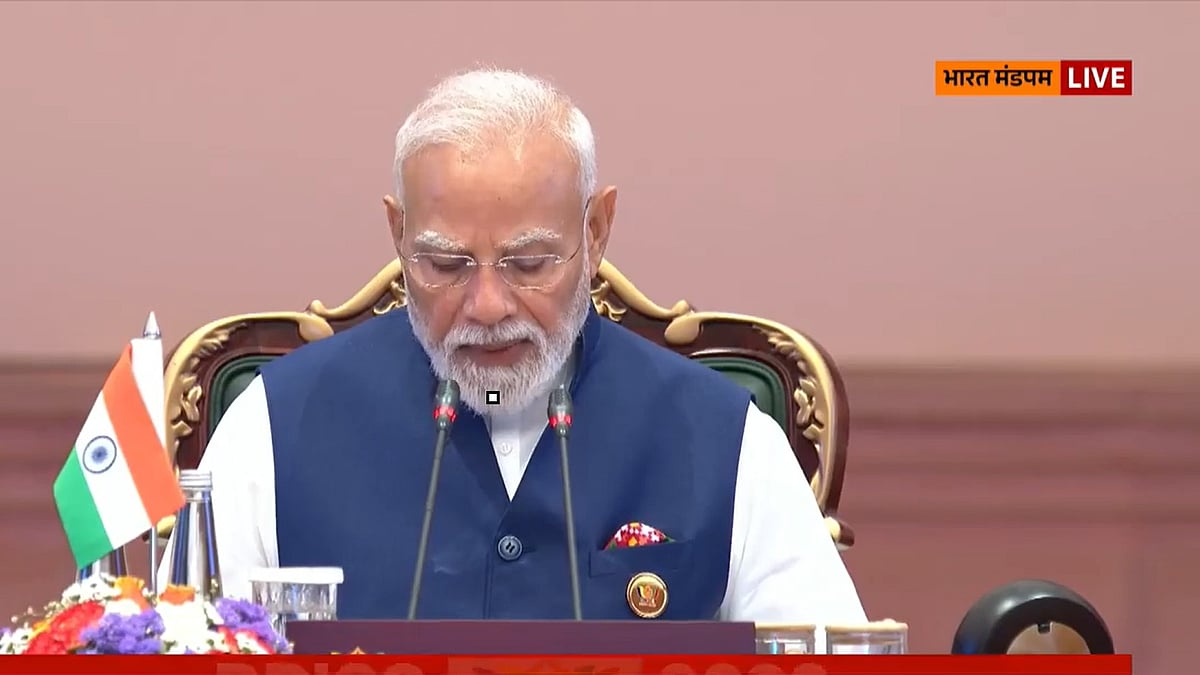
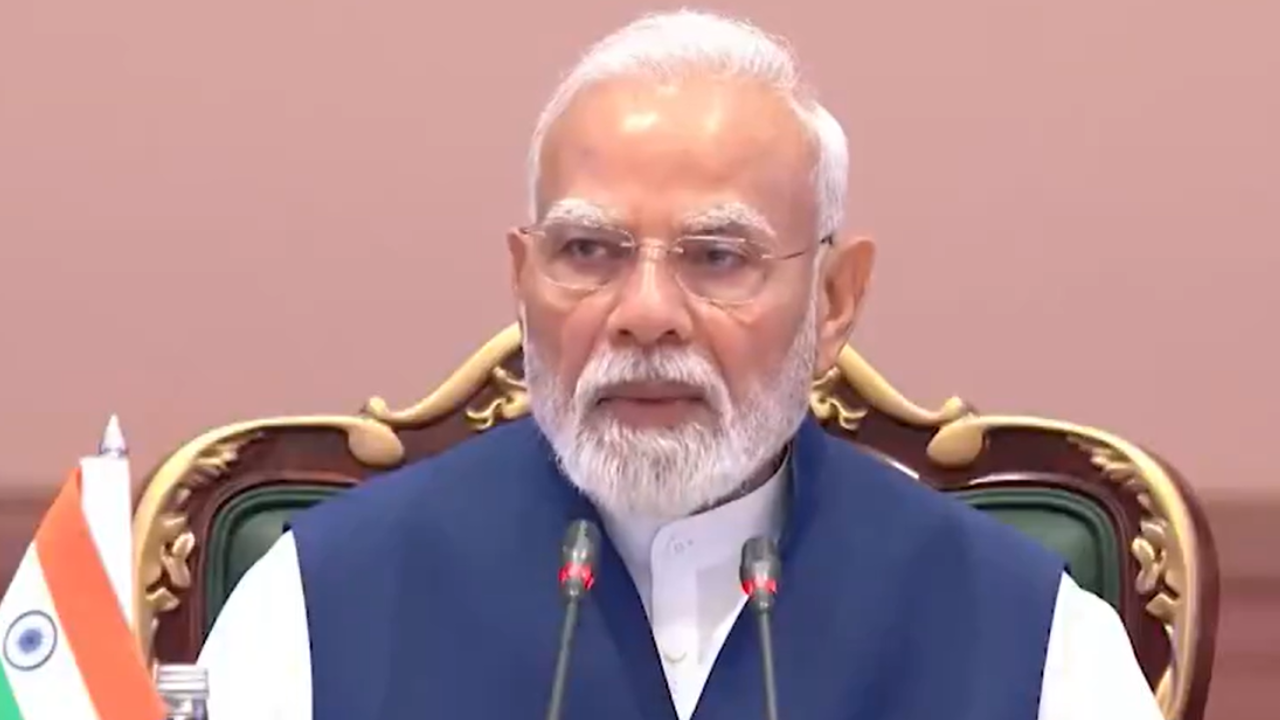
The 18th BRICS Summit entered its second day in New Delhi on Sunday, with leaders gathering for the key open plenary session at Bharat Mandapam. The session, titled “Resilience, Innovation, Cooperation and Sustainability: Shaping the Future for Inclusive Global Growth,” was hosted by Prime Minister Narendra Modi.
The open session brought together leaders of BRICS member countries, partner nations, and outreach invitees to discuss strengthening economic and supply-chain resilience, technological innovation, climate and sustainability challenges, and deeper cooperation among developing countries. The leaders also focused on inclusive global growth and the priorities of the Global South.
On the first day of the summit, the New Delhi Declaration was adopted by consensus. During the closed session on inclusive global governance and strengthening multilateralism, PM Modi called for a more people-centric approach and said the Global South should become a “rule-shaper” rather than a “rule-taker.” He also pushed for reforms to the UN Security Council and greater representation for developing countries in global financial institutions.
The second-day proceedings saw the attendance of prominent leaders, including Chinese President Xi Jinping, Russian President Vladimir Putin, and Iranian President Masoud Pezeshkian. The leaders arrived at Bharat Mandapam from around 10 am, followed by a group photograph.
PM Modi is also scheduled to hold several bilateral meetings with visiting leaders, focusing on strengthening India's ties with BRICS members, partner countries, and other outreach nations. The engagements are expected to advance cooperation in areas including trade, technology, development, and global governance.
The discussions at the BRICS Summit are significant, as they bring together some of the world's most influential leaders to address pressing global issues. The summit provides a platform for the leaders to share their perspectives and work together to find solutions to common challenges.
The BRICS grouping, which includes Brazil, Russia, India, China, and South Africa, represents a significant portion of the world's population and economic output. The summit's theme, “Building for Resilience, Innovation, Cooperation and Sustainability,” reflects the grouping's commitment to promoting inclusive global growth and addressing the challenges faced by developing countries.
The outcomes of the BRICS Summit will be formalized under India's 2026 chairship, with a focus on building resilience, innovation, cooperation, and sustainability. The summit's conclusions are expected to have a significant impact on global governance and international relations.
In conclusion, the BRICS Summit is an important platform for global leaders to come together and address pressing issues. The discussions at the summit are expected to have a significant impact on global governance and international relations, and will shape the future of inclusive global growth.
The summit's focus on resilience, innovation, cooperation, and sustainability reflects the need for a more people-centric approach to global governance. The leaders' commitment to promoting inclusive global growth and addressing the challenges faced by developing countries is a significant step towards creating a more equitable and just world.
As the BRICS Summit comes to a close, it is clear that the discussions and outcomes will have a lasting impact on global governance and international relations. The summit's theme and focus on building resilience, innovation, cooperation, and sustainability will continue to shape the future of inclusive global growth.
Frequently asked questions
What is the theme of the 2026 BRICS Summit?
The theme of the 2026 BRICS Summit is “Building for Resilience, Innovation, Cooperation and Sustainability.”
Who are the prominent leaders attending the BRICS Summit?
The prominent leaders attending the BRICS Summit include Chinese President Xi Jinping, Russian President Vladimir Putin, and Iranian President Masoud Pezeshkian.