Fungus Infects Flies Using Dead Females
A fungus uses dead female flies to spread infection. It launches spores with force.
'%3E%3Crect%20width%3D'96'%20height%3D'96'%20fill%3D'%23B3261E'%2F%3E%3Ccircle%20cx%3D'30'%20cy%3D'24'%20r%3D'44'%20fill%3D'%23fff'%20opacity%3D'.12'%2F%3E%3Ccircle%20cx%3D'60'%20cy%3D'74'%20r%3D'40'%20fill%3D'%23000'%20opacity%3D'.10'%2F%3E%3C%2Fg%3E%3Cg%20fill%3D'%23fff'%3E%3Crect%20x%3D'29'%20y%3D'49'%20width%3D'8'%20height%3D'19'%20rx%3D'1'%2F%3E%3Crect%20x%3D'39'%20y%3D'40'%20width%3D'9'%20height%3D'28'%20rx%3D'1'%2F%3E%3Crect%20x%3D'50'%20y%3D'45'%20width%3D'8'%20height%3D'23'%20rx%3D'1'%2F%3E%3Crect%20x%3D'60'%20y%3D'53'%20width%3D'7'%20height%3D'15'%20rx%3D'1'%2F%3E%3Crect%20x%3D'41'%20y%3D'34'%20width%3D'5'%20height%3D'6'%2F%3E%3C%2Fg%3E%3C%2Fsvg%3E)
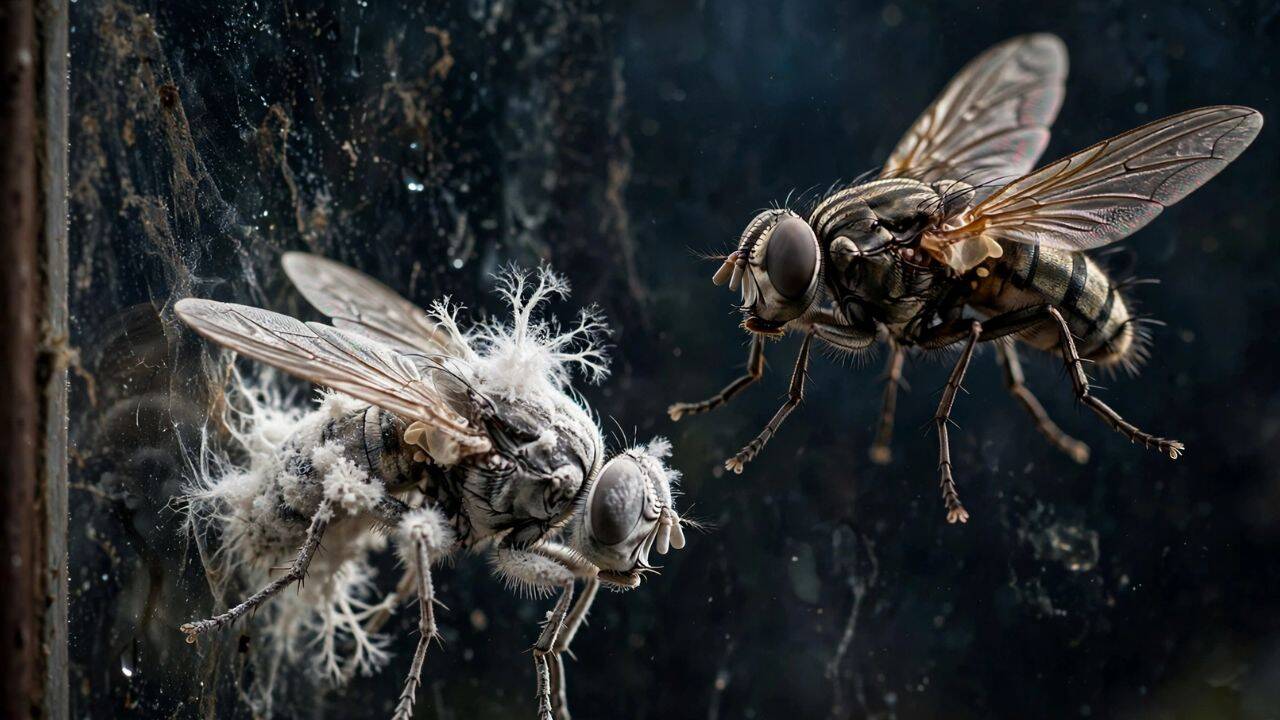
A unique fungus has been found to use dead female flies as a means to infect healthy flies. This fungus launches infectious spores into the air using pressurized liquid bursts from the dead flies, allowing it to spread its infection to other flies.
The spores are propelled with significant force, reaching speeds of up to ten meters per second. The size of the spores is crucial in this process, as it needs to balance the momentum required for dispersal with the ability to be transported by air currents.
The dead female flies play a key role in this process, as they attract male flies. When the male flies come into contact with the dead female flies, they pick up the spores and transport them to other locations, aiding in the spread of the infection.
This remarkable fungal artillery is a key component of the fungus's life cycle, ensuring its continued infection and progression. The use of dead female flies as a means to spread infection is a unique and fascinating example of the complex relationships between organisms in the natural world.
The fungus's ability to launch spores with such force and accuracy is a testament to its highly evolved infectious strategy. The fact that it uses dead female flies to attract male flies and spread its infection is a clever tactic that allows it to maximize its chances of infecting new hosts.
This discovery highlights the complex and often surprising ways in which organisms interact with each other and their environments. It also underscores the importance of continued research into the natural world, as there is still much to be learned about the intricate relationships between different species.
In the context of the natural world, this fungus's infectious strategy is just one example of the many complex relationships that exist between organisms. The use of dead female flies as a means to spread infection is a unique adaptation that has evolved in this fungus, and it plays a crucial role in its life cycle.
The study of this fungus and its infectious strategy can provide valuable insights into the ways in which organisms interact with each other and their environments. It can also inform our understanding of the complex relationships that exist between different species, and how these relationships shape the natural world.
In conclusion, the fungus's use of dead female flies to infect healthy flies is a remarkable example of the complex relationships that exist in the natural world. Its highly evolved infectious strategy is a testament to the fascinating and often surprising ways in which organisms interact with each other and their environments.
Frequently asked questions
How does the fungus infect healthy flies?
The fungus infects healthy flies by launching infectious spores from dead female flies, which are then transported to other locations by male flies.
What role do dead female flies play in the infection process?
Dead female flies attract male flies, which pick up the spores and transport them to other locations, aiding in the spread of the infection.