India Faces Coal Logistics Crisis, Not Shortage
Coal supply issues plague thermal plants, 58 face critically low fuel reserves.
'%3E%3Crect%20width%3D'96'%20height%3D'96'%20fill%3D'%23B3261E'%2F%3E%3Ccircle%20cx%3D'30'%20cy%3D'24'%20r%3D'44'%20fill%3D'%23fff'%20opacity%3D'.12'%2F%3E%3Ccircle%20cx%3D'60'%20cy%3D'74'%20r%3D'40'%20fill%3D'%23000'%20opacity%3D'.10'%2F%3E%3C%2Fg%3E%3Cg%20fill%3D'%23fff'%3E%3Crect%20x%3D'29'%20y%3D'49'%20width%3D'8'%20height%3D'19'%20rx%3D'1'%2F%3E%3Crect%20x%3D'39'%20y%3D'40'%20width%3D'9'%20height%3D'28'%20rx%3D'1'%2F%3E%3Crect%20x%3D'50'%20y%3D'45'%20width%3D'8'%20height%3D'23'%20rx%3D'1'%2F%3E%3Crect%20x%3D'60'%20y%3D'53'%20width%3D'7'%20height%3D'15'%20rx%3D'1'%2F%3E%3Crect%20x%3D'41'%20y%3D'34'%20width%3D'5'%20height%3D'6'%2F%3E%3C%2Fg%3E%3C%2Fsvg%3E)
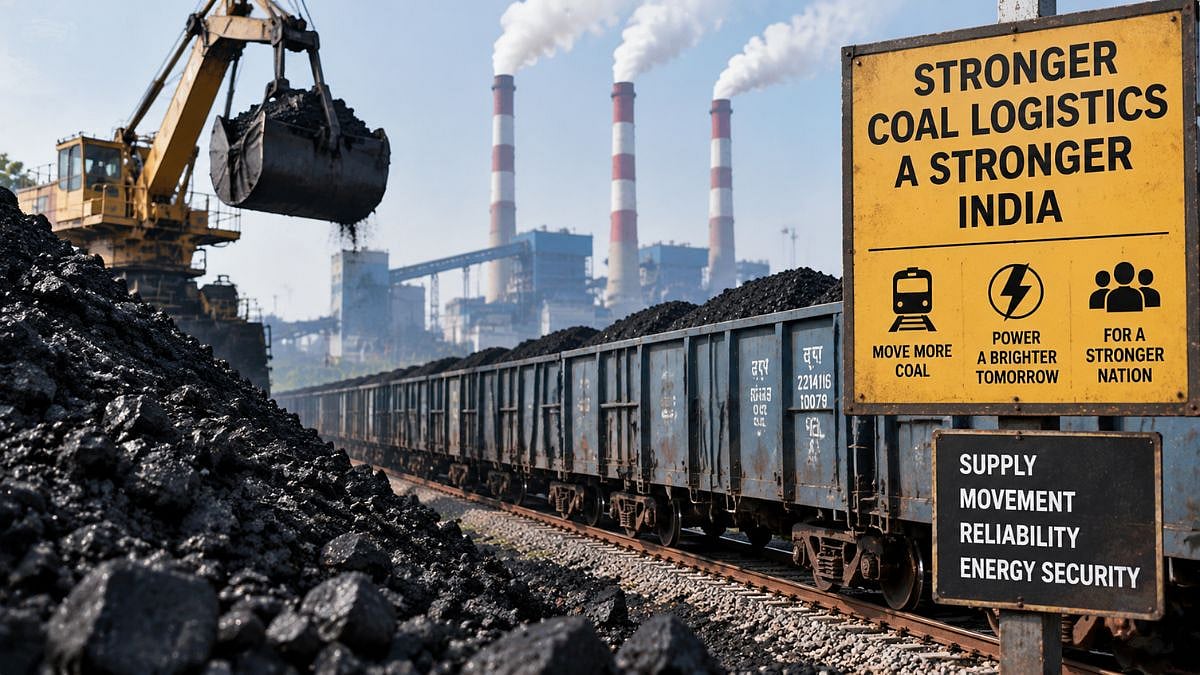
India's thermal plants are facing a severe coal supply crisis, with coal stocks falling to nearly 27 million tonnes, enough for only up to nine days of normal operations. This is below the recommended 19-day requirement. As of last week, the number of power stations facing critically low fuel reserves has grown to 58 from 46 in August.
The Ministry of Coal and Coal India have assured states that pithead stocks are sufficient and that rail shipments are being increased to fill the gap. However, the issue lies in the logistics of coal supply, not in the production of coal itself. Coal India has 76 million tonnes in its pits, and production is up 6.7 per cent year on year. Supply to the power sector has risen to 4.5 per cent.
The problem is that National Thermal Power Corporation plants receive only half the trains they need, which suggests that the gap isn't in mining but in movement. This is a recurring problem, with the monsoon season often being blamed for the logistics issue. However, monsoons are a predictable event, and the lack of planning to mitigate the disruption is evident.
In the past few months, power demand has jumped nearly 10 per cent, with July alone hitting 171 billion units, a record. This has put a strain on thermal plants, which need maintenance before becoming operational again. However, the Power Ministry is now seeking deferment of maintenance due to the ongoing crisis, which could lead to plant breakdowns and create a bigger problem.
The Coal Ministry needs to work towards increasing rail evacuation capacity for peak monsoon despatch, and road transport should be a standing contracted option, with prices locked in advance. The situation is grim, and the government cannot afford an emergency like a grid collapse.
The coal supply crisis is not just a matter of logistics, but also of planning and management. The lack of a buffer stock to absorb the disruption caused by the monsoon season has led to the current crisis. The government needs to take urgent action to address the issue and ensure a stable power supply.
In conclusion, the coal supply crisis in India is a complex issue that requires a comprehensive solution. The government needs to work towards increasing rail evacuation capacity, improving logistics, and ensuring a stable power supply. The situation is critical, and immediate action is necessary to prevent a grid collapse.
The implications of the coal supply crisis are far-reaching, and the government needs to take a long-term view to address the issue. This includes investing in rail infrastructure, improving the efficiency of coal supply chains, and promoting renewable energy sources. Only then can India ensure a stable and reliable power supply to meet its growing energy needs.
The coal supply crisis is a wake-up call for the government to take urgent action to address the issue. The consequences of inaction could be severe, and the government needs to work towards finding a solution to the crisis. The people of India deserve a reliable and stable power supply, and it is the government's responsibility to ensure that this is provided.
In the end, the coal supply crisis is a test of the government's ability to manage and plan for the country's energy needs. The government needs to rise to the challenge and take urgent action to address the issue. Only then can India ensure a bright and prosperous future for its people.
Frequently asked questions
What is the current coal stock level in India?
The current coal stock level is nearly 27 million tonnes, enough for up to nine days of normal operations.
What is the main cause of the coal supply crisis in India?
The main cause of the coal supply crisis is logistics issues, not a shortage of coal itself.