India Rejects Pakistan's Youm-e-Istehsal Protest
India dismisses Pakistan's protest, Pakistan observes day of protest
'%3E%3Crect%20width%3D'96'%20height%3D'96'%20fill%3D'%234A235A'%2F%3E%3Ccircle%20cx%3D'30'%20cy%3D'24'%20r%3D'44'%20fill%3D'%23fff'%20opacity%3D'.12'%2F%3E%3Ccircle%20cx%3D'60'%20cy%3D'74'%20r%3D'40'%20fill%3D'%23000'%20opacity%3D'.10'%2F%3E%3C%2Fg%3E%3Cg%20fill%3D'none'%20stroke%3D'%23fff'%20stroke-width%3D'3'%3E%3Ccircle%20cx%3D'48'%20cy%3D'48'%20r%3D'16'%2F%3E%3Cellipse%20cx%3D'48'%20cy%3D'48'%20rx%3D'6.5'%20ry%3D'16'%2F%3E%3Cline%20x1%3D'32'%20y1%3D'42'%20x2%3D'64'%20y2%3D'42'%2F%3E%3Cline%20x1%3D'32'%20y1%3D'54'%20x2%3D'64'%20y2%3D'54'%2F%3E%3C%2Fg%3E%3C%2Fsvg%3E)
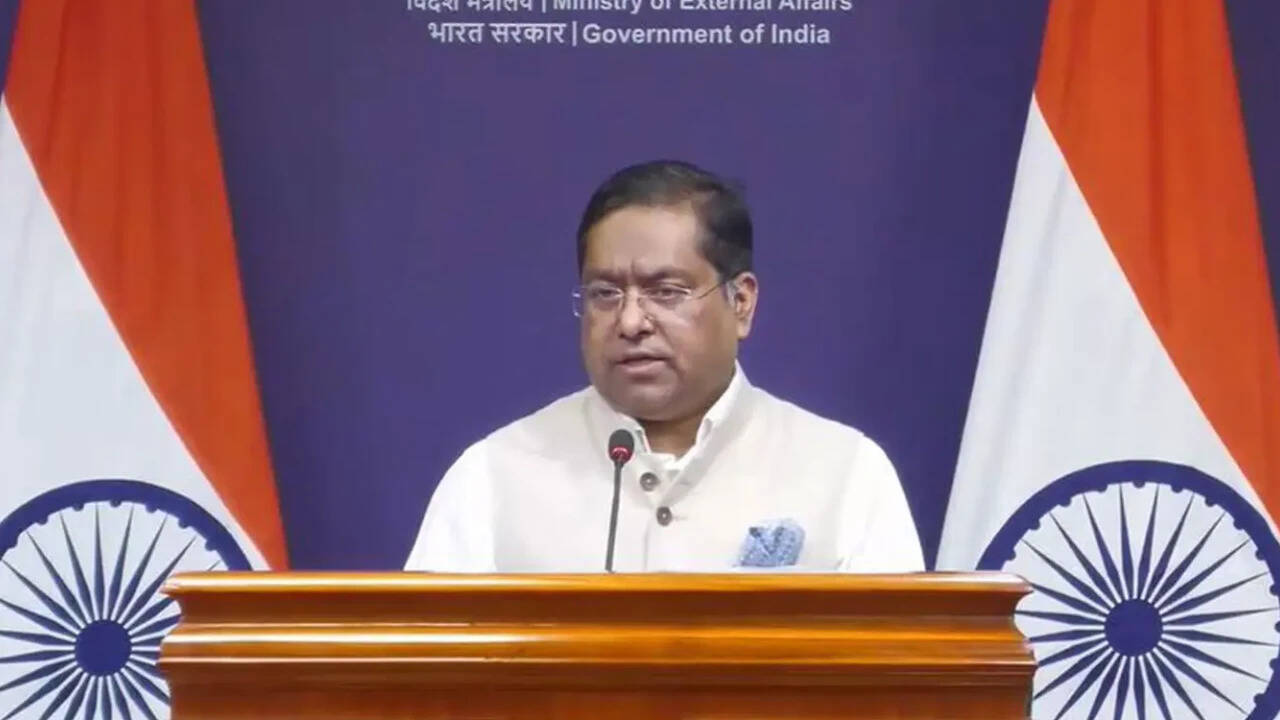
India has rejected Pakistan's observance of 'Youm-e-Istehsal', a day of protest against the revocation of Article 370 in Jammu and Kashmir. The protest was observed on August 5, marking two years since the Indian government's decision to revoke the special status of the region.
The Indian government has maintained that the decision to revoke Article 370 was an internal matter, and that Pakistan has no right to interfere in India's internal affairs.
Pakistan, on the other hand, has been vocal in its opposition to the revocation of Article 370, and has observed 'Youm-e-Istehsal' as a day of protest and solidarity with the people of Kashmir.
The revocation of Article 370 has been a major point of contention between India and Pakistan, with both countries having differing views on the issue.
India's decision to revoke Article 370 was made in August 2019, and has since been a major factor in the strained relations between India and Pakistan.
The Indian government has stated that the decision was made to integrate Jammu and Kashmir into the rest of India, and to promote economic development in the region.
However, Pakistan has viewed the decision as a violation of the rights of the people of Kashmir, and has called for the international community to intervene in the matter.
The observance of 'Youm-e-Istehsal' is seen as an attempt by Pakistan to draw attention to the issue, and to garner international support for its stance on Kashmir.
The issue of Kashmir has been a longstanding point of contention between India and Pakistan, with both countries having claimed sovereignty over the region.
The dispute over Kashmir has led to several wars and skirmishes between India and Pakistan, and continues to be a major factor in the strained relations between the two countries.
In recent years, the issue of Kashmir has gained increased international attention, with several countries and organizations calling for a peaceful resolution to the dispute.
However, a resolution to the issue remains elusive, with both India and Pakistan maintaining their respective stances on the matter.
The rejection of Pakistan's 'Youm-e-Istehsal' by India is seen as a reflection of the ongoing tensions between the two countries, and highlights the need for a peaceful and diplomatic resolution to the dispute over Kashmir.
The international community has called for restraint and dialogue between India and Pakistan, and has urged both countries to work towards a peaceful resolution to the issue.
In conclusion, the rejection of Pakistan's 'Youm-e-Istehsal' by India is a significant development in the ongoing dispute over Kashmir, and highlights the need for a peaceful and diplomatic resolution to the issue.
It remains to be seen how the situation will unfold in the coming days and weeks, but one thing is certain - the issue of Kashmir will continue to be a major point of contention between India and Pakistan, and will require a sustained effort from both countries to resolve.
The Indian government's decision to revoke Article 370 has had significant implications for the region, and has led to a major shift in the dynamics of the dispute over Kashmir.
The international community will be watching the situation closely, and will be urging both India and Pakistan to work towards a peaceful resolution to the issue.
For India, the revocation of Article 370 is seen as a major step towards integrating Jammu and Kashmir into the rest of the country, and promoting economic development in the region.
However, for Pakistan, the decision is seen as a violation of the rights of the people of Kashmir, and a threat to regional stability.
The differing views on the issue have led to increased tensions between India and Pakistan, and have highlighted the need for a peaceful and diplomatic resolution to the dispute.
In the end, it is clear that the issue of Kashmir will require a sustained effort from both India and Pakistan to resolve, and will need the support and cooperation of the international community.
The rejection of Pakistan's 'Youm-e-Istehsal' by India is a significant development in the ongoing dispute, and highlights the need for a peaceful and diplomatic resolution to the issue.
Frequently asked questions
What is Youm-e-Istehsal?
Youm-e-Istehsal is a day of protest observed by Pakistan against the revocation of Article 370 in Jammu and Kashmir.
Why did India revoke Article 370?
India revoked Article 370 to integrate Jammu and Kashmir into the rest of India and promote economic development in the region.