Maharashtra To Regulate Private Coaching Classes Soon
New law to curb excessive fees, misleading claims. Coaching centres to register, follow rules.
'%3E%3Crect%20width%3D'96'%20height%3D'96'%20fill%3D'%231B5E20'%2F%3E%3Ccircle%20cx%3D'30'%20cy%3D'24'%20r%3D'44'%20fill%3D'%23fff'%20opacity%3D'.12'%2F%3E%3Ccircle%20cx%3D'60'%20cy%3D'74'%20r%3D'40'%20fill%3D'%23000'%20opacity%3D'.10'%2F%3E%3C%2Fg%3E%3Cg%3E%3Ccircle%20cx%3D'48'%20cy%3D'48'%20r%3D'15'%20fill%3D'%23fff'%2F%3E%3Cpath%20d%3D'M43%2034%20Q50%2048%2043%2062'%20fill%3D'none'%20stroke%3D'%238a94a6'%20stroke-width%3D'2.4'%2F%3E%3Cpath%20d%3D'M47%2033%20Q54%2048%2047%2063'%20fill%3D'none'%20stroke%3D'%238a94a6'%20stroke-width%3D'1.8'%20stroke-dasharray%3D'1.5%203'%2F%3E%3C%2Fg%3E%3C%2Fsvg%3E)
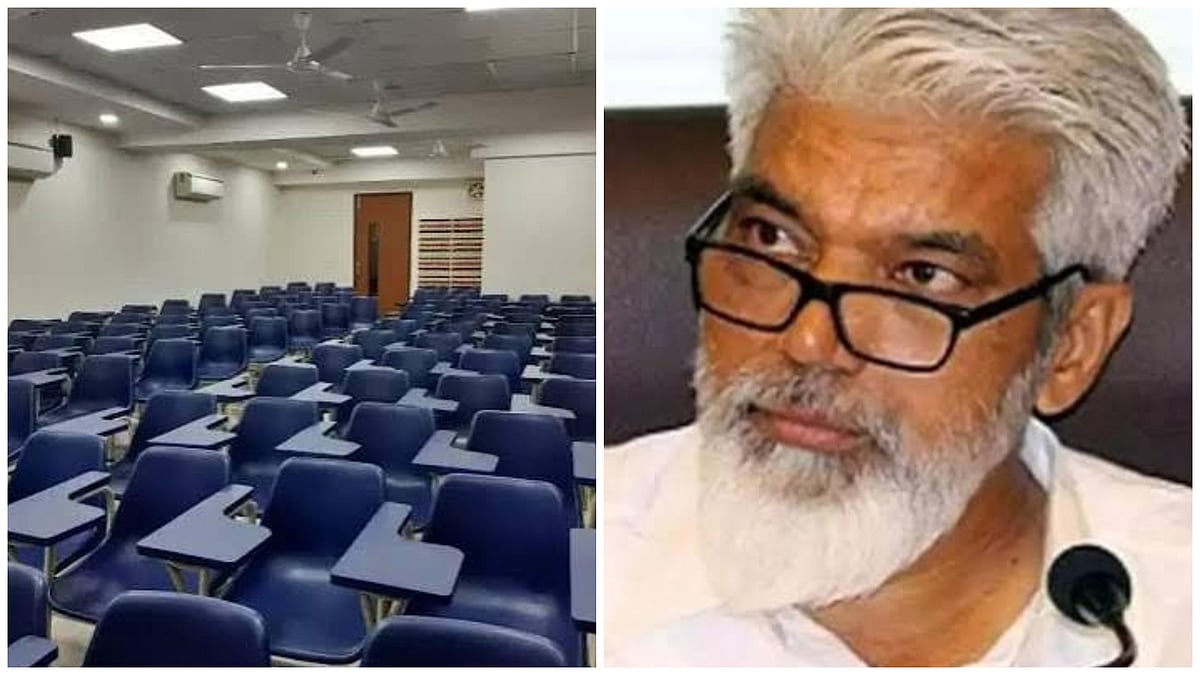
The Maharashtra government is set to introduce a new law to regulate private coaching classes across the state. School Education Minister Dada Bhuse announced this in Nashik, stating that coaching classes should provide quality education and guidance to students, rather than becoming purely commercial enterprises.
Bhuse emphasized the need to protect students and parents from excessive fees, misleading claims, and undue academic pressure. The proposed legislation aims to bring private coaching centres under a uniform regulatory framework, covering areas such as registration, fee structures, teacher qualifications, class timings, infrastructure, student safety, and advertising practices.
Under the proposed Maharashtra Private Coaching Centres (Registration and Regulation) Act, 2026, private coaching centres will have to obtain mandatory registration. Each branch will require separate registration, and existing coaching centres will have to comply with the new provisions within a prescribed period.
One of the key provisions proposed in the draft legislation is a restriction on admission of children below the age of 13 to private coaching centres. The draft also proposes minimum educational qualifications for teachers working in coaching centres. Coaching centres will not be permitted to make false or misleading claims regarding students' marks, ranks, or chances of success.
To reduce excessive academic pressure on students, the proposed law seeks to regulate the number of hours coaching classes can operate. The draft reportedly proposes a maximum of five hours of coaching per day, ensuring that students have sufficient time for school education, self-study, recreation, and rest.
The proposed legislation also seeks to curb the practice of 'dummy schools' and arrangements between educational institutions and coaching centres. Private coaching centres will not be permitted to operate within the premises of recognized schools or colleges. Restrictions have also been proposed on teachers working in recognized schools or junior colleges from teaching at private coaching centres.
Coaching centres will have to issue proper receipts for fees collected from students, and the proposed rules seek to prevent unauthorized additional charges and arbitrary fee hikes after commencement of a course. Provisions have also been proposed for proportionate refund of fees when a student leaves a course midway, subject to prescribed conditions.
The government is also looking to regulate advertisements issued by coaching centers, taking action against misleading advertisements. The new law is expected to bring transparency and accountability to the private coaching sector, protecting the interests of students and parents.
The introduction of this new law is a significant step towards regulating the private coaching sector in Maharashtra. With the proposed legislation, the government aims to ensure that coaching classes provide quality education and guidance to students, rather than exploiting them for commercial gain.
The new law will have a significant impact on the education sector in Maharashtra, affecting thousands of students and coaching centres across the state. It is expected to bring about a positive change, promoting transparency, accountability, and quality education in the private coaching sector.
In conclusion, the Maharashtra government's decision to introduce a new law to regulate private coaching classes is a welcome move. It is expected to bring about a significant improvement in the education sector, protecting the interests of students and parents, and promoting quality education and guidance.
Frequently asked questions
What is the purpose of the new law to regulate private coaching classes?
The purpose of the new law is to protect students and parents from excessive fees, misleading claims, and undue academic pressure, and to promote quality education and guidance.
What are the key provisions proposed in the draft legislation?
The key provisions include mandatory registration for coaching centres, restrictions on admission of children below 13, minimum educational qualifications for teachers, and regulation of fee structures and advertising practices.