Navi Mumbai Health Report Reveals 75% Vitamin D Deficiency
Navi Mumbai health report finds high rates of vitamin D deficiency and diabetes risk. Over 75% of people screened were deficient in vitamin D.
'%3E%3Crect%20width%3D'96'%20height%3D'96'%20fill%3D'%23B3261E'%2F%3E%3Ccircle%20cx%3D'30'%20cy%3D'24'%20r%3D'44'%20fill%3D'%23fff'%20opacity%3D'.12'%2F%3E%3Ccircle%20cx%3D'60'%20cy%3D'74'%20r%3D'40'%20fill%3D'%23000'%20opacity%3D'.10'%2F%3E%3C%2Fg%3E%3Cg%20fill%3D'%23fff'%3E%3Crect%20x%3D'29'%20y%3D'49'%20width%3D'8'%20height%3D'19'%20rx%3D'1'%2F%3E%3Crect%20x%3D'39'%20y%3D'40'%20width%3D'9'%20height%3D'28'%20rx%3D'1'%2F%3E%3Crect%20x%3D'50'%20y%3D'45'%20width%3D'8'%20height%3D'23'%20rx%3D'1'%2F%3E%3Crect%20x%3D'60'%20y%3D'53'%20width%3D'7'%20height%3D'15'%20rx%3D'1'%2F%3E%3Crect%20x%3D'41'%20y%3D'34'%20width%3D'5'%20height%3D'6'%2F%3E%3C%2Fg%3E%3C%2Fsvg%3E)
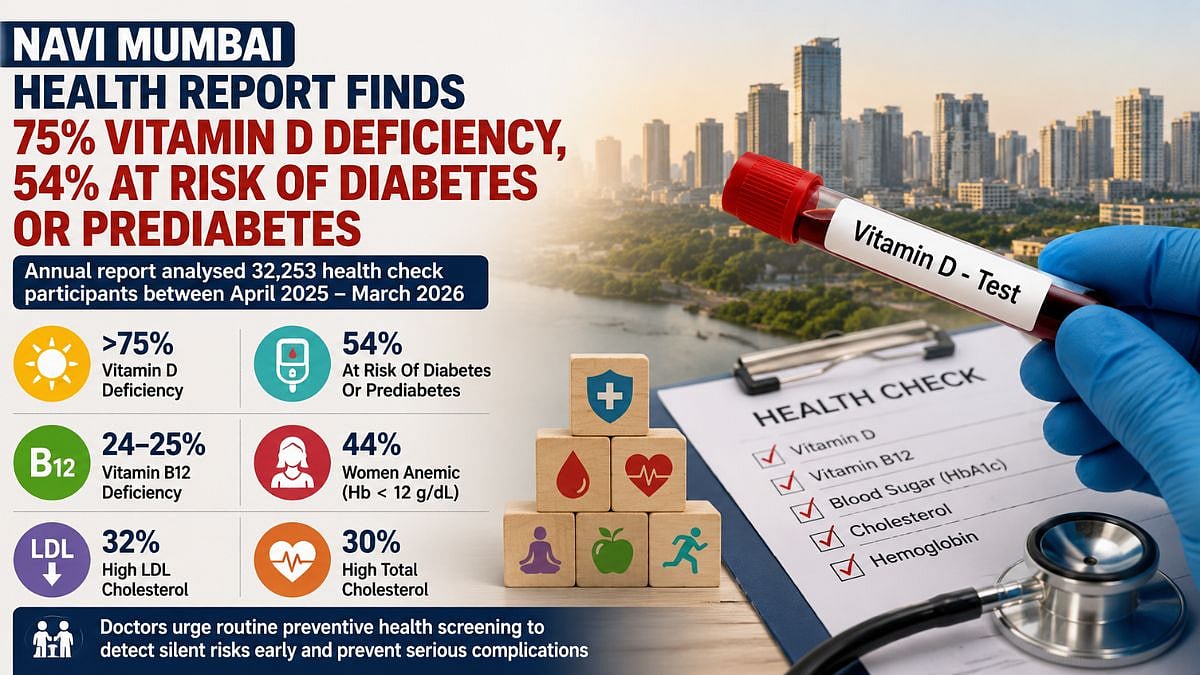
A recent health report released by a Navi Mumbai hospital has found that more than 75% of people screened in the area are deficient in vitamin D. The report, which analyzed over 100,000 laboratory investigations, also found that over 54% of participants were at risk of developing diabetes or prediabetes.
The study, conducted by Kokilaben Dhirubhai Ambani Hospital's Department of Laboratory Medicine, covered 32,253 participants between the ages of 20 and 80 years. The average age of the participants was 44.8 years, representing a predominantly working-age population.
The report identified six largely silent but preventable cardiometabolic and nutritional risks that are highly prevalent, yet frequently go undiagnosed in an apparently healthy population. These include vitamin D deficiency, vitamin B12 deficiency, dysglycaemia, female anaemia, elevated LDL cholesterol, and high total cholesterol.
Vitamin D deficiency emerged as the most common health concern, affecting more than 75% of those tested. Doctors attributed the widespread deficiency to indoor office lifestyles and inadequate exposure to sunlight rather than seasonal factors.
The report also found that 24-25% of participants had vitamin B12 deficiency, a trend linked to predominantly vegetarian dietary habits. Additionally, 28.5% of people with vitamin D deficiency also had low vitamin B12 levels, indicating that the two deficiencies frequently occur together.
The findings also pointed to a growing diabetes burden, with 54% of those screened found to have dysglycaemia. This includes 34% who fell in the prediabetes range and another 20% who met the criteria for diabetes.
Anaemia remained a significant concern among women, with 44% having haemoglobin levels below 12 g/dL. The median haemoglobin level among women stood at 12.1 g/dL, just above the clinical cut-off.
The report also highlighted abnormal cholesterol levels, with elevated LDL (bad cholesterol) found in 32% of participants, while 30% had high total cholesterol and 23.8% had elevated triglycerides.
The study found a strong clustering of metabolic disorders, indicating a need for comprehensive health check-ups and preventive measures. The report's findings have significant implications for public health policy and highlight the need for increased awareness and education about the importance of vitamin D, healthy diet, and regular exercise.
The high prevalence of vitamin D deficiency and diabetes risk in Navi Mumbai is a cause for concern, and efforts should be made to address these issues through public health initiatives and awareness campaigns. By promoting healthy lifestyles and providing access to regular health check-ups, it is possible to reduce the burden of these diseases and improve the overall health and wellbeing of the population.
In conclusion, the Navi Mumbai health report highlights the need for increased awareness and action to address the high prevalence of vitamin D deficiency and diabetes risk in the area. By working together, it is possible to create a healthier and more sustainable community for all.
Frequently asked questions
What is the prevalence of vitamin D deficiency in Navi Mumbai?
According to the report, more than 75% of people screened in Navi Mumbai are deficient in vitamin D.
What is the risk of diabetes or prediabetes in Navi Mumbai?
The report found that 54% of those screened were at risk of developing diabetes or prediabetes.