Pune Police Chief Faces Contempt Over Noise Pollution
Pune Police Commissioner Amitesh Kumar faces contempt petition, Allegations of failing to curb noise pollution
'%3E%3Crect%20width%3D'96'%20height%3D'96'%20fill%3D'%23B3261E'%2F%3E%3Ccircle%20cx%3D'30'%20cy%3D'24'%20r%3D'44'%20fill%3D'%23fff'%20opacity%3D'.12'%2F%3E%3Ccircle%20cx%3D'60'%20cy%3D'74'%20r%3D'40'%20fill%3D'%23000'%20opacity%3D'.10'%2F%3E%3C%2Fg%3E%3Cg%20fill%3D'%23fff'%3E%3Crect%20x%3D'29'%20y%3D'49'%20width%3D'8'%20height%3D'19'%20rx%3D'1'%2F%3E%3Crect%20x%3D'39'%20y%3D'40'%20width%3D'9'%20height%3D'28'%20rx%3D'1'%2F%3E%3Crect%20x%3D'50'%20y%3D'45'%20width%3D'8'%20height%3D'23'%20rx%3D'1'%2F%3E%3Crect%20x%3D'60'%20y%3D'53'%20width%3D'7'%20height%3D'15'%20rx%3D'1'%2F%3E%3Crect%20x%3D'41'%20y%3D'34'%20width%3D'5'%20height%3D'6'%2F%3E%3C%2Fg%3E%3C%2Fsvg%3E)
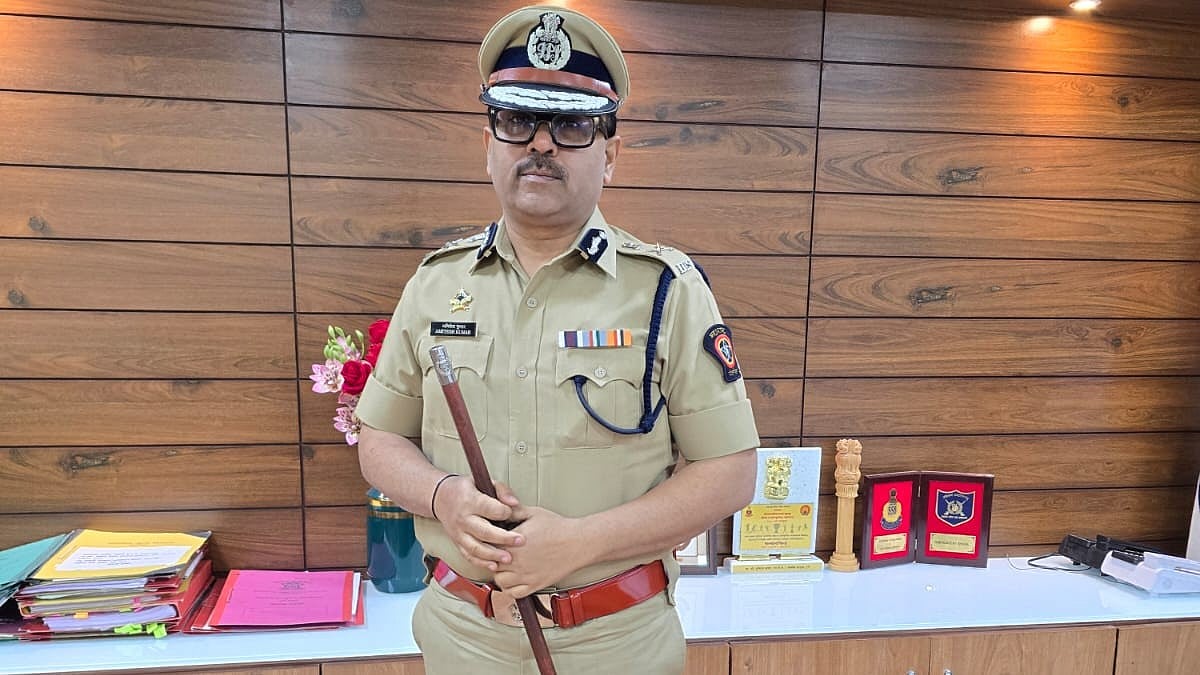
A contempt petition has been filed against Pune Police Commissioner Amitesh Kumar in the Bombay High Court. The petition alleges that the police have failed to effectively implement the court's directions to control noise pollution in the city.
The petition was filed by several organisations and individuals, including the Akhil Bharatiya Grahak Panchayat and the Pune District Cooperative Housing Societies and Apartment Federation. They claim that the police have not taken adequate measures to prevent noise pollution from high-powered DJ systems, amplifiers, and laser beams during public events.
The petitioners are concerned about the impact of excessive noise on senior citizens, children, patients, students, shopkeepers, and workers. They argue that the noise levels in the city are exceeding the permissible limits prescribed by law. The Noise Pollution (Regulation and Control) Rules, 2000, specify that the permissible noise limits are 75 dB during the day and 70 dB at night in industrial areas, 65 dB and 55 dB in commercial areas, 55 dB and 45 dB in residential areas, and 50 dB and 40 dB in silence zones.
The petitioners have presented evidence of noise-level readings recorded in 2025, which show that the noise levels in some areas of the city are exceeding the permissible limits. For example, noise levels of 105 dB were recorded at Jedhe Chowk, 93.8 dB at Tilak Chowk, and 90.2 dB at Sant Kabir Chowk and Sonya Maruti Chowk.
The police have responded to the petition by stating that action has been taken against those violating noise pollution norms. Police Commissioner Amitesh Kumar has said that sound systems have been seized and over 1,000 noise-level readings have been taken. However, the petitioners argue that more needs to be done to effectively control noise pollution in the city.
The petition is not targeted at any particular religion or festival, but rather at noise pollution of all kinds. The petitioners have clarified that they have no objection to the use of traditional musical instruments and music as long as they remain within the permissible limits prescribed by law.
The issue of noise pollution is a significant concern in Pune, with many residents complaining about the excessive noise from bars, pubs, clubs, rooftop establishments, and restaurants operating in residential areas. The petition highlights the need for effective implementation of the court's directions to control noise pollution and ensure that the noise levels in the city are within the permissible limits.
The Bombay High Court's directions on noise pollution are aimed at protecting the health and well-being of citizens. The court has specified measures to control noise pollution, including the use of noise-limiting devices and the imposition of penalties on those violating noise pollution norms.
In conclusion, the contempt petition filed against Pune Police Commissioner Amitesh Kumar highlights the need for effective action to control noise pollution in the city. The petitioners are seeking the court's intervention to ensure that the police take adequate measures to prevent noise pollution and protect the health and well-being of citizens.
The outcome of the petition is likely to have significant implications for the city of Pune and its residents. If the court rules in favor of the petitioners, it could lead to stricter enforcement of noise pollution norms and a reduction in the noise levels in the city. This, in turn, could have a positive impact on the health and well-being of citizens, particularly senior citizens, children, and patients who are most affected by noise pollution.
The issue of noise pollution is not unique to Pune, and it is a concern that affects many cities in India. The petition filed in the Bombay High Court highlights the need for effective action to control noise pollution and protect the health and well-being of citizens. It is likely to be an important precedent for other cities in India, and it could lead to a reduction in noise pollution and an improvement in the quality of life for citizens.
The petitioners are hoping that the court will take a strong stance on the issue of noise pollution and direct the police to take effective measures to control it. They are seeking the court's intervention to ensure that the noise levels in the city are within the permissible limits and that the health and well-being of citizens are protected.
The case is likely to be heard in the coming weeks, and the outcome is eagerly awaited by the petitioners and the residents of Pune. The decision of the court will have significant implications for the city and its residents, and it could lead to a reduction in noise pollution and an improvement in the quality of life for citizens.
The issue of noise pollution is a complex one, and it requires a multifaceted approach to solve. The petition filed in the Bombay High Court is an important step towards addressing the issue, and it highlights the need for effective action to control noise pollution and protect the health and well-being of citizens.
The city of Pune is known for its vibrant cultural scene, and it is home to many festivals and events throughout the year. However, the excessive noise from these events can have a significant impact on the health and well-being of citizens. The petitioners are seeking the court's intervention to ensure that the noise levels from these events are within the permissible limits and that the health and well-being of citizens are protected.
In recent years, there has been a growing concern about the impact of noise pollution on the health and well-being of citizens. Noise pollution has been linked to a range of health problems, including hearing loss, stress, and anxiety. The petition filed in the Bombay High Court highlights the need for effective action to control noise pollution and protect the health and well-being of citizens.
The petitioners are hoping that the court will take a strong stance on the issue of noise pollution and direct the police to take effective measures to control it. They are seeking the court's intervention to ensure that the noise levels in the city are within the permissible limits and that the health and well-being of citizens are protected.
The case is likely to be an important precedent for other cities in India, and it could lead to a reduction in noise pollution and an improvement in the quality of life for citizens. The petitioners are seeking the court's intervention to ensure that the noise levels in the city are within the permissible limits and that the health and well-being of citizens are protected.
The issue of noise pollution is a significant concern in Pune, and it requires a multifaceted approach to solve. The petition filed in the Bombay High Court is an important step towards addressing the issue, and it highlights the need for effective action to control noise pollution and protect the health and well-being of citizens.
The outcome of the petition is likely to have significant implications for the city of Pune and its residents. If the court rules in favor of the petitioners, it could lead to stricter enforcement of noise pollution norms and a reduction in the noise levels in the city. This, in turn, could have a positive impact on the health and well-being of citizens, particularly senior citizens, children, and patients who are most affected by noise pollution.
The petitioners are hoping that the court will take a strong stance on the issue of noise pollution and direct the police to take effective measures to control it. They are seeking the court's intervention to ensure that the noise levels in the city are within the permissible limits and that the health and well-being of citizens are protected.
The case is likely to be heard in the coming weeks, and the outcome is eagerly awaited by the petitioners and the residents of Pune. The decision of the court will have significant implications for the city and its residents, and it could lead to a reduction in noise pollution and an improvement in the quality of life for citizens.
The issue of noise pollution is a complex one, and it requires a multifaceted approach to solve. The petition filed in the Bombay High Court is an important step towards addressing the issue, and it highlights the need for effective action to control noise pollution and protect the health and well-being of citizens.
What it means for Mumbai and India is that the issue of noise pollution is not unique to Pune, and it is a concern that affects many cities in India. The petition filed in the Bombay High Court highlights the need for effective action to control noise pollution and protect the health and well-being of citizens. It is likely to be an important precedent for other cities in India, and it could lead to a reduction in noise pollution and an improvement in the quality of life for citizens.
In conclusion, the contempt petition filed against Pune Police Commissioner Amitesh Kumar highlights the need for effective action to control noise pollution in the city. The petitioners are seeking the court's intervention to ensure that the police take adequate measures to prevent noise pollution and protect the health and well-being of citizens. The outcome of the petition is likely to have significant implications for the city of Pune and its residents, and it could lead to a reduction in noise pollution and an improvement in the quality of life for citizens.
Frequently asked questions
What is the contempt petition about?
The contempt petition is about the failure of the Pune Police to effectively implement the court's directions to control noise pollution in the city.
What are the permissible noise limits in residential areas?
The permissible noise limits in residential areas are 55 dB during the day and 45 dB at night.