Madanpura's Textile Legacy Fades Into History
Mumbai's Madanpura loses textile hub status, community shares memories
'%3E%3Crect%20width%3D'96'%20height%3D'96'%20fill%3D'%23B3261E'%2F%3E%3Ccircle%20cx%3D'30'%20cy%3D'24'%20r%3D'44'%20fill%3D'%23fff'%20opacity%3D'.12'%2F%3E%3Ccircle%20cx%3D'60'%20cy%3D'74'%20r%3D'40'%20fill%3D'%23000'%20opacity%3D'.10'%2F%3E%3C%2Fg%3E%3Cg%20fill%3D'%23fff'%3E%3Crect%20x%3D'29'%20y%3D'49'%20width%3D'8'%20height%3D'19'%20rx%3D'1'%2F%3E%3Crect%20x%3D'39'%20y%3D'40'%20width%3D'9'%20height%3D'28'%20rx%3D'1'%2F%3E%3Crect%20x%3D'50'%20y%3D'45'%20width%3D'8'%20height%3D'23'%20rx%3D'1'%2F%3E%3Crect%20x%3D'60'%20y%3D'53'%20width%3D'7'%20height%3D'15'%20rx%3D'1'%2F%3E%3Crect%20x%3D'41'%20y%3D'34'%20width%3D'5'%20height%3D'6'%2F%3E%3C%2Fg%3E%3C%2Fsvg%3E)
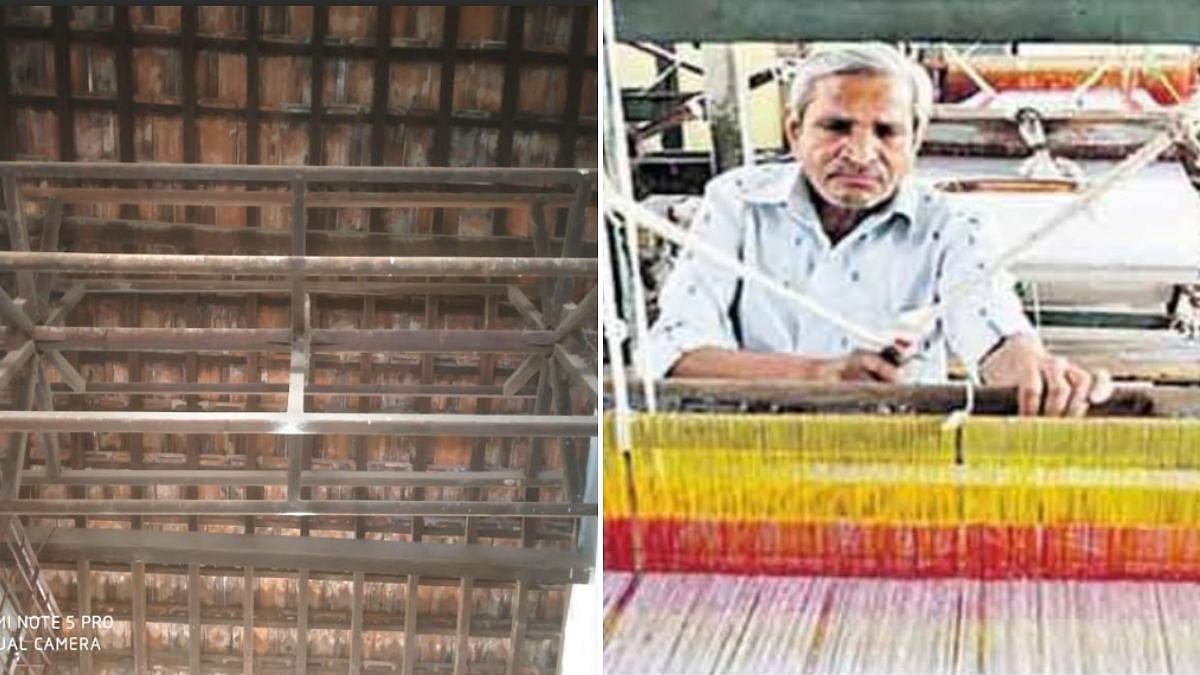
Mumbai's central neighbourhood of Madanpura has undergone a significant transformation from a thriving textile hub to a nondescript area. Local resident Mushir Ahmed Ansari notes that the community that built Madanpura is still present, but its identity has been lost.
On National Handloom Day, descendants of the locality's textile pioneers shared memories and rare photographs of the era when Madanpura's lanes were filled with the sound of thousands of looms. The area was originally a refuge for the Julaha Muslim weaving community who fled Uttar Pradesh towns after the 1857 Revolt.
The community flourished in Madanpura, with nearly 90% of the area's residents belonging to the Julaha community by the early 20th century. Homes were converted into workshops, allowing women to participate in the family trade. The handloom ecosystem also attracted allied trades like dyeing and textile printing.
The electrification of looms in the 1960s boosted production and led to the rise of workers' movements. Renowned Urdu writers and poets from the Progressive Writers' Movement engaged with Madanpura's weaving community. However, acute yarn shortages in the 1970s crippled production, leading to the formation of the National Weavers Welfare Society.
By the 1980s, the local industry went into decline as manufacturing shifted to other regions. The newer generation in the weavers' families shifted to salaried jobs and other businesses. To preserve this vanishing history, the Bhendi Bazar Research Academy is documenting the remaining textile heritage.
The academy is creating an archive featuring photographs of traditional charkhas, handloom warping, and historical equipment. This effort aims to safeguard what remains of Madanpura's textile legacy. The story of Madanpura's rise and fall as a textile hub serves as a reminder of the importance of preserving cultural heritage.
The decline of the textile industry in Madanpura has had a significant impact on the community. Many families have had to adapt to new ways of living, and the area has lost its unique identity. However, the efforts of the Bhendi Bazar Research Academy and the National Weavers Welfare Society are helping to keep the memory of Madanpura's textile legacy alive.
In conclusion, the story of Madanpura's textile hub is a significant part of Mumbai's history. The efforts to preserve this legacy are crucial in maintaining the city's cultural heritage. As Mumbai continues to evolve, it is essential to remember and learn from its past.
The preservation of Madanpura's textile legacy is not just important for the local community but also for the city of Mumbai as a whole. It serves as a reminder of the city's rich cultural heritage and the importance of preserving it for future generations.
Frequently asked questions
What was Madanpura known for in the past?
Madanpura was known for its thriving textile industry, with thousands of looms operating in the area.
Why did the textile industry decline in Madanpura?
The textile industry declined due to acute yarn shortages, rising costs, and the shift of manufacturing to other regions.