RSS Chief Bhagwat Outlines Route to Change
RSS chief outlines plan, society to politics transformation
'%3E%3Crect%20width%3D'96'%20height%3D'96'%20fill%3D'%231A5276'%2F%3E%3Ccircle%20cx%3D'30'%20cy%3D'24'%20r%3D'44'%20fill%3D'%23fff'%20opacity%3D'.12'%2F%3E%3Ccircle%20cx%3D'60'%20cy%3D'74'%20r%3D'40'%20fill%3D'%23000'%20opacity%3D'.10'%2F%3E%3C%2Fg%3E%3Cg%20fill%3D'%23fff'%3E%3Cpath%20d%3D'M31%2041%20L48%2031%20L65%2041%20Z'%2F%3E%3Crect%20x%3D'33'%20y%3D'43'%20width%3D'4'%20height%3D'17'%2F%3E%3Crect%20x%3D'41'%20y%3D'43'%20width%3D'4'%20height%3D'17'%2F%3E%3Crect%20x%3D'51'%20y%3D'43'%20width%3D'4'%20height%3D'17'%2F%3E%3Crect%20x%3D'59'%20y%3D'43'%20width%3D'4'%20height%3D'17'%2F%3E%3Crect%20x%3D'30'%20y%3D'62'%20width%3D'36'%20height%3D'4'%20rx%3D'1'%2F%3E%3C%2Fg%3E%3C%2Fsvg%3E)
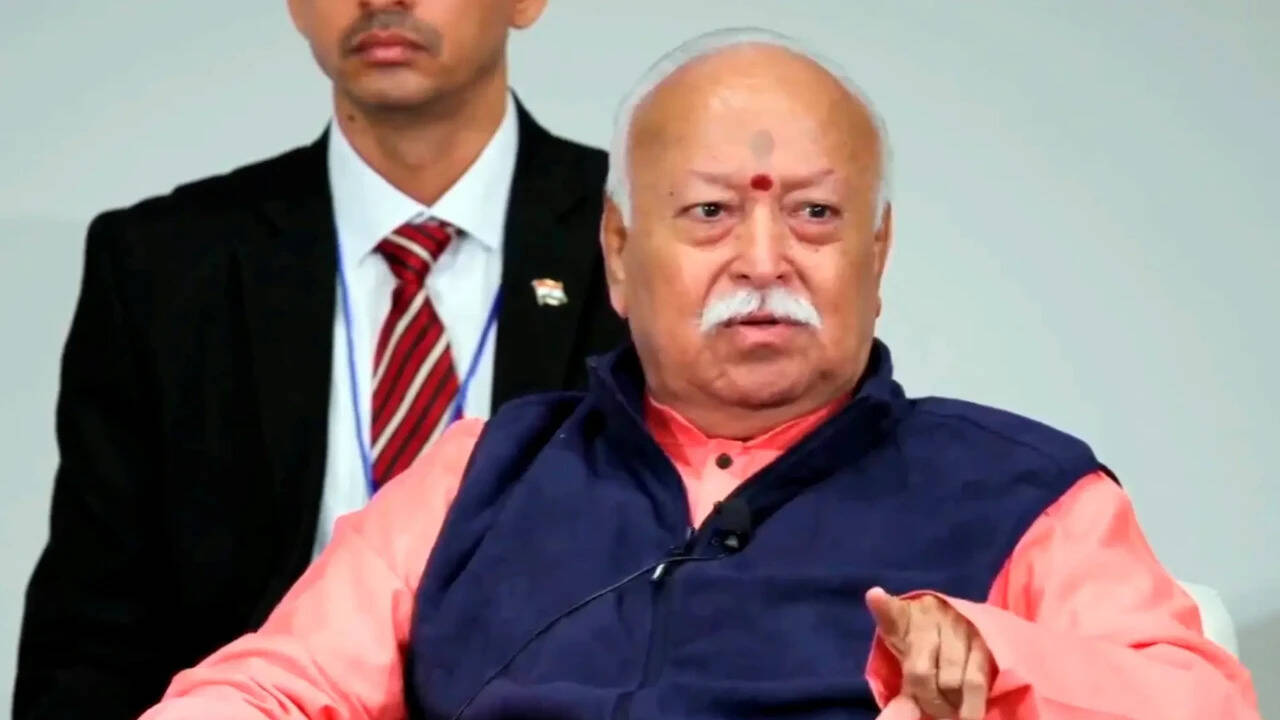
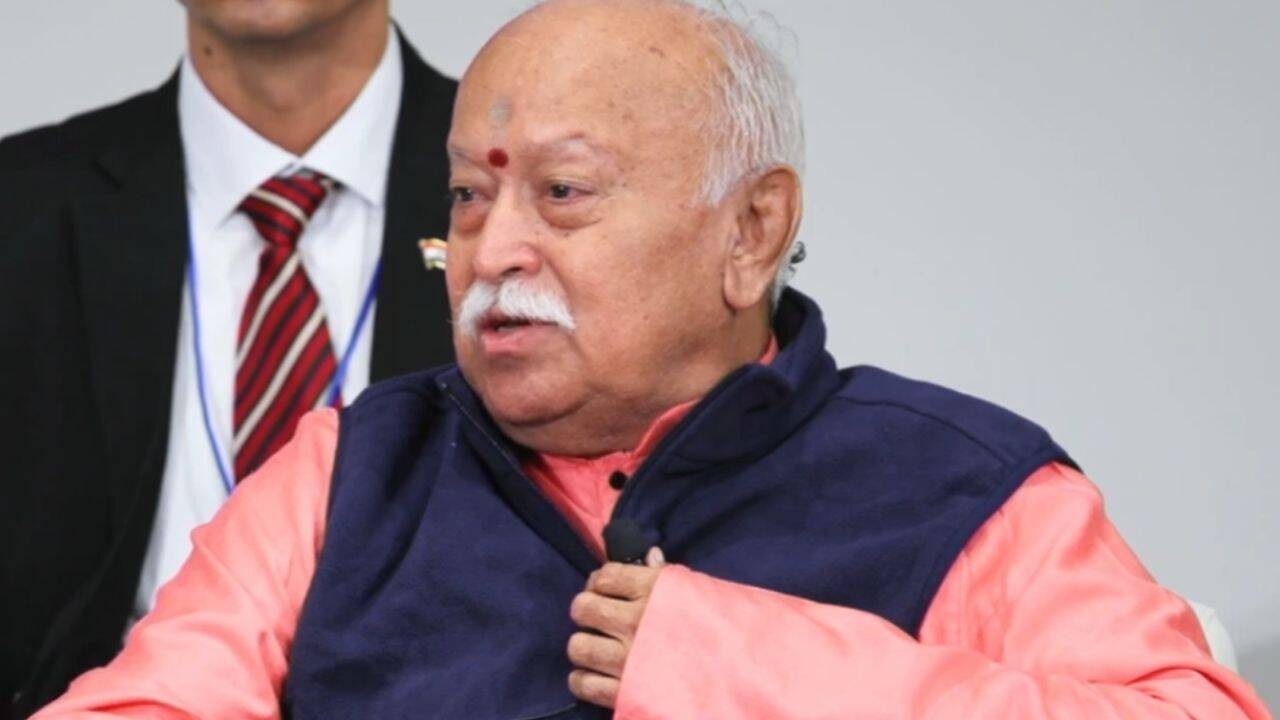
RSS Chief Mohan Bhagwat has laid out the organization's route to change, emphasizing the importance of transforming society before entering politics.
In a recent address, Bhagwat highlighted the need for the RSS to focus on societal transformation as a precursor to political change. This approach underscores the organization's commitment to grassroots development and its belief that meaningful change can only be achieved through a bottom-up approach.
Bhagwat's statement is significant, as it provides insight into the RSS's strategy for driving change in India. By prioritizing societal transformation, the organization aims to create a strong foundation for its political endeavors. This approach is consistent with the RSS's long-standing emphasis on community development and social welfare.
The RSS has a long history of community engagement and social service, with a presence in numerous fields, including education, healthcare, and disaster relief. The organization's emphasis on societal transformation is likely to involve a range of initiatives, from promoting social cohesion and community development to addressing issues such as poverty, inequality, and social injustice.
Bhagwat's outline of the RSS's route to change has significant implications for Indian politics. By focusing on societal transformation, the organization is likely to build a strong support base and create a favorable environment for its political endeavors. This approach may also help to differentiate the RSS from other political organizations, which often prioritize short-term political gains over long-term societal development.
The RSS's commitment to societal transformation is also likely to have a positive impact on Indian society as a whole. By promoting community development, social welfare, and social cohesion, the organization can help to address some of India's most pressing social challenges. This, in turn, can contribute to a more stable, equitable, and prosperous society, which is essential for India's long-term development and growth.
In conclusion, Bhagwat's outline of the RSS's route to change provides valuable insight into the organization's strategy for driving transformation in India. By prioritizing societal transformation and community development, the RSS is likely to create a strong foundation for its political endeavors and contribute to a more stable, equitable, and prosperous society.
The implications of this approach are far-reaching, and it will be interesting to see how the RSS's strategy unfolds in the coming years. As India continues to evolve and grow, the need for effective, grassroots-driven change is likely to become increasingly important. The RSS's commitment to societal transformation is a significant step in this direction, and its impact is likely to be felt for years to come.
Overall, the RSS's route to change, as outlined by Bhagwat, is a significant development in Indian politics and society. It underscores the organization's commitment to grassroots development, community engagement, and social welfare, and highlights the importance of societal transformation in driving meaningful change.
In the context of Indian politics, the RSS's approach is likely to be seen as a refreshing change from the traditional top-down approach to political change. By prioritizing societal transformation, the organization is likely to build a strong support base and create a favorable environment for its political endeavors. This approach may also help to promote a more nuanced understanding of the complex relationships between society, politics, and governance in India.
As the RSS continues to implement its strategy for societal transformation, it will be important to monitor its progress and assess its impact on Indian society and politics. This will provide valuable insights into the effectiveness of the organization's approach and its potential to drive meaningful change in India.
The RSS's commitment to societal transformation is a significant development in Indian politics and society, and its implications are likely to be far-reaching. As India continues to evolve and grow, the need for effective, grassroots-driven change is likely to become increasingly important. The RSS's approach is a significant step in this direction, and its impact is likely to be felt for years to come.
In the end, the success of the RSS's route to change will depend on its ability to promote meaningful societal transformation and create a strong foundation for its political endeavors. This will require a sustained commitment to community development, social welfare, and social cohesion, as well as a nuanced understanding of the complex relationships between society, politics, and governance in India.
The RSS's approach to societal transformation is a significant development in Indian politics and society, and its implications are likely to be far-reaching. As India continues to evolve and grow, the need for effective, grassroots-driven change is likely to become increasingly important. The RSS's commitment to societal transformation is a significant step in this direction, and its impact is likely to be felt for years to come.
What it means for India is that the RSS is taking a proactive approach to driving change, focusing on the grassroots level and emphasizing the importance of societal transformation. This approach has the potential to promote a more stable, equitable, and prosperous society, which is essential for India's long-term development and growth.
In conclusion, the RSS's route to change, as outlined by Bhagwat, is a significant development in Indian politics and society. It underscores the organization's commitment to grassroots development, community engagement, and social welfare, and highlights the importance of societal transformation in driving meaningful change.
The implications of this approach are far-reaching, and it will be interesting to see how the RSS's strategy unfolds in the coming years. As India continues to evolve and grow, the need for effective, grassroots-driven change is likely to become increasingly important. The RSS's commitment to societal transformation is a significant step in this direction, and its impact is likely to be felt for years to come.
Overall, the RSS's approach to societal transformation is a significant development in Indian politics and society, and its implications are likely to be far-reaching. As India continues to evolve and grow, the need for effective, grassroots-driven change is likely to become increasingly important. The RSS's commitment to societal transformation is a significant step in this direction, and its impact is likely to be felt for years to come.
Frequently asked questions
What is the RSS's approach to driving change in India?
The RSS is prioritizing societal transformation over politics, focusing on grassroots development and community engagement.
Why is the RSS emphasizing societal transformation?
The RSS believes that meaningful change can only be achieved through a bottom-up approach, starting with societal transformation and then moving to politics.