Bhiwandi Voter Digitisation Reaches 50%
Bhiwandi voter digitisation nears 50%, migrant population poses challenge
'%3E%3Crect%20width%3D'96'%20height%3D'96'%20fill%3D'%23B3261E'%2F%3E%3Ccircle%20cx%3D'30'%20cy%3D'24'%20r%3D'44'%20fill%3D'%23fff'%20opacity%3D'.12'%2F%3E%3Ccircle%20cx%3D'60'%20cy%3D'74'%20r%3D'40'%20fill%3D'%23000'%20opacity%3D'.10'%2F%3E%3C%2Fg%3E%3Cg%20fill%3D'%23fff'%3E%3Crect%20x%3D'29'%20y%3D'49'%20width%3D'8'%20height%3D'19'%20rx%3D'1'%2F%3E%3Crect%20x%3D'39'%20y%3D'40'%20width%3D'9'%20height%3D'28'%20rx%3D'1'%2F%3E%3Crect%20x%3D'50'%20y%3D'45'%20width%3D'8'%20height%3D'23'%20rx%3D'1'%2F%3E%3Crect%20x%3D'60'%20y%3D'53'%20width%3D'7'%20height%3D'15'%20rx%3D'1'%2F%3E%3Crect%20x%3D'41'%20y%3D'34'%20width%3D'5'%20height%3D'6'%2F%3E%3C%2Fg%3E%3C%2Fsvg%3E)
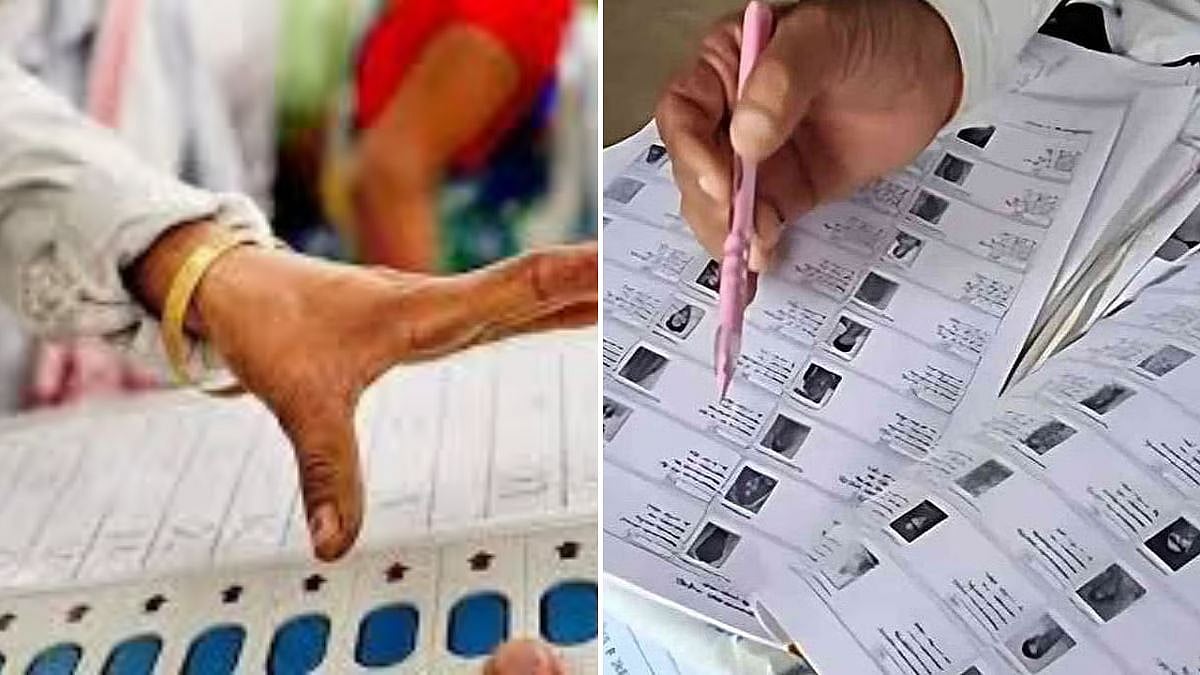
The digitisation of electoral rolls in Bhiwandi city has reached around 50% under the Special Intensive Revision (SIR) exercise.
According to election officials, 48.20% of the electoral roll in Bhiwandi East Assembly constituency and 52.11% in Bhiwandi West have been digitised.
In Bhiwandi Rural, the progress stands at 75.34%.
The SIR exercise involves verifying and digitising voter details using the 2002 electoral roll as the reference point.
However, the large migrant workforce in Bhiwandi city has made the exercise more time-consuming.
Many migrant workers who were residing in Bhiwandi in 2002 have since moved back to their native villages or relocated to other cities.
Tracing such voters and establishing their present status has emerged as one of the key challenges in completing the verification process.
A Booth Level Officer (BLO) working in Bhiwandi East said the movement of migrant workers and people engaged in business had made the verification process more complicated.
The presence of a large migrant population and business community has also brought cases of possible duplicate entries to the attention of election officials.
Some workers are reportedly listed in both the electoral rolls of their native villages and Bhiwandi.
Voters who have permanently shifted from the city but whose current addresses are unavailable also require additional verification, slowing down the digitisation process.
A large number of teachers have been appointed as BLOs for the SIR exercise, adding to their existing responsibilities.
Along with regular teaching duties, they are required to verify voter details, conduct field visits, collect information, scrutinise forms and enter verified data online.
The additional assignment has created challenges in managing their time and maintaining their regular academic responsibilities.
Despite the challenges, election officials are working to complete the digitisation process as soon as possible.
The SIR exercise is an important step towards ensuring the accuracy and integrity of the electoral rolls in Bhiwandi.
The completion of the exercise will help to prevent duplicate entries and ensure that only eligible voters are included in the electoral rolls.
The digitisation of electoral rolls is a significant development in the electoral process in Bhiwandi.
It will help to improve the efficiency and transparency of the electoral process, and ensure that the rights of all eligible voters are protected.
In conclusion, the digitisation of electoral rolls in Bhiwandi is an important step towards improving the electoral process in the city.
Despite the challenges posed by the migrant population, election officials are working to complete the process as soon as possible.
Frequently asked questions
What is the current status of voter digitisation in Bhiwandi?
The digitisation of electoral rolls in Bhiwandi city has reached around 50% under the Special Intensive Revision (SIR) exercise.
What are the challenges faced by election officials in Bhiwandi?
The large migrant workforce in Bhiwandi city has made the exercise more time-consuming, and tracing voters who have moved back to their native villages or relocated to other cities has emerged as one of the key challenges.