HC Refuses Relief To Charcoal Merchants
Charcoal is a polluting fuel, says MPCB. HC denies relief to traders.
'%3E%3Crect%20width%3D'96'%20height%3D'96'%20fill%3D'%23B3261E'%2F%3E%3Ccircle%20cx%3D'30'%20cy%3D'24'%20r%3D'44'%20fill%3D'%23fff'%20opacity%3D'.12'%2F%3E%3Ccircle%20cx%3D'60'%20cy%3D'74'%20r%3D'40'%20fill%3D'%23000'%20opacity%3D'.10'%2F%3E%3C%2Fg%3E%3Cg%20fill%3D'%23fff'%3E%3Crect%20x%3D'29'%20y%3D'49'%20width%3D'8'%20height%3D'19'%20rx%3D'1'%2F%3E%3Crect%20x%3D'39'%20y%3D'40'%20width%3D'9'%20height%3D'28'%20rx%3D'1'%2F%3E%3Crect%20x%3D'50'%20y%3D'45'%20width%3D'8'%20height%3D'23'%20rx%3D'1'%2F%3E%3Crect%20x%3D'60'%20y%3D'53'%20width%3D'7'%20height%3D'15'%20rx%3D'1'%2F%3E%3Crect%20x%3D'41'%20y%3D'34'%20width%3D'5'%20height%3D'6'%2F%3E%3C%2Fg%3E%3C%2Fsvg%3E)
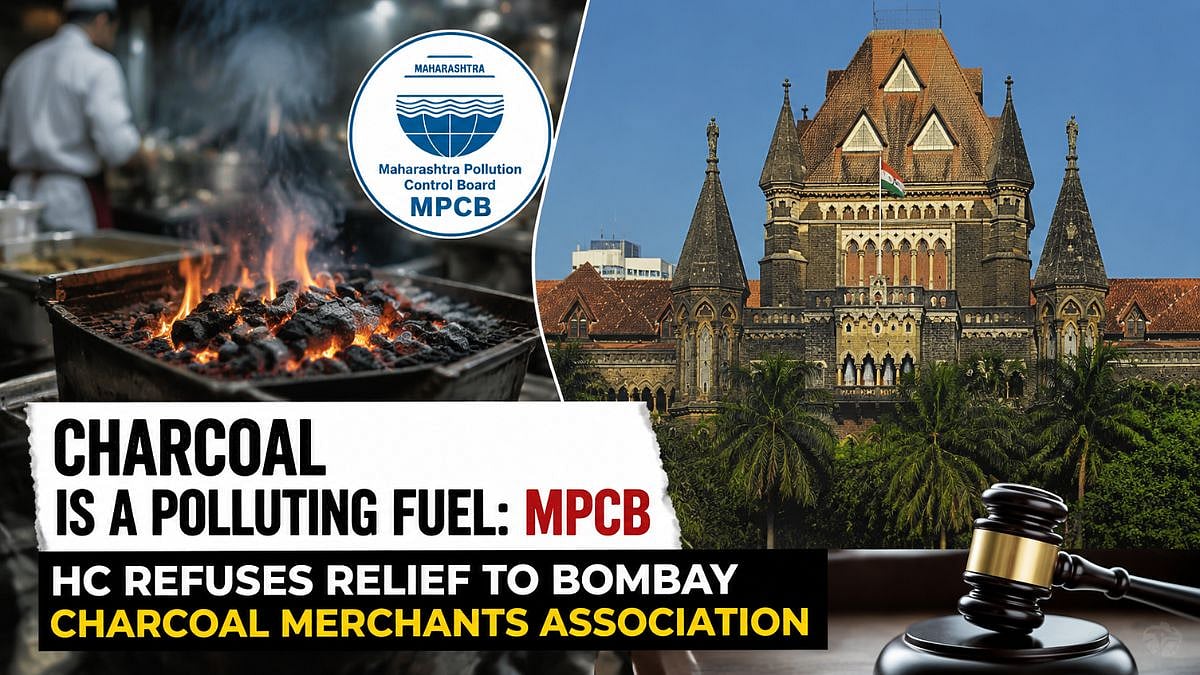
The Bombay High Court has refused to grant interim relief to the Bombay Charcoal Merchants Association, which had sought permission to continue using charcoal as a fuel source in hotels, restaurants, and bakeries.
The Maharashtra Pollution Control Board (MPCB) had informed the court that charcoal emits toxic gases, including carbon monoxide, methane, and black carbon, making it a hazardous fuel that contributes to air pollution.
The court was hearing an intervention application filed by the association, which claimed that it was not heard before an order was passed against it. However, the court noted that the association had already been given an opportunity to present its case but failed to avail itself of it.
The MPCB had submitted a report stating that incomplete combustion of charcoal releases toxic gases, increasing pollution and posing health risks. The report also noted that charcoal requires dry, well-ventilated storage and that there is no effective mechanism to detect adulteration with other fuels.
The association had argued that it was not financially viable for all hotels and restaurants to switch to LPG, and that during the recent war-like situation, gas shortages had forced many establishments to rely on coal and charcoal to continue operations.
However, the court remained unconvinced, asking what the association hoped to achieve by filing an additional affidavit. The bench observed that if the MPCB had concluded that charcoal emitted toxic gases and avoiding its use would reduce pollution, there was no reason to object.
The court's decision comes as part of a suo motu public interest litigation initiated by the High Court in relation to increasing air pollution in the city. A high-level committee constituted by the High Court had held 22 meetings on the issue and submitted a preliminary report along with four additional reports.
The MPCB had also heard the petitioners pursuant to an earlier court order. However, the association's representatives were absent from one of those meetings, which the court noted as a reason for denying them another opportunity to present their case.
The use of charcoal as a fuel source has been a topic of debate in recent times, with many establishments relying on it due to its affordability and availability. However, the MPCB's report highlights the risks associated with its use, including the release of toxic gases and the lack of effective mechanisms to detect adulteration.
The court's decision is a significant step towards reducing air pollution in the city, which has been a major concern for residents and authorities alike. The MPCB's report and the court's decision are expected to have far-reaching implications for the use of charcoal as a fuel source in hotels, restaurants, and bakeries.
In the larger context, the issue of air pollution in Mumbai is a complex one, with multiple factors contributing to the problem. The use of charcoal as a fuel source is just one aspect of the issue, and the court's decision is a step towards addressing the problem.
The decision is also significant in the context of the government's policy decisions, which are aimed at reducing air pollution and promoting the use of cleaner fuels. The court's decision is expected to have a positive impact on the environment and public health, and is a welcome step towards creating a cleaner and healthier city.
In conclusion, the Bombay High Court's decision to refuse relief to the Bombay Charcoal Merchants Association is a significant step towards reducing air pollution in Mumbai. The decision highlights the risks associated with the use of charcoal as a fuel source and is expected to have far-reaching implications for the city's environment and public health.