Florida Scientists Use Mosquito Blood to Track Pythons
Mosquito blood meals help locate hidden pythons, Florida scientists discover.
'%3E%3Crect%20width%3D'96'%20height%3D'96'%20fill%3D'%23B3261E'%2F%3E%3Ccircle%20cx%3D'30'%20cy%3D'24'%20r%3D'44'%20fill%3D'%23fff'%20opacity%3D'.12'%2F%3E%3Ccircle%20cx%3D'60'%20cy%3D'74'%20r%3D'40'%20fill%3D'%23000'%20opacity%3D'.10'%2F%3E%3C%2Fg%3E%3Cg%20fill%3D'%23fff'%3E%3Crect%20x%3D'29'%20y%3D'49'%20width%3D'8'%20height%3D'19'%20rx%3D'1'%2F%3E%3Crect%20x%3D'39'%20y%3D'40'%20width%3D'9'%20height%3D'28'%20rx%3D'1'%2F%3E%3Crect%20x%3D'50'%20y%3D'45'%20width%3D'8'%20height%3D'23'%20rx%3D'1'%2F%3E%3Crect%20x%3D'60'%20y%3D'53'%20width%3D'7'%20height%3D'15'%20rx%3D'1'%2F%3E%3Crect%20x%3D'41'%20y%3D'34'%20width%3D'5'%20height%3D'6'%2F%3E%3C%2Fg%3E%3C%2Fsvg%3E)
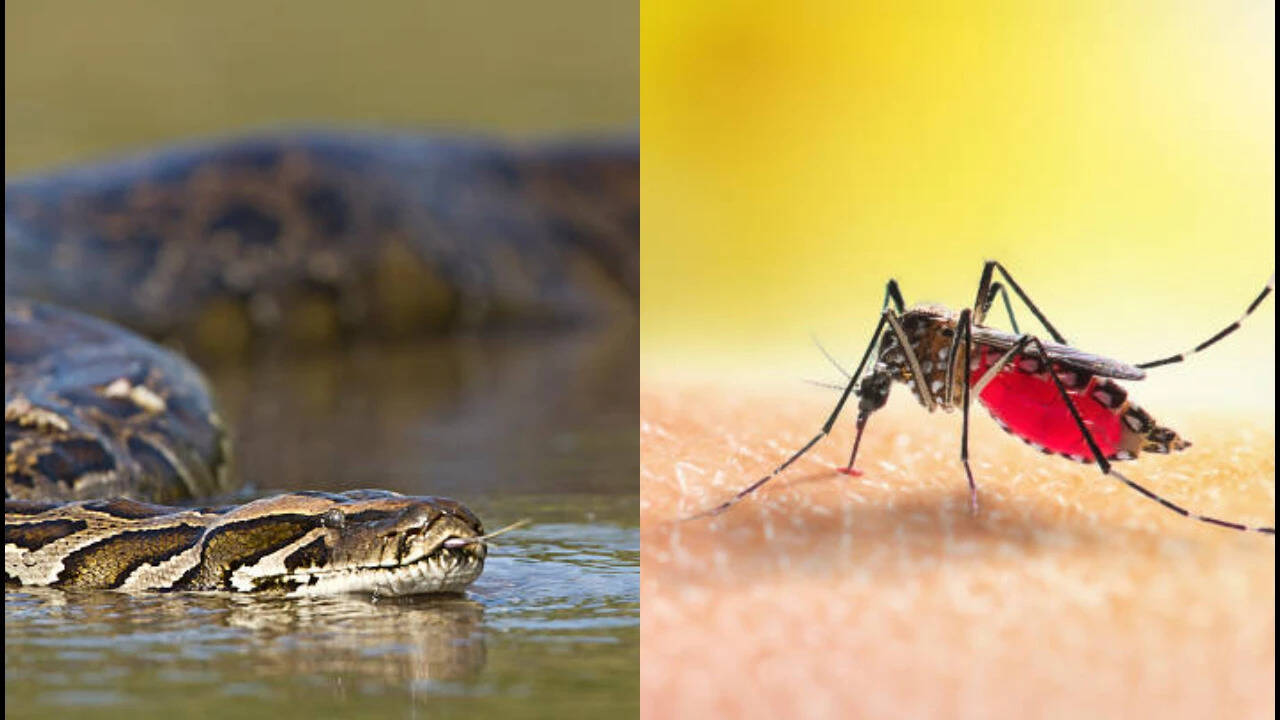
Scientists in Florida have made a groundbreaking discovery that could aid in the tracking of invasive Burmese pythons. By analyzing the blood meals of mosquitoes, researchers believe they can locate the hidden snakes. This innovative approach utilizes the fact that mosquitoes often feed on the blood of pythons, and by identifying the genetic material present in the mosquito's blood meal, scientists can determine the presence of pythons in a given area.
The Burmese python is an invasive species in Florida, and its population has been growing rapidly, causing significant harm to the native ecosystem. The snakes are difficult to track, and their hiding habits make them hard to detect. However, mosquitoes are abundant in the region and often feed on the blood of various animals, including pythons.
The research team collected mosquitoes from areas known to be inhabited by pythons and analyzed their blood meals. They found that the genetic material from the pythons was present in the mosquito's blood, allowing them to identify the species. This breakthrough could provide a new tool for conservation efforts, enabling researchers to track the movement and population of pythons more effectively.
The discovery has significant implications for the management of invasive species. By using mosquito blood meals to track pythons, scientists can identify areas where the snakes are present and take targeted measures to control their population. This approach could also be applied to other invasive species, providing a valuable tool for conservation efforts.
The research was conducted in the Everglades, a region in Florida known for its diverse wildlife and ecosystem. The Everglades is a unique and fragile environment, and the presence of invasive species such as the Burmese python poses a significant threat to its balance. The discovery of this new tracking method could play a crucial role in preserving the delicate ecosystem of the Everglades.
The use of mosquito blood meals to track pythons is a non-invasive and cost-effective method, making it an attractive option for conservation efforts. The approach also has the potential to be used in other regions where invasive species are present, providing a valuable tool for researchers and conservationists.
In conclusion, the discovery that mosquito blood meals can help locate hidden pythons is a significant breakthrough in the field of conservation. The approach has the potential to provide a new tool for tracking invasive species, and its implications are far-reaching. As researchers continue to develop and refine this method, it is likely to play an increasingly important role in the management of invasive species and the preservation of fragile ecosystems.
The discovery is also a testament to the importance of interdisciplinary research, combining fields such as ecology, genetics, and entomology to address complex conservation challenges. By working together and sharing knowledge, scientists can develop innovative solutions to pressing environmental issues.
The impact of this discovery on the environment and conservation efforts is significant. It highlights the importance of continued research and innovation in the field of conservation, and demonstrates the potential for new and creative approaches to address complex environmental challenges.
In the context of Florida's ecosystem, the discovery of this new tracking method could have a significant impact on the management of invasive species. The Burmese python is just one of many invasive species present in the state, and the use of mosquito blood meals to track these species could provide a valuable tool for conservation efforts.
Overall, the discovery that mosquito blood meals can help locate hidden pythons is a significant breakthrough with far-reaching implications for conservation efforts. As researchers continue to develop and refine this method, it is likely to play an increasingly important role in the management of invasive species and the preservation of fragile ecosystems.
Frequently asked questions
How do scientists use mosquito blood meals to track pythons?
Scientists analyze the genetic material present in the mosquito's blood meal to determine the presence of pythons.
Why is it important to track invasive pythons in Florida?
Invasive pythons pose a significant threat to the native ecosystem, and tracking them is crucial for conservation efforts.