Oil Prices Rise 5% Weekly Amid US-Iran Tensions
Oil prices surge as US prepares new measures against Iran, disrupting global energy supplies.
'%3E%3Crect%20width%3D'96'%20height%3D'96'%20fill%3D'%234A235A'%2F%3E%3Ccircle%20cx%3D'30'%20cy%3D'24'%20r%3D'44'%20fill%3D'%23fff'%20opacity%3D'.12'%2F%3E%3Ccircle%20cx%3D'60'%20cy%3D'74'%20r%3D'40'%20fill%3D'%23000'%20opacity%3D'.10'%2F%3E%3C%2Fg%3E%3Cg%20fill%3D'none'%20stroke%3D'%23fff'%20stroke-width%3D'3'%3E%3Ccircle%20cx%3D'48'%20cy%3D'48'%20r%3D'16'%2F%3E%3Cellipse%20cx%3D'48'%20cy%3D'48'%20rx%3D'6.5'%20ry%3D'16'%2F%3E%3Cline%20x1%3D'32'%20y1%3D'42'%20x2%3D'64'%20y2%3D'42'%2F%3E%3Cline%20x1%3D'32'%20y1%3D'54'%20x2%3D'64'%20y2%3D'54'%2F%3E%3C%2Fg%3E%3C%2Fsvg%3E)
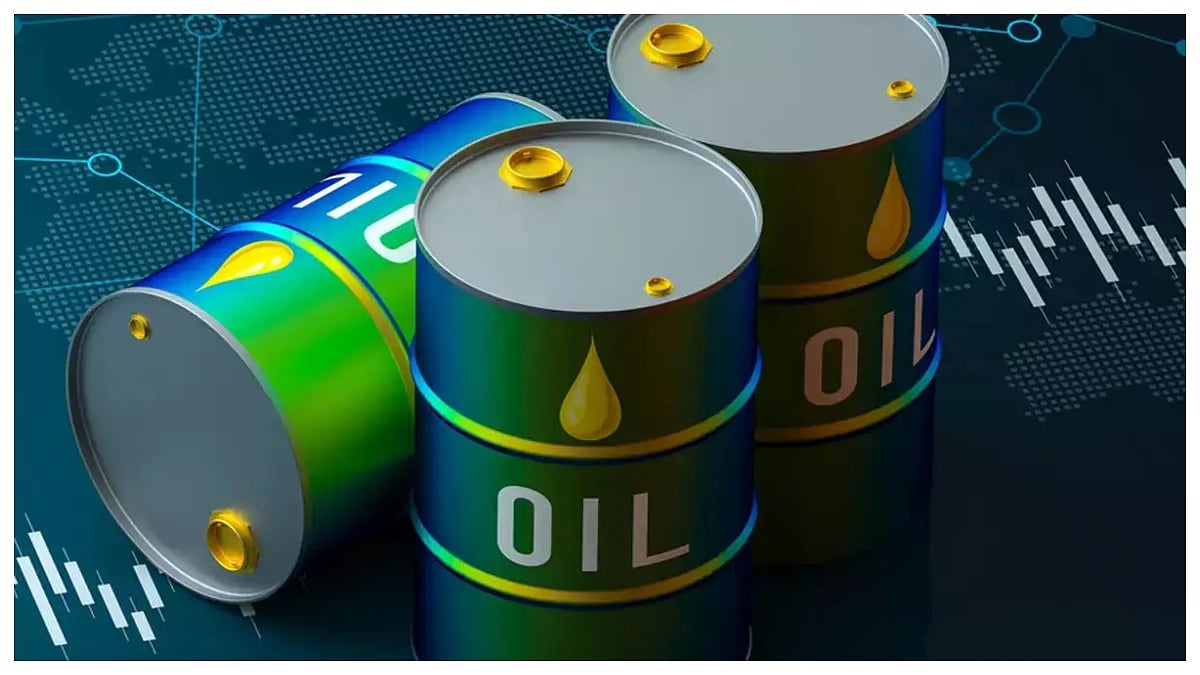
Oil prices are set to record a sharp weekly gain of over 5% as the United States prepares to announce fresh economic measures against Iran. This move has increased concerns that further restrictions could worsen disruptions in global energy supplies.
On Friday, Brent crude traded above $93 a barrel, while West Texas Intermediate (WTI) for October delivery eased towards $86 a barrel. The latest rally in crude prices comes as Washington prepares to increase economic pressure on Tehran.
US Treasury Secretary Scott Bessent stated that details of the new measures would be announced on Monday, following President Donald Trump's description of the planned action as an “economic D-day.” The measures are expected to target Iran and could also affect countries continuing to trade with Tehran, including China.
Oil prices have risen more than 50% this year amid the wider US-Iran conflict and its impact on energy supplies across the Middle East. The situation has raised particular concerns over shipping through the Strait of Hormuz, a critical route for global oil and gas trade.
Bessent said Washington controls the waterway and that vessels could use a southern route to exit the region. Iranian oil flows face mounting pressure, with China, the world's largest buyer of Iranian crude, opposing Washington's approach and arguing that sanctions and economic pressure will not resolve the conflict.
The US has maintained a naval blockade around Iranian ports, while Iranian Central Bank Governor Abdolnaser Hemmati said the country's oil flows had “virtually stopped”. The supply impact is particularly visible in diesel markets, where prices have increased more rapidly than crude.
Any additional restrictions on Iranian exports or disruptions to shipping through Hormuz could therefore intensify pressure on global fuel markets. With the global energy market already facing supply constraints, investors are closely monitoring US-Iran tensions for signs of further escalation and its potential impact on crude and fuel prices.
The ongoing tensions between the US and Iran have significant implications for the global energy market, and the potential consequences of further supply disruptions are being closely watched by investors and analysts.
In conclusion, the rise in oil prices is a result of the escalating tensions between the US and Iran, and the potential for further supply disruptions. As the situation continues to unfold, it is likely that the global energy market will remain volatile, with significant implications for crude and fuel prices.
Frequently asked questions
What is the current price of Brent crude?
Brent crude traded above $93 a barrel on Friday.
What is the expected impact of US measures on Iranian oil exports?
The measures are expected to target Iran and could also affect countries continuing to trade with Tehran, including China, potentially intensifying pressure on global fuel markets.