Bombay High Court Rules on Private Forests
Court decision affects landholders, Maharashtra land use
'%3E%3Crect%20width%3D'96'%20height%3D'96'%20fill%3D'%23B3261E'%2F%3E%3Ccircle%20cx%3D'30'%20cy%3D'24'%20r%3D'44'%20fill%3D'%23fff'%20opacity%3D'.12'%2F%3E%3Ccircle%20cx%3D'60'%20cy%3D'74'%20r%3D'40'%20fill%3D'%23000'%20opacity%3D'.10'%2F%3E%3C%2Fg%3E%3Cg%20fill%3D'%23fff'%3E%3Crect%20x%3D'29'%20y%3D'49'%20width%3D'8'%20height%3D'19'%20rx%3D'1'%2F%3E%3Crect%20x%3D'39'%20y%3D'40'%20width%3D'9'%20height%3D'28'%20rx%3D'1'%2F%3E%3Crect%20x%3D'50'%20y%3D'45'%20width%3D'8'%20height%3D'23'%20rx%3D'1'%2F%3E%3Crect%20x%3D'60'%20y%3D'53'%20width%3D'7'%20height%3D'15'%20rx%3D'1'%2F%3E%3Crect%20x%3D'41'%20y%3D'34'%20width%3D'5'%20height%3D'6'%2F%3E%3C%2Fg%3E%3C%2Fsvg%3E)
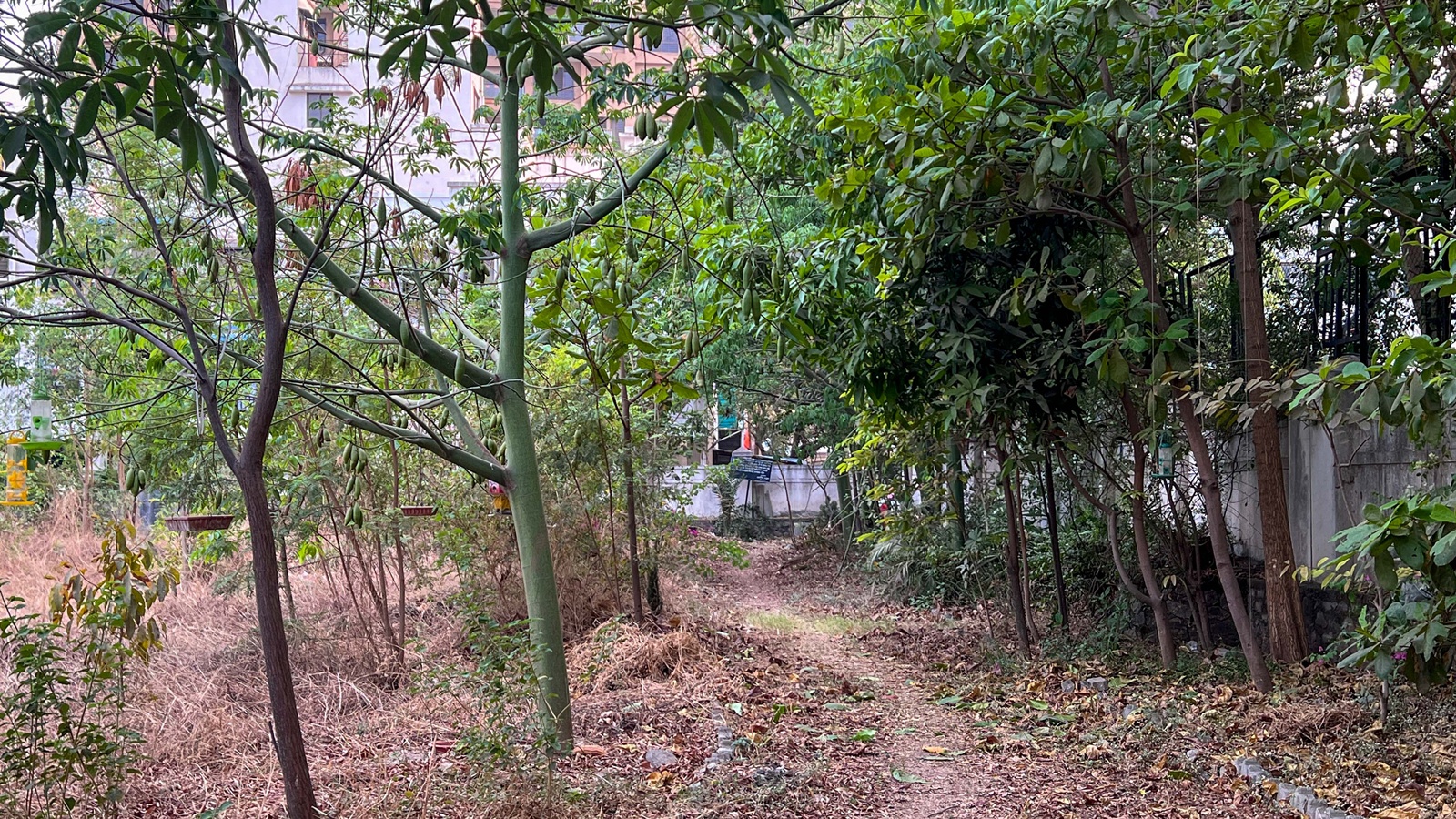
The Bombay High Court has made a significant ruling regarding 'private forests' in Maharashtra, which is set to have far-reaching implications for landholders across the state.
The court's decision revolves around the interpretation of the term 'private forest' and its application to land ownership in Maharashtra.
According to the ruling, land that is not explicitly classified as a forest under the Indian Forest Act, 1927, or the Forest (Conservation) Act, 1980, cannot be considered a 'private forest'.
This clarification is crucial for landholders in Maharashtra, as it affects their rights and obligations regarding land use and development.
The Indian Forest Act, 1927, and the Forest (Conservation) Act, 1980, are central laws that regulate forestland in India.
The Bombay High Court's ruling is based on the principle that the onus of proving that a particular land is a forest lies with the person making the claim.
In Maharashtra, the issue of 'private forests' has been a subject of debate, with some landholders claiming that their land is a 'private forest' to avoid certain regulations and restrictions.
The court's decision is expected to bring clarity to this issue and provide a clear understanding of what constitutes a 'private forest' in the state.
The ruling may also have implications for the conservation of forests in Maharashtra, as it may lead to increased scrutiny of land use and development in areas that are not explicitly classified as forests.
The Maharashtra government may need to review its policies and regulations regarding 'private forests' in light of the Bombay High Court's ruling.
Overall, the court's decision is a significant development for landholders and conservation efforts in Maharashtra, and its implications will be closely watched in the coming months.
The Bombay High Court's ruling highlights the importance of clear and consistent regulations regarding land use and forest conservation in Maharashtra.
It also underscores the need for landholders to be aware of their rights and obligations regarding land use and development in the state.
As the state government and landholders navigate the implications of the ruling, it is likely that there will be a greater emphasis on sustainable land use and conservation practices in Maharashtra.
Frequently asked questions
What is the Bombay High Court's ruling on private forests?
The court ruled that land not explicitly classified as a forest under the Indian Forest Act, 1927, or the Forest (Conservation) Act, 1980, cannot be considered a 'private forest'.
How will the ruling affect landholders in Maharashtra?
The ruling will affect landholders' rights and obligations regarding land use and development, and may lead to increased scrutiny of land use in areas not explicitly classified as forests.