Nepal Issues Fresh Flood Warning as Tibet Barrier Lake Bursts
Nepal suspends rescue operations, China withdraws teams amid new flood threat
'%3E%3Crect%20width%3D'96'%20height%3D'96'%20fill%3D'%234A235A'%2F%3E%3Ccircle%20cx%3D'30'%20cy%3D'24'%20r%3D'44'%20fill%3D'%23fff'%20opacity%3D'.12'%2F%3E%3Ccircle%20cx%3D'60'%20cy%3D'74'%20r%3D'40'%20fill%3D'%23000'%20opacity%3D'.10'%2F%3E%3C%2Fg%3E%3Cg%20fill%3D'none'%20stroke%3D'%23fff'%20stroke-width%3D'3'%3E%3Ccircle%20cx%3D'48'%20cy%3D'48'%20r%3D'16'%2F%3E%3Cellipse%20cx%3D'48'%20cy%3D'48'%20rx%3D'6.5'%20ry%3D'16'%2F%3E%3Cline%20x1%3D'32'%20y1%3D'42'%20x2%3D'64'%20y2%3D'42'%2F%3E%3Cline%20x1%3D'32'%20y1%3D'54'%20x2%3D'64'%20y2%3D'54'%2F%3E%3C%2Fg%3E%3C%2Fsvg%3E)
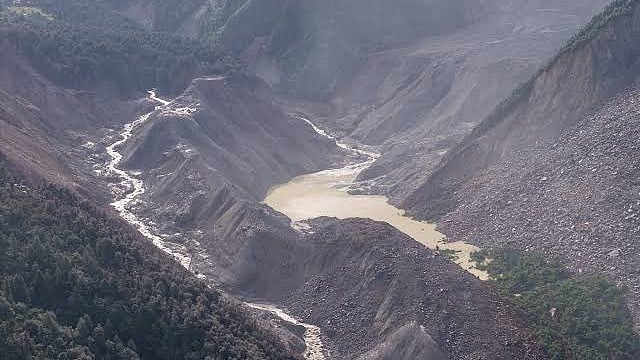
A fresh flood warning has been issued in Nepal after a natural barrier lake on the Tibetan side of the border burst again, raising fears of another surge of water into areas already devastated by a catastrophic glacial collapse earlier this week.
The barrier lake, formed by debris left behind after a glacial ice-and-rock avalanche on August 26, has begun overflowing, prompting authorities to take precautionary measures in the Gyirong area.
Nepal Police have issued an alert, warning all security personnel, rescue workers, and the general public to remain vigilant. Rescue operations in Nepal were temporarily suspended for about 1.5 hours after officials received reports that the upstream dammed lake was overflowing.
An army officer confirmed the pause, saying the decision was taken as a precaution amid concerns that a fresh surge of water could reach downstream areas. Helicopter rescue operations in the badly affected Rasuwa district were also temporarily halted.
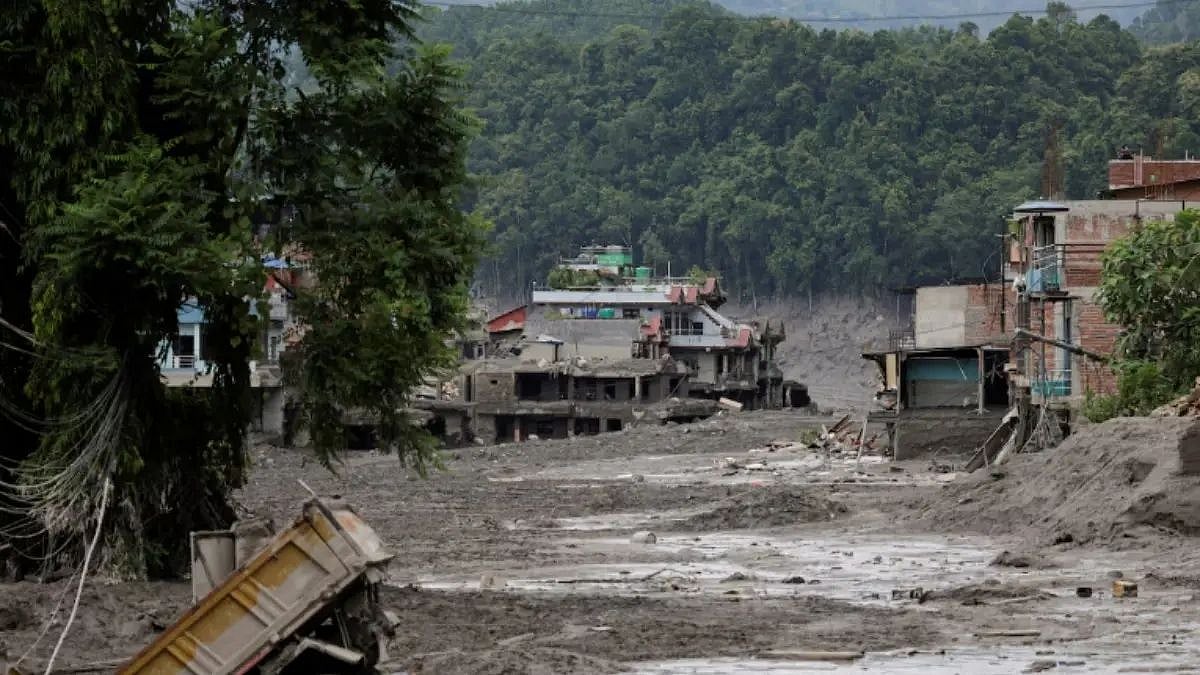
With the flood threat increasing, local residents were seen moving rapidly towards higher ground in search of safety. The temporary suspension underscores the increasingly hazardous conditions facing rescue teams, who are already working in areas where roads and bridges have been washed away and large quantities of mud and debris continue to obstruct access.
On the Tibetan side, the overflowing barrier lake prompted Chinese rescue teams and vehicles operating near Gyirong to withdraw from vulnerable areas and remain on standby at safer locations. The precautionary withdrawal was driven by fears that the overflowing lake could trigger additional flooding, secondary landslides, or avalanches.
According to reports, the lake contained more than 2.5 million cubic meters of water, while continued rainfall was expected to send additional water into the already swollen basin. That combination of a large volume of stored water and continued inflow has heightened concerns that the situation could deteriorate further.
The latest flood alert comes just days after the initial disaster on August 26, when a massive glacial collapse sent an enormous volume of water, mud, and debris downstream. The initial event caused widespread destruction on both sides of the Nepal-China border, killing hundreds of people and leaving communities isolated.
The newly reported overflowing barrier lake represents a second threat to the region, which is still reeling from the aftermath of the initial disaster. The situation remains precarious, with authorities and rescue teams working to mitigate the effects of the flooding and provide aid to those affected.
The flooding has significant implications for the region, highlighting the need for increased vigilance and cooperation between Nepal and China in responding to natural disasters. The situation is being closely monitored, with authorities working to ensure the safety of those affected and to provide support to communities in need.
Frequently asked questions
What is the current flood situation in Nepal?
A fresh flood warning has been issued in Nepal after a natural barrier lake on the Tibetan side of the border burst again, raising fears of another surge of water into areas already devastated by a catastrophic glacial collapse.
Have rescue operations been affected by the flooding?
Yes, rescue operations in Nepal were temporarily suspended for about 1.5 hours after officials received reports that the upstream dammed lake was overflowing.