Congress Slams Caste Census Methodology
Congress opposes caste census method, seeks new questionnaire.
'%3E%3Crect%20width%3D'96'%20height%3D'96'%20fill%3D'%231A5276'%2F%3E%3Ccircle%20cx%3D'30'%20cy%3D'24'%20r%3D'44'%20fill%3D'%23fff'%20opacity%3D'.12'%2F%3E%3Ccircle%20cx%3D'60'%20cy%3D'74'%20r%3D'40'%20fill%3D'%23000'%20opacity%3D'.10'%2F%3E%3C%2Fg%3E%3Cg%20fill%3D'%23fff'%3E%3Cpath%20d%3D'M31%2041%20L48%2031%20L65%2041%20Z'%2F%3E%3Crect%20x%3D'33'%20y%3D'43'%20width%3D'4'%20height%3D'17'%2F%3E%3Crect%20x%3D'41'%20y%3D'43'%20width%3D'4'%20height%3D'17'%2F%3E%3Crect%20x%3D'51'%20y%3D'43'%20width%3D'4'%20height%3D'17'%2F%3E%3Crect%20x%3D'59'%20y%3D'43'%20width%3D'4'%20height%3D'17'%2F%3E%3Crect%20x%3D'30'%20y%3D'62'%20width%3D'36'%20height%3D'4'%20rx%3D'1'%2F%3E%3C%2Fg%3E%3C%2Fsvg%3E)
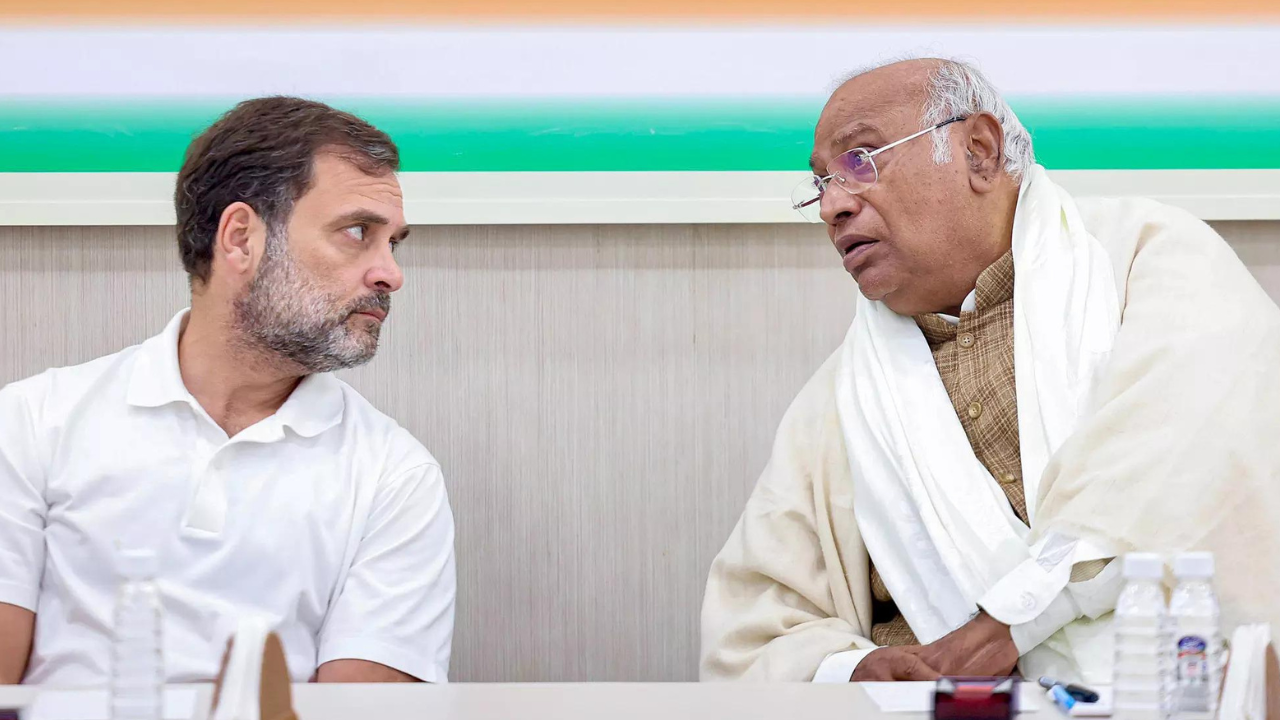
The Indian National Congress has expressed strong reservations over the methodology employed for the caste census, terming it as misleading. In a letter addressed to the Prime Minister, the party has urged the government to reconsider the current approach and instead adopt a more inclusive and consultative process.
The Congress party's objection stems from concerns that the present methodology may not accurately capture the diverse caste dynamics across the country. The party has suggested that the government should engage in widespread consultations with various stakeholders, including political parties, experts, and the general public, to devise a more effective and reliable questionnaire.
According to the Congress, a fresh questionnaire would enable the collection of precise and relevant data on every caste and community, ultimately leading to a more accurate headcount. The party believes that this would be essential in ensuring that the caste census serves its intended purpose and provides valuable insights into the social fabric of the country.
The caste census has been a contentious issue in India, with various political parties and social groups holding differing opinions on its methodology and objectives. The Congress party's intervention is likely to add to the ongoing debate and may prompt the government to re-examine its approach.
The government's decision to conduct a caste census has been seen as a significant move, with potential implications for policy-making and social welfare initiatives. However, the success of this exercise hinges on the accuracy and reliability of the data collected, which in turn depends on the methodology employed.
In recent years, there have been growing demands for a comprehensive caste census, with many arguing that it would help identify and address the socio-economic disparities faced by various communities. The Congress party's letter to the Prime Minister reflects these concerns and underscores the need for a more nuanced and inclusive approach to the caste census.
As the debate over the caste census methodology continues, it remains to be seen how the government will respond to the Congress party's concerns. The outcome of this discussion is likely to have significant implications for the future of social policy and governance in India.
The Congress party's stance on the caste census methodology is a reflection of the broader concerns surrounding the exercise. With the government's approach under scrutiny, it is essential to ensure that the caste census is conducted in a manner that is fair, transparent, and effective in capturing the complexities of India's social landscape.
In conclusion, the Congress party's opposition to the caste census methodology highlights the need for a more consultative and inclusive approach to this critical exercise. As the government navigates the complexities of the caste census, it must prioritize accuracy, reliability, and social relevance to ensure that the exercise yields meaningful insights and informs effective policy-making.
The implications of the caste census extend beyond the realm of policy-making, with potential impacts on social welfare initiatives, education, and employment opportunities. As such, it is essential to get the methodology right, to ensure that the exercise serves its intended purpose and contributes to the betterment of Indian society.
The government's response to the Congress party's concerns will be closely watched, as it will have significant implications for the future of the caste census and its potential to inform social policy in India.
Frequently asked questions
Why is the Congress party opposing the caste census methodology?
The Congress party believes that the current methodology is misleading and may not accurately capture the diverse caste dynamics across the country.
What is the Congress party's suggestion for improving the caste census?
The party has suggested that the government should engage in widespread consultations with various stakeholders to devise a more effective and reliable questionnaire.