India Taps 15 Countries for LNG, 41 for Crude Oil
India diversifies energy imports, reduces reliance on single markets.
'%3E%3Crect%20width%3D'96'%20height%3D'96'%20fill%3D'%230B6E4F'%2F%3E%3Ccircle%20cx%3D'30'%20cy%3D'24'%20r%3D'44'%20fill%3D'%23fff'%20opacity%3D'.12'%2F%3E%3Ccircle%20cx%3D'60'%20cy%3D'74'%20r%3D'40'%20fill%3D'%23000'%20opacity%3D'.10'%2F%3E%3C%2Fg%3E%3Cg%20fill%3D'none'%20stroke%3D'%23fff'%20stroke-width%3D'3.2'%20stroke-linecap%3D'round'%20stroke-linejoin%3D'round'%3E%3Cpolyline%20points%3D'31%2C59%2041%2C49%2049%2C54%2063%2C37'%2F%3E%3Cpolyline%20points%3D'55%2C37%2063%2C37%2063%2C45'%2F%3E%3C%2Fg%3E%3C%2Fsvg%3E)
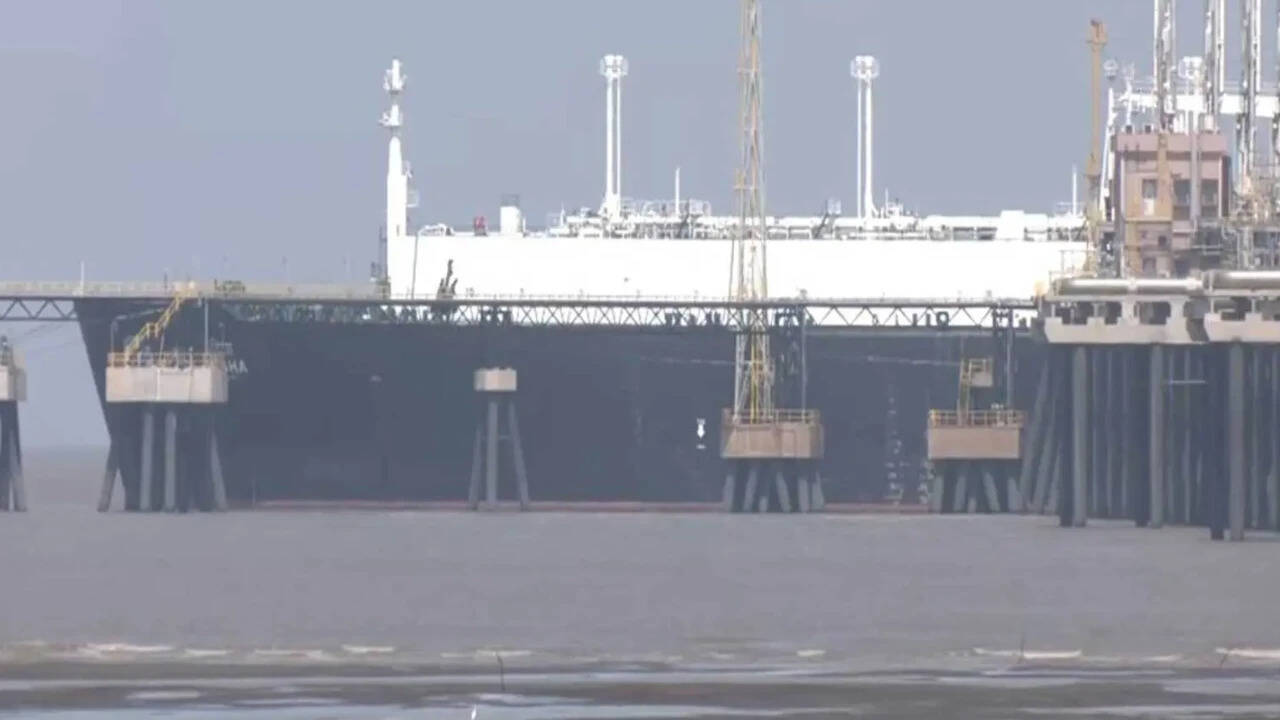
India is taking significant steps to diversify its energy sourcing, aiming to reduce its dependence on any single market or transport route.
The country is currently tapping 15 countries for Liquefied Natural Gas (LNG) and 41 countries for crude oil, in a bid to strengthen its energy security. This move is expected to help India better handle supply interruptions and market fluctuations, ultimately making the nation more resilient to global energy shocks.
The decision to diversify energy imports is a strategic one, driven by the need to mitigate risks associated with relying on a limited number of suppliers. By spreading its energy imports across a larger number of countries, India can reduce its vulnerability to disruptions in any one market or transport route.
In addition to diversifying its energy imports, the government is also investing in new infrastructure to boost domestic crude oil storage. This will provide a cushion against supply shocks and help to stabilize the market in the event of disruptions.
The expansion of India's energy import portfolio is a key component of the country's broader energy security strategy. By reducing its reliance on any single market or transport route, India can improve its ability to respond to changes in the global energy landscape.
India's energy demands are expected to continue growing in the coming years, driven by the country's rapid economic expansion. As a result, the need for a diversified and resilient energy supply chain is becoming increasingly important.
The government's efforts to boost domestic crude oil storage and diversify energy imports are seen as positive steps towards achieving this goal. By investing in new infrastructure and spreading its energy imports across a larger number of countries, India can reduce its vulnerability to supply shocks and improve its energy security.
In the long term, India's energy security strategy is expected to have a positive impact on the country's economy and energy market. By reducing its reliance on any single market or transport route, India can improve its ability to respond to changes in the global energy landscape and mitigate the risks associated with energy price volatility.
Overall, India's decision to diversify its energy sourcing and invest in new infrastructure is a significant step towards achieving energy security and reducing its vulnerability to global energy shocks.
The move is also expected to have a positive impact on India's relations with other countries, as it seeks to expand its energy import portfolio and reduce its dependence on any single supplier. By engaging with a larger number of countries and investing in new infrastructure, India can strengthen its position in the global energy market and improve its energy security.
In conclusion, India's efforts to diversify its energy sourcing and invest in new infrastructure are a key component of the country's broader energy security strategy. By reducing its reliance on any single market or transport route, India can improve its ability to respond to changes in the global energy landscape and mitigate the risks associated with energy price volatility.
Frequently asked questions
Why is India diversifying its energy imports?
India is diversifying its energy imports to reduce its reliance on any single market or transport route, and to improve its energy security.
How many countries is India currently tapping for LNG and crude oil?
India is currently tapping 15 countries for LNG and 41 countries for crude oil.