NGT Closes Mumbai Tree Transplantation Case
MCGM's affidavit accepted, tribunal closes proceedings. No negligence found.
'%3E%3Crect%20width%3D'96'%20height%3D'96'%20fill%3D'%23B3261E'%2F%3E%3Ccircle%20cx%3D'30'%20cy%3D'24'%20r%3D'44'%20fill%3D'%23fff'%20opacity%3D'.12'%2F%3E%3Ccircle%20cx%3D'60'%20cy%3D'74'%20r%3D'40'%20fill%3D'%23000'%20opacity%3D'.10'%2F%3E%3C%2Fg%3E%3Cg%20fill%3D'%23fff'%3E%3Crect%20x%3D'29'%20y%3D'49'%20width%3D'8'%20height%3D'19'%20rx%3D'1'%2F%3E%3Crect%20x%3D'39'%20y%3D'40'%20width%3D'9'%20height%3D'28'%20rx%3D'1'%2F%3E%3Crect%20x%3D'50'%20y%3D'45'%20width%3D'8'%20height%3D'23'%20rx%3D'1'%2F%3E%3Crect%20x%3D'60'%20y%3D'53'%20width%3D'7'%20height%3D'15'%20rx%3D'1'%2F%3E%3Crect%20x%3D'41'%20y%3D'34'%20width%3D'5'%20height%3D'6'%2F%3E%3C%2Fg%3E%3C%2Fsvg%3E)
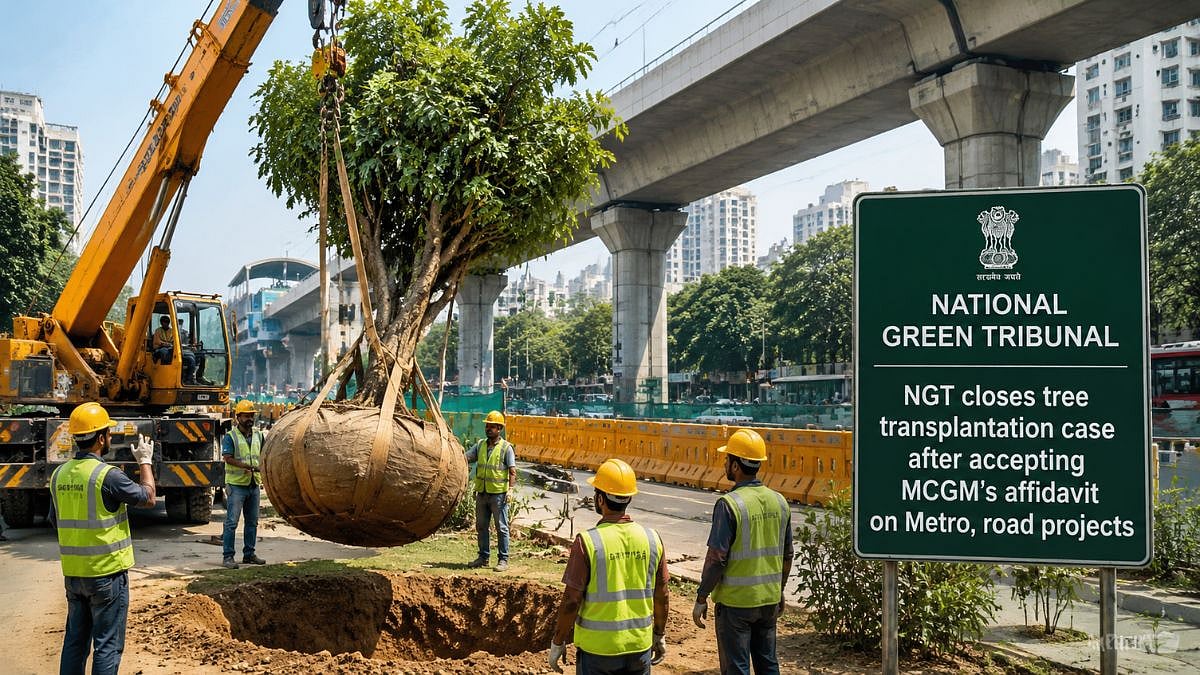
The National Green Tribunal (NGT) has closed its suo motu proceedings against the Municipal Corporation of Greater Mumbai (MCGM) regarding tree transplantation for Metro and road projects.
The MCGM had filed an affidavit before the tribunal, stating that it had followed a responsible approach in matters relating to tree transplantation and that there was no negligence on the corporation's part.
According to the affidavit, the MCGM's role is confined to granting permissions through the Tree Authority, while the responsibility for carrying out the transplantation rests with the respective project proponents. The executing agencies appoint specialised contractors, deploy the required machinery, undertake the transplantation process, and remain responsible for post-transplant maintenance, monitoring and ensuring the survival of the transplanted trees.
The tribunal noted that the ward-wise details submitted by the MCGM indicate that the Tree Authority only grants permission for transplantation and does not execute the work itself. The affidavit also described the scientific procedure adopted for transplanting trees, which includes pruning branches, carefully excavating the tree while preserving its root ball, protecting the roots during transportation, treating them with fungicides, preparing the new planting site, staking the tree for support, regular watering, mulching and continuous monitoring after transplantation to improve survival.
The MCGM further submitted that the success of tree transplantation depends on several biological and environmental factors, including the species and age of the tree, its health, soil conditions, seasonal and climatic variations, and the quality of post-transplant care. It emphasised that sustained maintenance by the project proponents plays a crucial role in ensuring long-term survival.
During the hearing, the tribunal was informed that notices are issued to project proponents that fail to submit compliance reports. It was also told that if a transplanted tree does not survive, the concerned agency is required to undertake compensatory plantation by planting three trees in its place.
The tribunal considered the survival rate of transplanted trees, which was 47.44%, to be satisfactory. Taking note of the methodology explained by the MCGM and the material placed on record, the tribunal concluded that no further directions were required and disposed of the application.
The NGT's decision to close the proceedings is a significant development in the case, which was initiated over reports of the city losing more than 21,000 trees in six years for Metro and road infrastructure projects. The MCGM's affidavit and the tribunal's decision highlight the importance of responsible tree transplantation and maintenance practices in urban development projects.
The case also underscores the need for sustained maintenance and monitoring of transplanted trees to ensure their long-term survival. As Mumbai continues to develop its infrastructure, the city's tree cover remains a critical aspect of its environmental sustainability.
In conclusion, the NGT's decision to close the proceedings marks a positive step towards ensuring that tree transplantation is carried out in a responsible and sustainable manner in Mumbai. The city's residents can expect a more environmentally conscious approach to urban development projects, with a focus on preserving and enhancing the city's tree cover.
Frequently asked questions
What was the NGT case about?
The NGT case was about tree transplantation for Metro and road projects in Mumbai.
What was the outcome of the case?
The NGT closed the proceedings after accepting the MCGM's affidavit, finding no negligence on the corporation's part.