NTA Needs Structural Strengthening: Former UGC Chief
Former UGC Chairman Mamidala Jagadesh Kumar says NTA needs deep structural strengthening, replacing it may not be the solution.
'%3E%3Crect%20width%3D'96'%20height%3D'96'%20fill%3D'%231A5276'%2F%3E%3Ccircle%20cx%3D'30'%20cy%3D'24'%20r%3D'44'%20fill%3D'%23fff'%20opacity%3D'.12'%2F%3E%3Ccircle%20cx%3D'60'%20cy%3D'74'%20r%3D'40'%20fill%3D'%23000'%20opacity%3D'.10'%2F%3E%3C%2Fg%3E%3Cg%20fill%3D'%23fff'%3E%3Cpath%20d%3D'M31%2041%20L48%2031%20L65%2041%20Z'%2F%3E%3Crect%20x%3D'33'%20y%3D'43'%20width%3D'4'%20height%3D'17'%2F%3E%3Crect%20x%3D'41'%20y%3D'43'%20width%3D'4'%20height%3D'17'%2F%3E%3Crect%20x%3D'51'%20y%3D'43'%20width%3D'4'%20height%3D'17'%2F%3E%3Crect%20x%3D'59'%20y%3D'43'%20width%3D'4'%20height%3D'17'%2F%3E%3Crect%20x%3D'30'%20y%3D'62'%20width%3D'36'%20height%3D'4'%20rx%3D'1'%2F%3E%3C%2Fg%3E%3C%2Fsvg%3E)
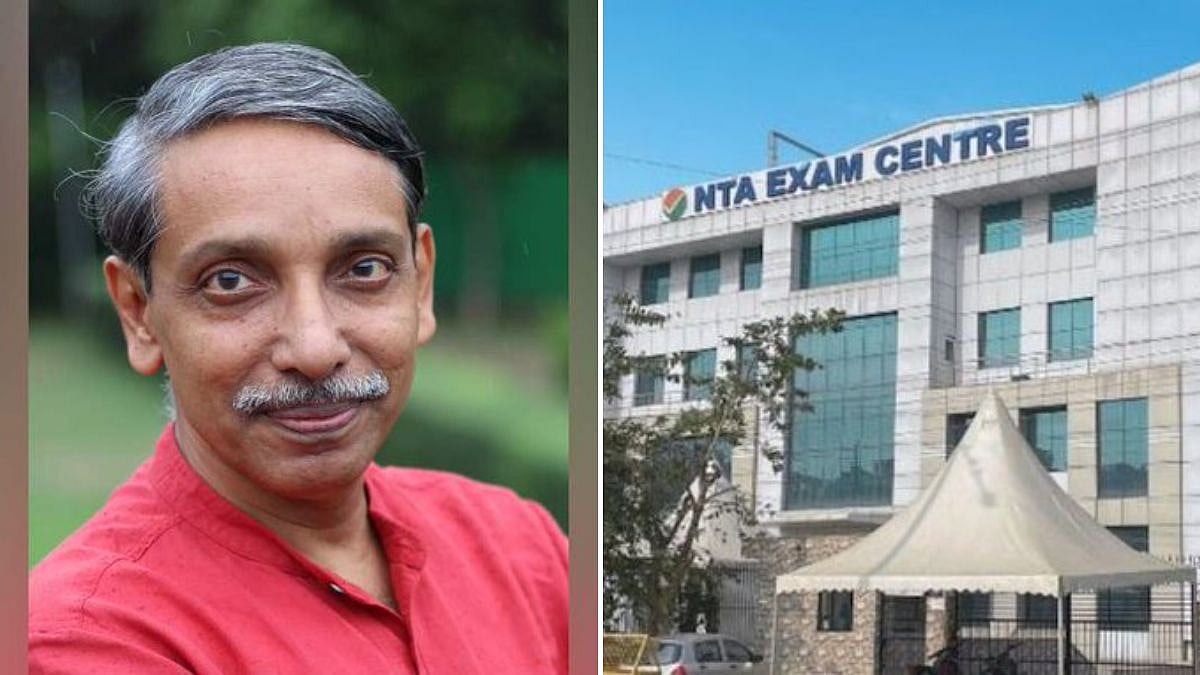
Former UGC Chairman Mamidala Jagadesh Kumar has stated that the National Testing Agency (NTA) requires deep structural strengthening to address recurring examination-security concerns. However, replacing the agency altogether may not be the most effective solution.
Kumar, who is also the Chairman of the Review Committee for NEP 2020, emphasized that the recurring paper-leak concerns should be viewed as an end-to-end examination-security challenge, considering the scale and complexity of examinations conducted by NTA. The Centre has recently ordered several measures to strengthen the NTA and examination system following the NEET-UG paper leak issue.
The government has set up a high-level committee under technocrat Nandan Nilekani and passed a law on curbing unfair means in public examinations to provide greater punishments. Kumar noted that NTA operates examinations involving over one crore candidates each year, and security depends on various factors, including subject experts, digital systems, and service providers.
The Radhakrishnan Committee had examined the entire testing process and recommended stronger standard operating procedures, better data security, and clearer responsibility. Kumar said that the government and NTA have introduced several recommended measures, and the long-term solution is continuous risk assessment, fewer people handling confidential material, digital traceability, and independent checks at every stage.
Kumar also addressed the issue of whether the NTA had become overburdened with too many examinations. He stated that the agency's workload is very large, but the number of examinations alone does not prove that it is overburdened. The real issue, according to Kumar, is the complexity behind each examination.
The Radhakrishnan Committee had proposed a partnership model in which ministries, regulators, or institutions seeking an examination should take responsibility for the syllabus, subject experts, question quality, and academic validation. Kumar suggested that the NTA can provide a secure platform, centre network, candidate verification, examination delivery, and result processing.
On the question of whether different examinations should be handled by different agencies, Kumar said he would not recommend dividing examinations among several agencies merely to reduce the visible workload. A single national testing body offers common security standards, technology, candidate services, and result procedures, he added.
In conclusion, Kumar emphasized that the entire examination system needs to be strengthened, and the measures introduced by the government and NTA can steadily make breaches much harder and protect students' trust.
The issue of examination security is a critical one, and the government's efforts to strengthen the NTA and examination system are a step in the right direction. However, it is essential to address the underlying structural issues and implement long-term solutions to ensure the integrity of the examination process.
The NTA's role in conducting examinations for over one crore candidates each year is a significant one, and it is crucial to ensure that the agency has the necessary resources and infrastructure to conduct examinations securely and efficiently. The partnership model proposed by the Radhakrishnan Committee can help to distribute the responsibility and workload of the NTA, making it more effective in conducting examinations.
Ultimately, the goal is to ensure that the examination process is secure, efficient, and fair, and that students' trust is protected. The measures introduced by the government and NTA are a step towards achieving this goal, and it is essential to continue to monitor and evaluate the effectiveness of these measures to ensure that the examination system is strengthened and improved over time.
The significance of this issue cannot be overstated, as it affects the lives and futures of millions of students who take these examinations every year. It is essential to get it right and ensure that the examination system is fair, secure, and efficient.
In the context of India's education system, the NTA plays a critical role in conducting examinations for various courses and programs. The agency's ability to conduct examinations securely and efficiently is essential to maintaining the integrity of the education system.
The government's efforts to strengthen the NTA and examination system are a positive step towards addressing the issues of examination security and integrity. However, it is essential to continue to monitor and evaluate the effectiveness of these measures to ensure that the examination system is strengthened and improved over time.
In conclusion, the NTA needs deep structural strengthening to address recurring examination-security concerns, and replacing the agency altogether may not be the most effective solution. The measures introduced by the government and NTA can steadily make breaches much harder and protect students' trust, but it is essential to continue to monitor and evaluate the effectiveness of these measures to ensure that the examination system is strengthened and improved over time.
Frequently asked questions
What is the main issue with the NTA?
The main issue with the NTA is the recurring examination-security concerns, including paper leaks.
What is the proposed solution to address the issues with the NTA?
The proposed solution is to introduce stronger standard operating procedures, better data security, and clearer responsibility, as well as continuous risk assessment and digital traceability.