Mumbai Water Stock Reaches 49.79%
Mumbai's water reserves rise, lake levels increase after rainfall. City's water security improves.
'%3E%3Crect%20width%3D'96'%20height%3D'96'%20fill%3D'%23B3261E'%2F%3E%3Ccircle%20cx%3D'30'%20cy%3D'24'%20r%3D'44'%20fill%3D'%23fff'%20opacity%3D'.12'%2F%3E%3Ccircle%20cx%3D'60'%20cy%3D'74'%20r%3D'40'%20fill%3D'%23000'%20opacity%3D'.10'%2F%3E%3C%2Fg%3E%3Cg%20fill%3D'%23fff'%3E%3Crect%20x%3D'29'%20y%3D'49'%20width%3D'8'%20height%3D'19'%20rx%3D'1'%2F%3E%3Crect%20x%3D'39'%20y%3D'40'%20width%3D'9'%20height%3D'28'%20rx%3D'1'%2F%3E%3Crect%20x%3D'50'%20y%3D'45'%20width%3D'8'%20height%3D'23'%20rx%3D'1'%2F%3E%3Crect%20x%3D'60'%20y%3D'53'%20width%3D'7'%20height%3D'15'%20rx%3D'1'%2F%3E%3Crect%20x%3D'41'%20y%3D'34'%20width%3D'5'%20height%3D'6'%2F%3E%3C%2Fg%3E%3C%2Fsvg%3E)
Mumbai's drinking water reserves have shown a slight increase, with the seven lakes supplying water to the city now holding 49.79% of their total live storage capacity. This rise comes after rainfall was recorded across the catchment areas over the past 24 hours.
The Hydraulic Engineer's Department of the BMC released the latest data, which shows that the combined water stock increased by 0.14 percentage points between 6 am on Thursday, July 16, and 6 am on Friday, July 17. The total usable water storage now stands at 7,20,597 million litres out of the total live capacity of 14,47,363 million litres.
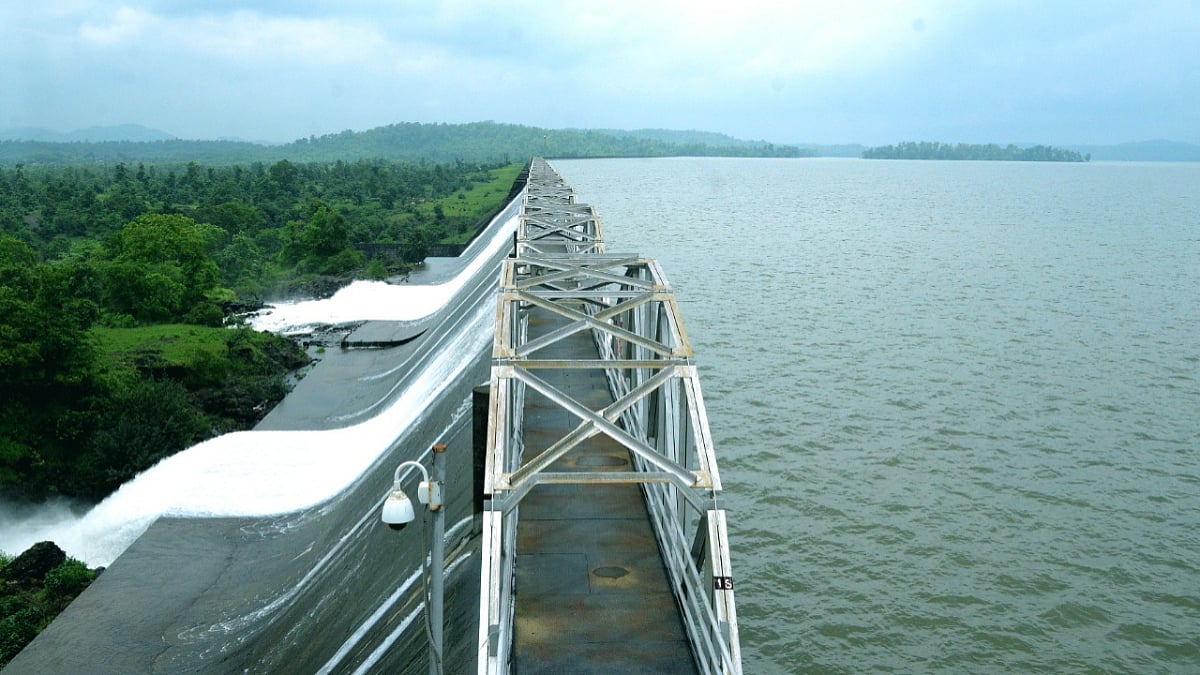
Among the major reservoirs, Bhatsa Lake, the city's largest source of drinking water, now holds 44.53% of its live storage capacity. Upper Vaitarna stands at 29.14%, Middle Vaitarna at 44.79%, while Tansa has reached 79.17% of its useful live storage. Modak Sagar remains 76.07% full, while both Vihar Lake and Tulsi Lake continue to overflow after reaching their full storage capacity earlier this month.
The BMC data also showed rainfall across several catchment areas during the last 24 hours. Vihar Lake received 14 mm of rainfall, Tulsi Lake recorded 15 mm, Bhatsa received 10 mm, while Upper Vaitarna and Tansa recorded 9 mm and 2 mm of rainfall, respectively. Modak Sagar and Middle Vaitarna did not receive any rainfall during the period.
The steady increase in reservoir levels follows the heavy spell of monsoon rainfall witnessed earlier this month, which majorly boosted the city's water reserves after the delayed onset of the southwest monsoon. With reservoir storage now approaching the halfway mark, Mumbai's water security has improved considerably.
The city's water reserves were boosted after the delayed onset of the southwest monsoon. The monsoon season is crucial for Mumbai's water supply, and the civic authorities continue to closely monitor rainfall patterns across the catchment areas.
Mumbai's water supply is managed by the BMC, which ensures that the city's residents have access to clean and safe drinking water. The BMC's efforts to monitor and manage the city's water supply have helped to improve Mumbai's water security.
The increase in water reserves is a welcome relief for the city's residents, who were concerned about the delayed onset of the monsoon. With the reservoirs now approaching the halfway mark, the city's water supply is expected to remain stable for the coming months.
In conclusion, the rise in Mumbai's water reserves is a positive development for the city's residents. The civic authorities will continue to monitor rainfall patterns and manage the city's water supply to ensure that the city's residents have access to clean and safe drinking water.
The improved water security will also have a positive impact on the city's economy and environment. With a stable water supply, the city's residents and businesses can operate without worrying about water shortages.
Overall, the increase in Mumbai's water reserves is a significant development for the city, and the civic authorities will continue to work to ensure that the city's water supply remains stable and secure.