Gen Alpha Protests Highlight Gaps in School Education
Protests by Gen Alpha reveal significant gaps in school education, mirroring a government report. Issues are found across regions.
'%3E%3Crect%20width%3D'96'%20height%3D'96'%20fill%3D'%23B3261E'%2F%3E%3Ccircle%20cx%3D'30'%20cy%3D'24'%20r%3D'44'%20fill%3D'%23fff'%20opacity%3D'.12'%2F%3E%3Ccircle%20cx%3D'60'%20cy%3D'74'%20r%3D'40'%20fill%3D'%23000'%20opacity%3D'.10'%2F%3E%3C%2Fg%3E%3Cg%20fill%3D'%23fff'%3E%3Crect%20x%3D'29'%20y%3D'49'%20width%3D'8'%20height%3D'19'%20rx%3D'1'%2F%3E%3Crect%20x%3D'39'%20y%3D'40'%20width%3D'9'%20height%3D'28'%20rx%3D'1'%2F%3E%3Crect%20x%3D'50'%20y%3D'45'%20width%3D'8'%20height%3D'23'%20rx%3D'1'%2F%3E%3Crect%20x%3D'60'%20y%3D'53'%20width%3D'7'%20height%3D'15'%20rx%3D'1'%2F%3E%3Crect%20x%3D'41'%20y%3D'34'%20width%3D'5'%20height%3D'6'%2F%3E%3C%2Fg%3E%3C%2Fsvg%3E)
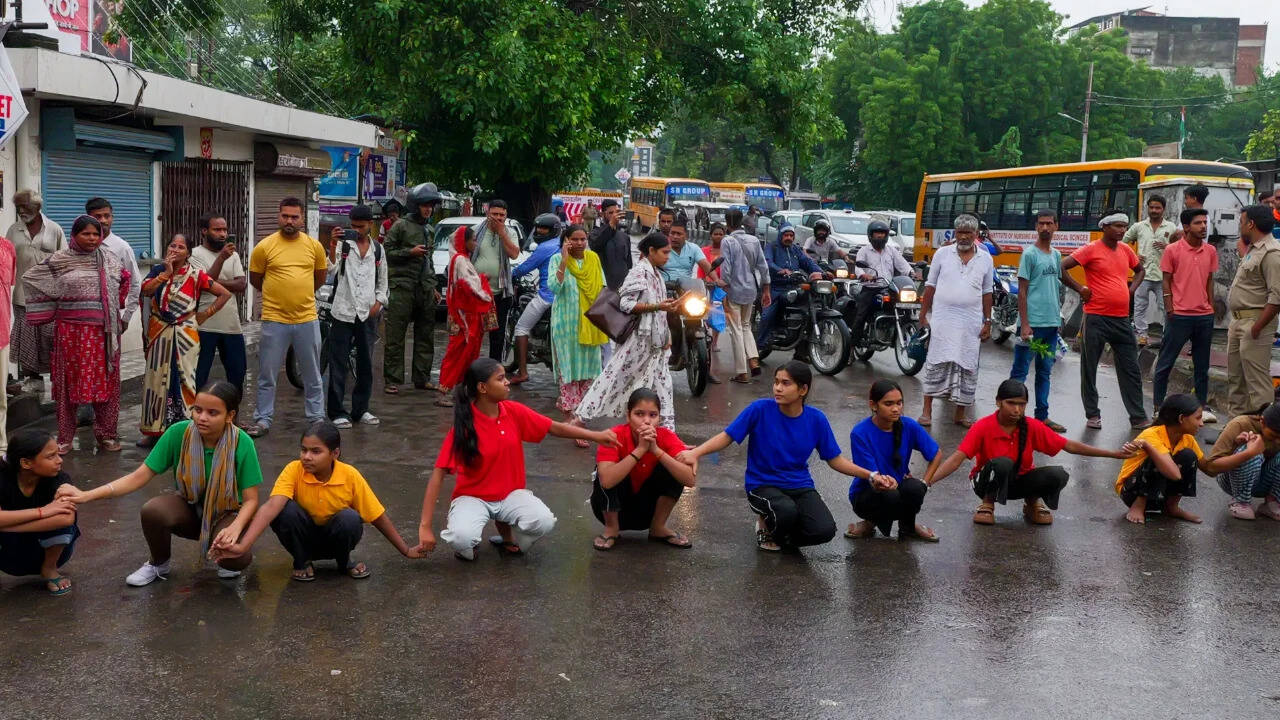
A recent wave of protests by Gen Alpha, the generation born between 2010 and 2025, has brought attention to the significant gaps in school education. These protests mirror the findings of a government report that highlights the disparities in the education system.
The issues raised by Gen Alpha are not unique to any particular region, but rather are found across different parts of the country. This suggests that the problems in school education are widespread and require a comprehensive solution.
According to the government report, the gaps in school education are attributed to various factors, including inadequate infrastructure, insufficient resources, and a lack of qualified teachers. The report also notes that the education system is not equipped to meet the needs of the 21st century, resulting in a significant skills gap among students.
The protests by Gen Alpha have sparked a national conversation about the state of school education in the country. Educators, policymakers, and parents are coming together to discuss the issues and potential solutions.
One of the key concerns raised by Gen Alpha is the emphasis on rote learning, which they believe hinders their ability to think critically and creatively. They are also calling for a more inclusive and diverse curriculum that reflects the complexities of the modern world.
The government has acknowledged the concerns raised by Gen Alpha and has pledged to take steps to address the gaps in school education. This includes increasing funding for education, improving teacher training, and introducing reforms to the curriculum.
In the context of India's growing population and increasing competition in the job market, the need for a robust education system cannot be overstated. The protests by Gen Alpha serve as a reminder that the country's future depends on its ability to provide quality education to its citizens.
The issue of gaps in school education is not new, but the protests by Gen Alpha have brought renewed attention to the problem. It remains to be seen how the government and other stakeholders will respond to the concerns raised by Gen Alpha, but one thing is clear: the need for reform in the education system is urgent.
In conclusion, the protests by Gen Alpha have highlighted the significant gaps in school education, which are not unique to any region but are found across the country. The government and other stakeholders must work together to address these issues and provide a quality education system that prepares students for the challenges of the 21st century.
As India continues to grow and develop, the importance of a robust education system will only continue to increase. The country's ability to provide quality education to its citizens will have a significant impact on its future, and it is essential that the government and other stakeholders take the concerns raised by Gen Alpha seriously and work towards creating a better education system.
The future of India's education system is uncertain, but one thing is clear: the need for reform is urgent, and the protests by Gen Alpha have sparked a necessary conversation about the state of school education in the country.
Frequently asked questions
What are the main issues raised by Gen Alpha in their protests?
The main issues raised by Gen Alpha include the emphasis on rote learning, lack of inclusive and diverse curriculum, and inadequate infrastructure.
What has the government pledged to do to address the gaps in school education?
The government has pledged to increase funding for education, improve teacher training, and introduce reforms to the curriculum.