Northern Hemisphere Lakes Face 40-Day Ice Loss
Lakes may lose ice, affecting ecosystems. Warming accelerates loss.
'%3E%3Crect%20width%3D'96'%20height%3D'96'%20fill%3D'%23B3261E'%2F%3E%3Ccircle%20cx%3D'30'%20cy%3D'24'%20r%3D'44'%20fill%3D'%23fff'%20opacity%3D'.12'%2F%3E%3Ccircle%20cx%3D'60'%20cy%3D'74'%20r%3D'40'%20fill%3D'%23000'%20opacity%3D'.10'%2F%3E%3C%2Fg%3E%3Cg%20fill%3D'%23fff'%3E%3Crect%20x%3D'29'%20y%3D'49'%20width%3D'8'%20height%3D'19'%20rx%3D'1'%2F%3E%3Crect%20x%3D'39'%20y%3D'40'%20width%3D'9'%20height%3D'28'%20rx%3D'1'%2F%3E%3Crect%20x%3D'50'%20y%3D'45'%20width%3D'8'%20height%3D'23'%20rx%3D'1'%2F%3E%3Crect%20x%3D'60'%20y%3D'53'%20width%3D'7'%20height%3D'15'%20rx%3D'1'%2F%3E%3Crect%20x%3D'41'%20y%3D'34'%20width%3D'5'%20height%3D'6'%2F%3E%3C%2Fg%3E%3C%2Fsvg%3E)
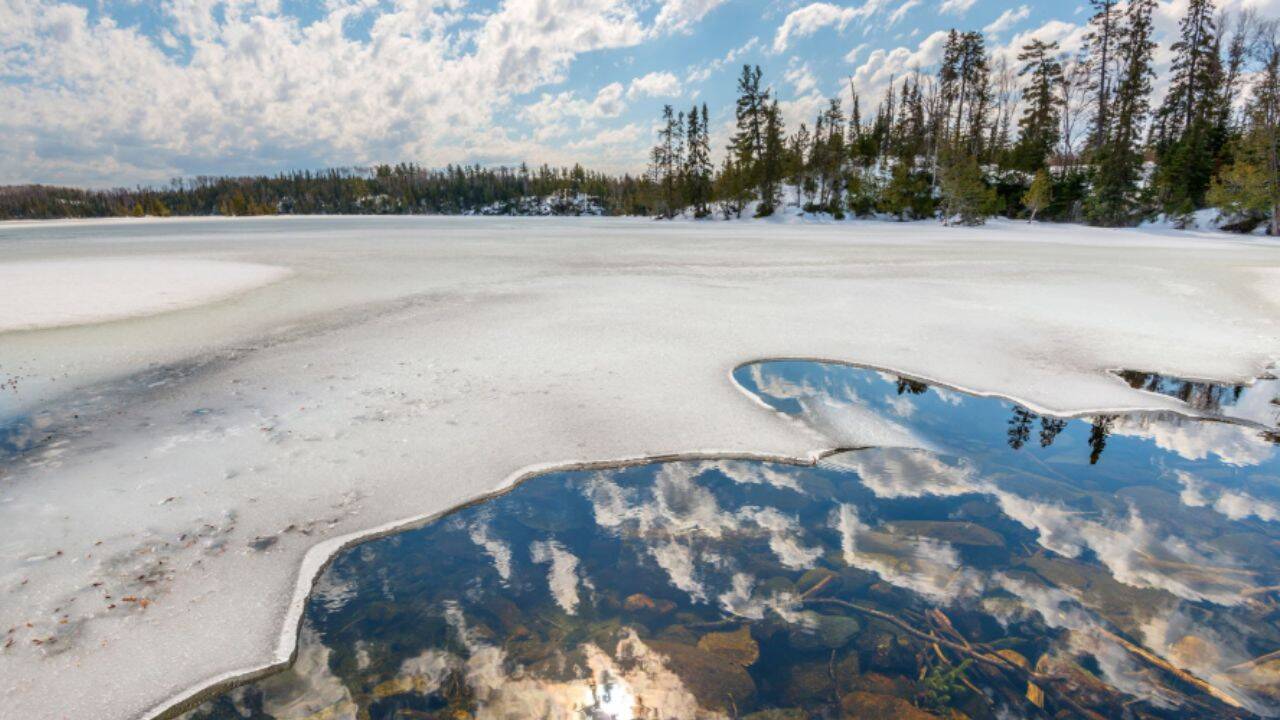
A recent international study has revealed that lakes in the Northern Hemisphere may experience a significant reduction in ice cover by the end of the century. If greenhouse gas emissions continue to rise, the duration of lake ice could decrease by approximately 40 days. This finding is based on research that identified specific winter temperature thresholds, beyond which the loss of ice accelerates rapidly.
The study's results have raised concerns about the potential impact on water quality, freshwater ecosystems, and communities that rely on stable winter ice. As temperatures rise, the consequences for these ecosystems could be severe, leading to disruptions in the delicate balance of aquatic life.
The research team behind the study analyzed data from various lakes across the Northern Hemisphere, taking into account factors such as temperature, ice cover, and other environmental variables. Their findings suggest that the loss of ice cover could have far-reaching consequences, including changes to water chemistry, altered habitats for aquatic species, and increased risk of invasive species.
The Northern Hemisphere is home to numerous lakes that play a crucial role in supporting local ecosystems and communities. The potential loss of ice cover could have significant implications for these regions, including impacts on fishing industries, tourism, and recreational activities.
As the world continues to experience the effects of climate change, the study's findings serve as a reminder of the need for urgent action to reduce greenhouse gas emissions and mitigate the worst impacts of global warming. By understanding the critical temperature thresholds beyond which ice loss accelerates, researchers and policymakers can work together to develop strategies for preserving lake ice and protecting the ecosystems that depend on it.
The study's results are a call to action, highlighting the importance of addressing climate change to ensure the long-term health and sustainability of Northern Hemisphere lakes. As the planet continues to warm, it is essential to take proactive steps to reduce emissions and preserve the natural beauty and ecological significance of these vital ecosystems.
In conclusion, the potential loss of 40 days of ice cover from Northern Hemisphere lakes is a stark reminder of the need for immediate action to address climate change. By working together to reduce emissions and protect these ecosystems, we can help preserve the health and sustainability of our planet's precious freshwater resources.
Frequently asked questions
How much ice loss is predicted for Northern Hemisphere lakes?
The study predicts a loss of approximately 40 days of ice cover by the end of the century.
What is driving the loss of ice cover from lakes?
The main driver of ice loss is the increase in greenhouse gas emissions, which is accelerating global warming.