India Lacks Law on Abandoned Properties
Abandoned buildings in India lack clear laws, causing fragmented regulations.
'%3E%3Crect%20width%3D'96'%20height%3D'96'%20fill%3D'%231A5276'%2F%3E%3Ccircle%20cx%3D'30'%20cy%3D'24'%20r%3D'44'%20fill%3D'%23fff'%20opacity%3D'.12'%2F%3E%3Ccircle%20cx%3D'60'%20cy%3D'74'%20r%3D'40'%20fill%3D'%23000'%20opacity%3D'.10'%2F%3E%3C%2Fg%3E%3Cg%20fill%3D'%23fff'%3E%3Cpath%20d%3D'M31%2041%20L48%2031%20L65%2041%20Z'%2F%3E%3Crect%20x%3D'33'%20y%3D'43'%20width%3D'4'%20height%3D'17'%2F%3E%3Crect%20x%3D'41'%20y%3D'43'%20width%3D'4'%20height%3D'17'%2F%3E%3Crect%20x%3D'51'%20y%3D'43'%20width%3D'4'%20height%3D'17'%2F%3E%3Crect%20x%3D'59'%20y%3D'43'%20width%3D'4'%20height%3D'17'%2F%3E%3Crect%20x%3D'30'%20y%3D'62'%20width%3D'36'%20height%3D'4'%20rx%3D'1'%2F%3E%3C%2Fg%3E%3C%2Fsvg%3E)
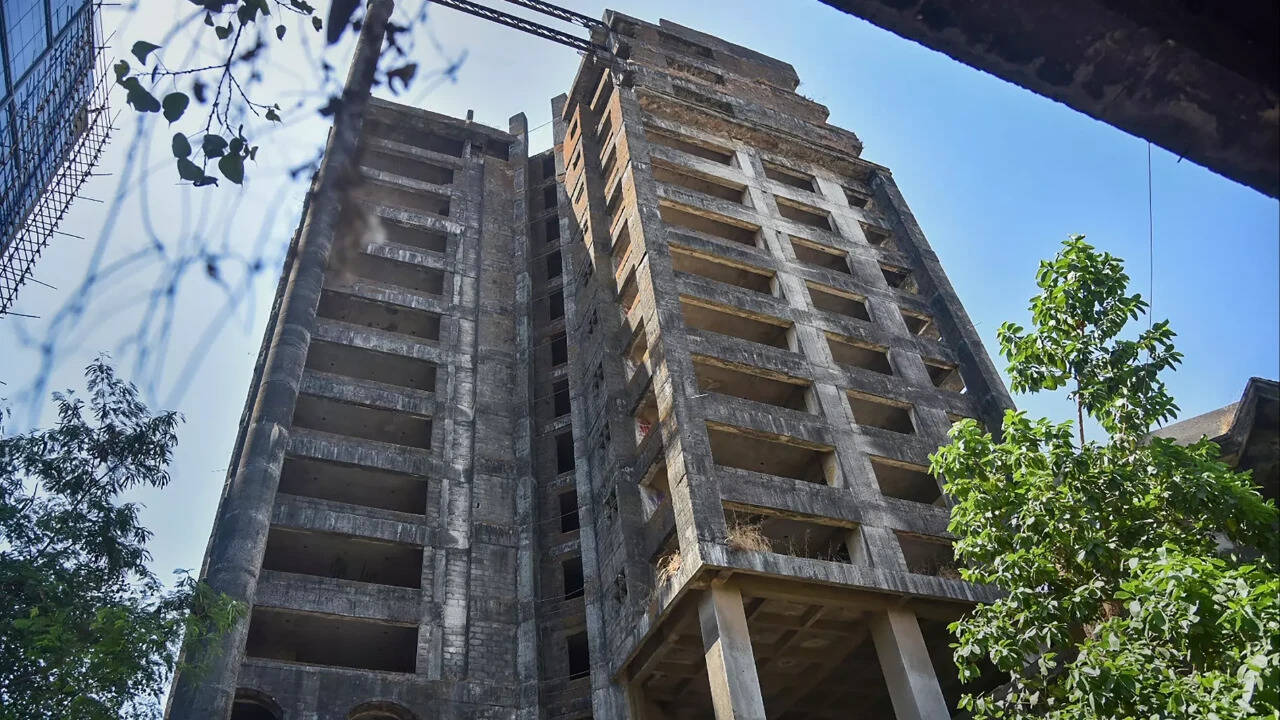
In India, the absence of a comprehensive law governing abandoned buildings has led to a complex and fragmented regulatory framework. This has resulted in varying rules and regulations across different legislative acts, making it challenging for authorities to address the issue effectively.
Municipal authorities have been given the authority to inspect and classify buildings as dangerous, which enables them to take necessary actions to ensure public safety. When a building is deemed hazardous, the owner is notified and required to undertake necessary repairs or secure their property. In cases where the building poses an imminent risk, demolition is considered a potential option.
Both Maharashtra and Delhi have implemented mandatory structural evaluations for older buildings, which helps identify potential risks and ensures that necessary measures are taken to prevent accidents. However, the lack of a unified law governing abandoned properties hinders the government's ability to take over and utilize these properties effectively.
The issue of abandoned properties is not only a matter of public safety but also a concern for urban development and resource utilization. With a significant number of buildings lying vacant for decades, the potential for redevelopment and reuse is substantial. Nevertheless, the current regulatory framework makes it difficult for the government to acquire and repurpose these properties.
In recent years, there have been efforts to address the issue of abandoned properties, but a comprehensive law is still lacking. The government has been working to strengthen regulations and provide a clear framework for dealing with abandoned buildings. However, until a unified law is enacted, the issue is likely to persist, and the potential benefits of redeveloping these properties will remain unexploited.
The lack of a comprehensive law governing abandoned properties in India has significant implications for urban development, public safety, and resource utilization. It highlights the need for a unified and effective regulatory framework that enables the government to address the issue of abandoned properties and harness their potential for the benefit of society.
In conclusion, the absence of a comprehensive law governing abandoned properties in India is a complex issue that requires a unified and effective regulatory framework. The government's inability to take over and utilize these properties effectively is a significant concern, and it is essential to address this issue to ensure public safety, promote urban development, and optimize resource utilization.