Thane Women Create Eco-Friendly Ganesha Idols
Thane women promote sustainable Ganeshotsav, craft eco-friendly idols, reduce festival waste.
'%3E%3Crect%20width%3D'96'%20height%3D'96'%20fill%3D'%23B3261E'%2F%3E%3Ccircle%20cx%3D'30'%20cy%3D'24'%20r%3D'44'%20fill%3D'%23fff'%20opacity%3D'.12'%2F%3E%3Ccircle%20cx%3D'60'%20cy%3D'74'%20r%3D'40'%20fill%3D'%23000'%20opacity%3D'.10'%2F%3E%3C%2Fg%3E%3Cg%20fill%3D'%23fff'%3E%3Crect%20x%3D'29'%20y%3D'49'%20width%3D'8'%20height%3D'19'%20rx%3D'1'%2F%3E%3Crect%20x%3D'39'%20y%3D'40'%20width%3D'9'%20height%3D'28'%20rx%3D'1'%2F%3E%3Crect%20x%3D'50'%20y%3D'45'%20width%3D'8'%20height%3D'23'%20rx%3D'1'%2F%3E%3Crect%20x%3D'60'%20y%3D'53'%20width%3D'7'%20height%3D'15'%20rx%3D'1'%2F%3E%3Crect%20x%3D'41'%20y%3D'34'%20width%3D'5'%20height%3D'6'%2F%3E%3C%2Fg%3E%3C%2Fsvg%3E)
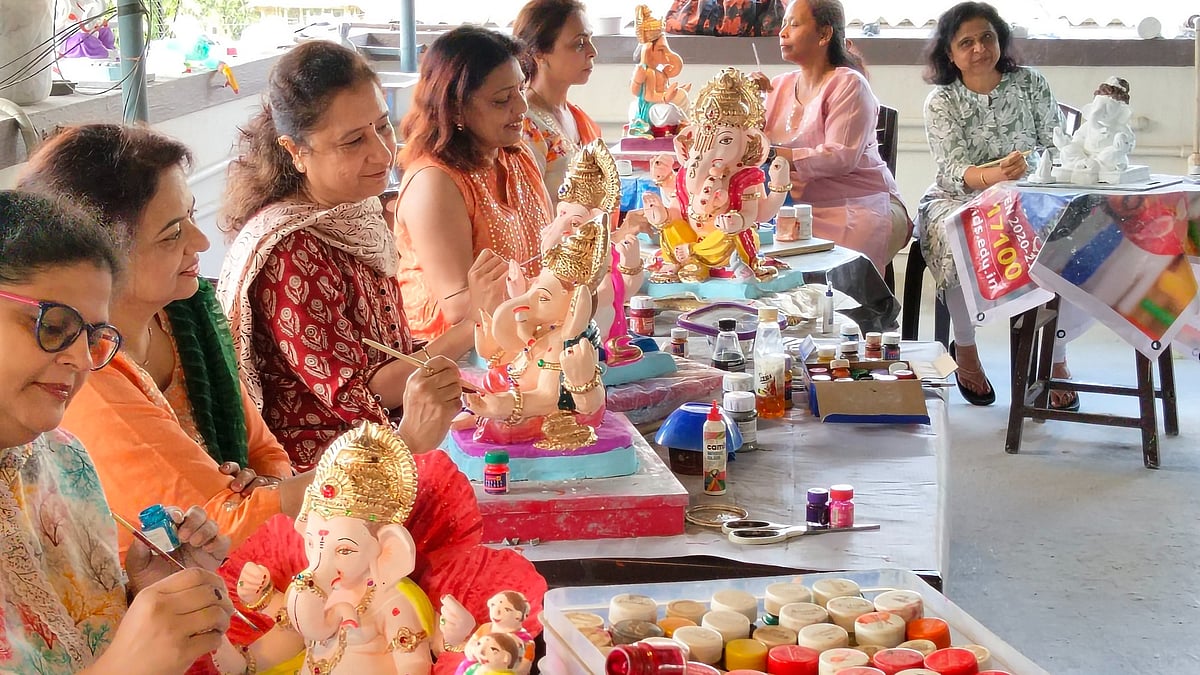
A group of women professionals from Thane's Shrirang Society area have come together to create eco-friendly Lord Ganesha idols, promoting sustainable Ganeshotsav celebrations.
The initiative, which took place over a 10-to-12-day workshop, saw the participants hand-sculpting the idols using natural mud and painting them with colorful stone detailing. The workshop was guided by veteran artisan Aditi Date, who has been handcrafting her own Ganpati idols for the past 28 years.
The participants, who included doctors, pathologists, stage artists, and authors, were required to perform the idol immersion at home rather than in local water bodies. This not only reduced festival waste but also helped minimize urban congestion during the festive period.
The dissolved clay from the idols will be recycled for domestic gardening or future sculpting, significantly reducing the environmental impact of the festival. By bringing their completed idols home for private celebrations, the group helped minimize street crowding and noise pollution across Thane.
The initiative is a striking example of community-led sustainability, proving that cultural heritage and modern environmental responsibility can go hand in hand. The women's efforts demonstrate that it is possible to celebrate traditional festivals in an eco-friendly manner, without compromising on the cultural significance of the occasion.
The workshop was a unique opportunity for the participants to learn about sustainable practices and to be a part of a community-led initiative. The fact that the participants were from different professions and backgrounds added to the diversity and richness of the initiative.
The success of the initiative has shown that even small actions can make a big difference in reducing festival waste and promoting sustainability. It has also highlighted the importance of community-led initiatives in promoting environmental responsibility and cultural heritage.
The initiative has set an example for others to follow, showing that it is possible to celebrate festivals in an eco-friendly manner. It has also demonstrated the power of community-led initiatives in promoting sustainability and reducing waste.
In conclusion, the Thane women's initiative to create eco-friendly Ganesha idols is a shining example of community-led sustainability and environmental responsibility. It has shown that cultural heritage and modern environmental responsibility can go hand in hand, and that even small actions can make a big difference in promoting sustainability.
The initiative has also highlighted the importance of individual actions in reducing festival waste and promoting environmental responsibility. It has demonstrated that by making small changes to our daily lives, we can make a significant impact on the environment.
Overall, the Thane women's initiative is a step in the right direction towards promoting sustainability and reducing waste during festivals. It is an example that others can follow, and it has the potential to make a significant impact on the environment.
The success of the initiative has also shown that community-led initiatives can be an effective way to promote sustainability and environmental responsibility. It has demonstrated that by working together, individuals can make a significant impact on the environment and promote cultural heritage.
In the future, it is hoped that more initiatives like this will be undertaken, promoting sustainability and environmental responsibility during festivals. It is also hoped that the initiative will inspire others to take action and make a difference in their communities.
The Thane women's initiative is a testament to the power of community-led initiatives in promoting sustainability and environmental responsibility. It has shown that even small actions can make a big difference, and that cultural heritage and modern environmental responsibility can go hand in hand.
The initiative has also highlighted the importance of education and awareness in promoting sustainability and environmental responsibility. It has demonstrated that by educating individuals about the importance of sustainability, we can inspire them to take action and make a difference in their communities.
In conclusion, the Thane women's initiative to create eco-friendly Ganesha idols is a significant step towards promoting sustainability and reducing waste during festivals. It is an example that others can follow, and it has the potential to make a significant impact on the environment.
Frequently asked questions
What material were the eco-friendly Ganesha idols made of?
The idols were made of natural mud and painted with colorful stone detailing.
What happened to the dissolved clay from the idols?
The dissolved clay will be recycled for domestic gardening or future sculpting.